What "Settled In" Looks Like for a Formerly Feral Cat
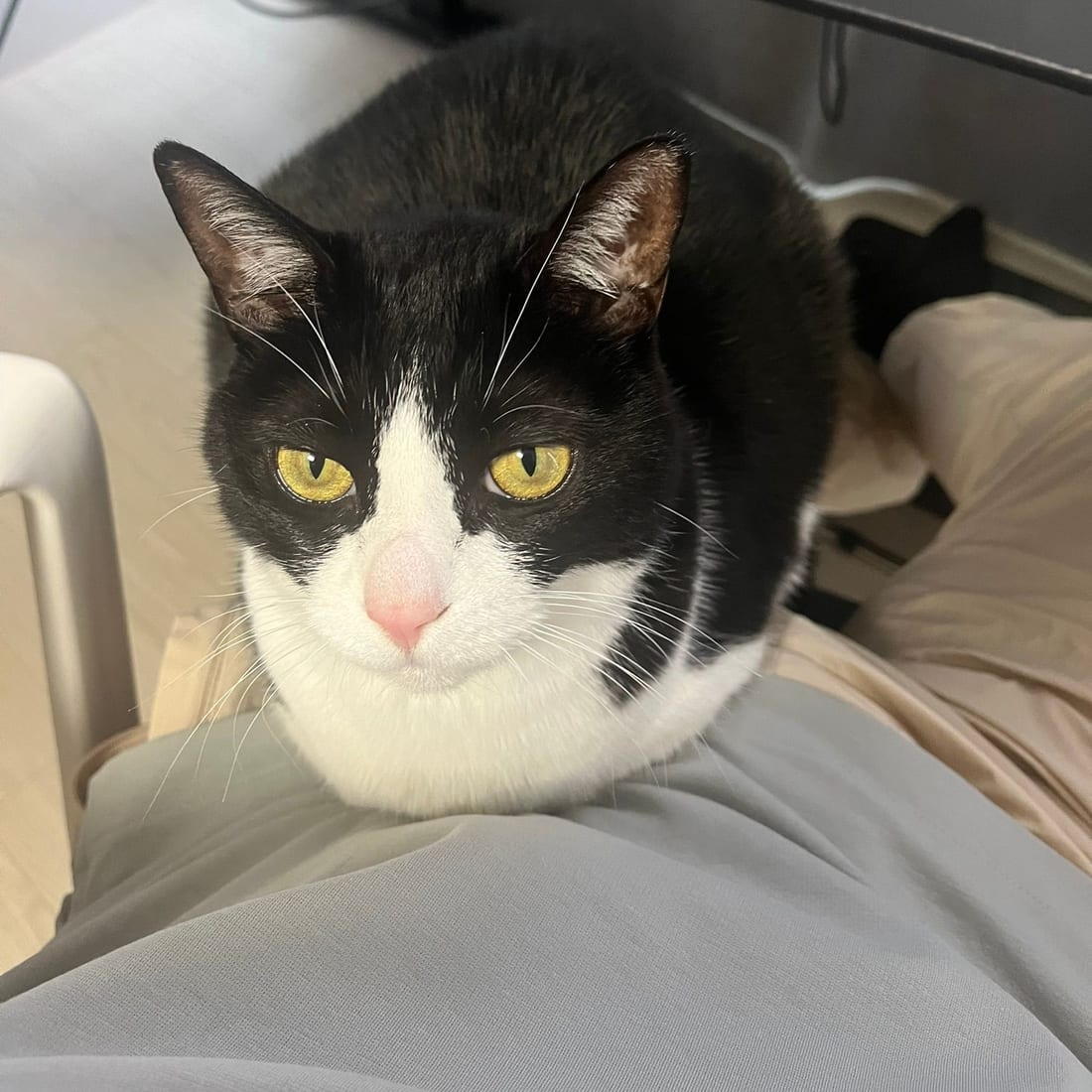
“Settled in” for a formerly feral cat doesn’t look like a calm, cuddly cat who comes when called. It looks like a cat who trusts you on her own terms — eats in the open, sleeps where she can see you, comes close when she wants — while still keeping a few hard limits like hissing when you overstay a petting session. Progress, not a personality transplant.
We’ve had Yuja and Mochi for six years. Yuja came to us formerly feral: she hid behind the washing machine for a little over ten days, and it took about four years before we could touch her paws. So when people ask what “done adjusting” actually means, we can only tell you what it looked like in our home — and it’s quieter and messier than most people expect.
What does a settled formerly feral cat actually do?
The clearest signs aren’t dramatic. They’re small, boring, repeated behaviors that would’ve been impossible early on.
Here’s the before-and-after we’ve watched happen with Yuja:
| Behavior | Early on | Now (year six) |
|---|---|---|
| Eating | Only behind the washing machine, delivered by tongs | Eats in the open, nibbling across several visits |
| Resting spot | Hidden where we couldn’t see her | Cat tower top shelf, windowsill, sometimes a lap |
| When we walk by | Hissed at us just passing | Ignores us, or lifts her head to look up |
| Being touched | Bit if a paw hair was brushed | Lets us touch her paws — once, then she’s done |
| Plastic bag sounds | Bit and bolted, even mid-scratch | Watches warily, stays put |
Notice none of these are “she’s a lap cat now and purrs all day.” The real markers are: she stopped hiding to eat, she chose spots where she can see us, and a plastic-bag crinkle no longer sends her running; she stands and watches.
Why doesn’t “settled” mean “no more hissing”?
This is the part that surprises new rescue owners. A fully settled cat can still have firm limits, and keeping those limits is a sign of trust, not a failure of it.
Yuja will climb into a lap now, roll over, show her belly, and press her head into our palm with her eyes closed. Five minutes later, if we pet her one stroke too many, she’ll grab the hand and leave. Both are true at once. We wrote more about why a cat bites while you’re petting her — the short version is that her threshold is just lower than a confident cat’s, and that’s part of who she is.
Same with the plastic bag thing. Six years in, she no longer runs. She stands and watches. But if a bag comes close, she still hates it — and strangely, if we leave one sitting on the floor, she’ll walk over and chew it. We have no clean explanation for that, and after six years we’ve stopped needing one. We just don’t bring bags near her, and that works.
A settled cat isn’t a cat with no fears. It’s a cat whose fears got smaller, and who recovers instead of disappearing.
How do you know it’s trust and not just time?
Time alone doesn’t do it. A cat can live in your house for years and still treat you like furniture. The difference is whether she chooses you when she has other options.
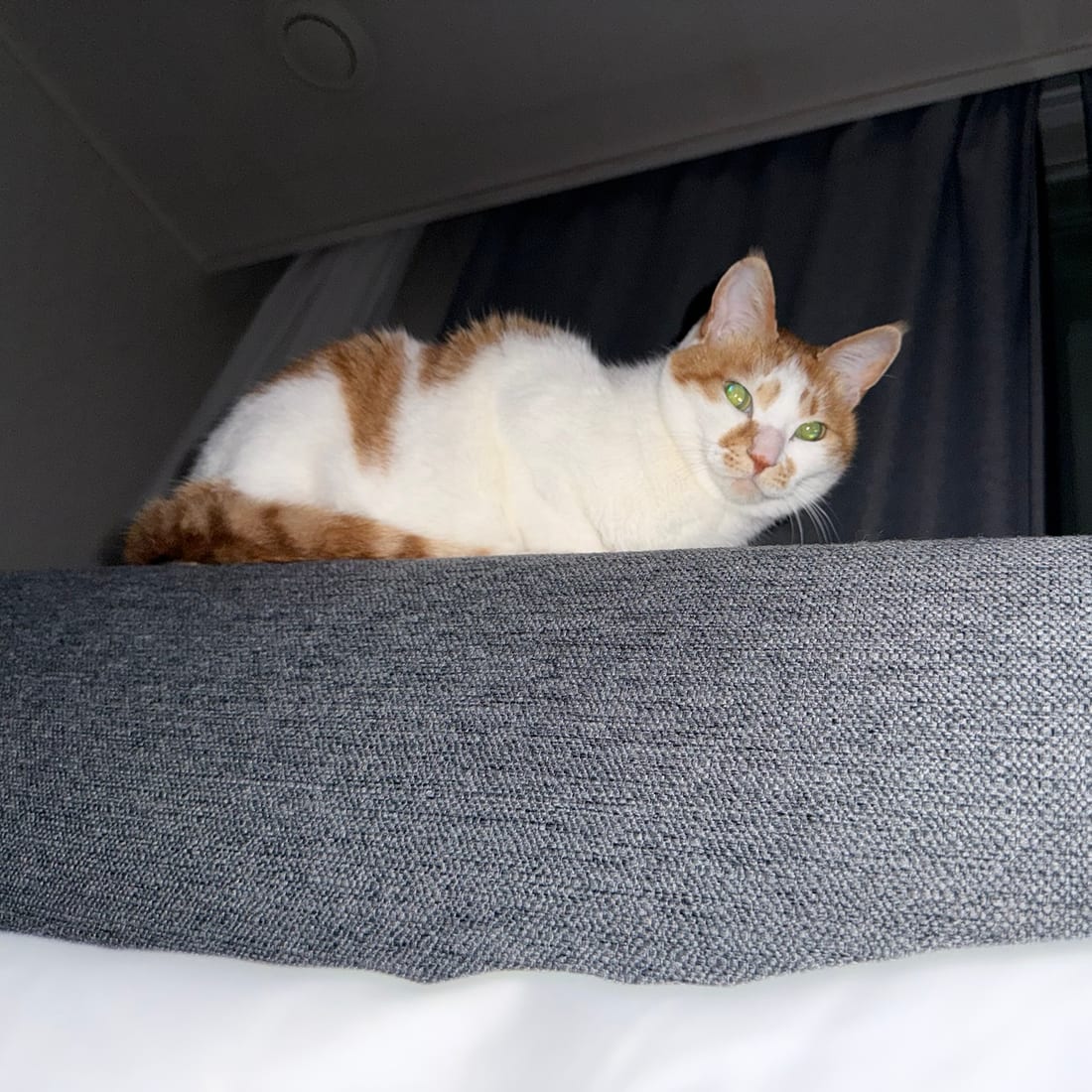
The moment it clicked for us with Yuja wasn’t a cuddle. It was finding her on top of the refrigerator instead of behind the washing machine — out in the room, still hissing at us, but no longer buried in the one spot we couldn’t reach. She picked a better vantage point on her own. That’s a cat deciding the open room is safer than the hiding hole.
A few things that read as genuine trust rather than resignation:
- She comes toward you instead of just tolerating you being near.
- She rests belly-up or on her side where you can see her.
- She eats while you’re in the room, not only after you leave.
- She recovers from a startle in the same room, instead of hiding for a day.
If you want a fuller picture of the slow ramp, we laid it out in our six-year trust timeline.
Does every formerly feral cat end up like this?
No — and comparing cats is the fastest way to feel like you’re failing. Mochi came to us the same time Yuja did, lived with the same people in the same home, and was already eating well and doing fine while Yuja was still hiding behind the washer. Yuja took years for the same ground. Neither one was doing it wrong.
Some things also just never arrive, and that’s not a sign you missed a step. Yuja still doesn’t respond to her name after six years. We still can’t properly trim her nails. We stopped expecting her to be a cat who comes when called. If you’re chasing a milestone that isn’t coming, some things genuinely don’t work — and the cat can still be fully settled anyway.
So “settled” is personal. For Mochi it looks like meeting us at the door every day and sleeping on a lap. For Yuja it looks like sitting on the floor, head tilted up, purring at us — her odd way of asking to be scratched — then hissing if we push the scratch too long. Both are home. Both trust us. They just show it in opposite dialects.
The honest version of “done adjusting”
There isn’t a finish line with a bow on it. What changes is that the cat’s baseline shifts from scared to fine, and the scary moments become brief interruptions instead of the whole story.
If you’re waiting for the day your formerly feral cat becomes an easy, affectionate, no-limits pet, you may wait a long time — and you’ll miss the real wins happening in front of you. The cat eating in the open. The cat on the windowsill instead of under the bed. The cat who still hisses sometimes, but stays.
That’s what settled looks like here. Quieter than the fantasy, and much better than it sounds.
This article is general information from a cat owner, not veterinary advice. Talk to your vet about your cat's specific situation.