Why Does My Cat Bite Me While I'm Petting Her?
Most of the time, it’s overstimulation. Your cat enjoys the petting right up until she doesn’t, and once she hits her limit, the same touch that felt good a minute ago starts to feel like too much. The bite is her telling you to stop. It’s not aggression, and it’s usually not a warning about you specifically — it’s a threshold thing, and every cat’s threshold is different.
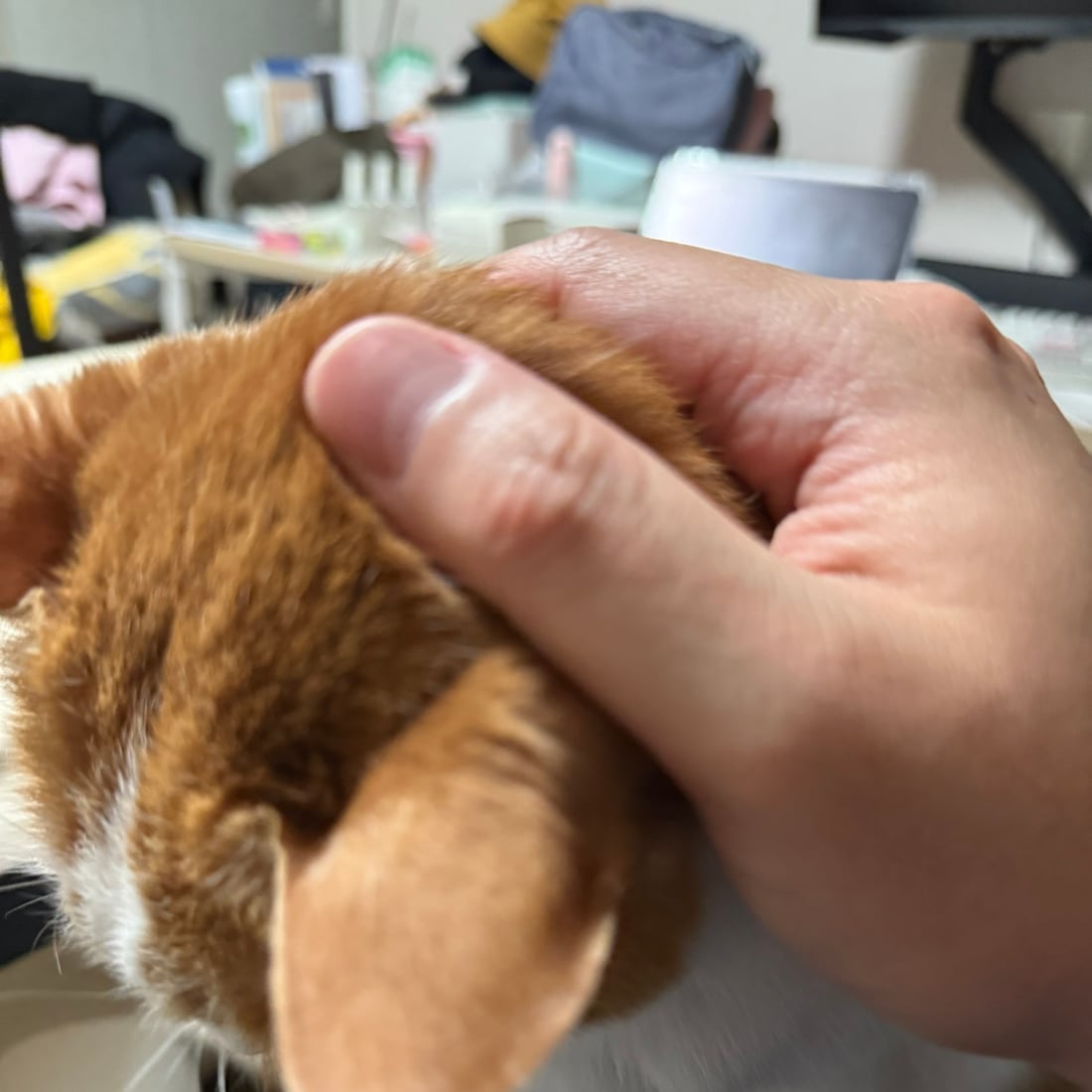
We live with a textbook example. Yuja, our orange-and-white eight-year-old, will lean into your hand, purr, ask for more, and then bite and bolt the second you cross her invisible line. She wants the affection. She just can’t tolerate a lot of it at once. Six years in, we’ve mostly learned to read her, and I’ll walk you through what we watch for.
What overstimulation actually is
Repeated petting builds up a kind of sensory static. For some cats, a few strokes are pleasant. Keep going past that point and the input flips from soothing to irritating. Think of someone poking the same spot on your arm — fine once, annoying by the tenth time. The cat has no way to say “okay, enough” in words, so she says it with her mouth.
This is different from a cat who bites out of fear or pain. Overstimulation bites happen during affection the cat asked for. That’s the tell. She approached you, she was purring, she was enjoying it — and then she snapped. That whole arc is the signature of overstimulation, not a cat who hates being touched.
It also explains why the same cat can seem so contradictory. Yuja is a classic tsundere. She’ll nudge your hand for attention and, if you pet her too long, bite and run. Both things are true at once: she wants contact, and she has a hard ceiling on how much she can take.
The warning signs before the teeth
Cats almost always signal before they bite. The problem is the signals are subtle and fast, and we miss them because we’re enjoying the moment too. Watch for these, roughly in the order they tend to escalate:
- Tail twitching or thumping. A slow swish that speeds up is a big one. A relaxed cat’s tail is mostly still.
- Skin rippling along the back, like a little shudder.
- Ears rotating back or flattening — the “airplane ear” look.
- Turning her head toward your hand. This is the last stop before contact. She’s lining up.
- Suddenly going stiff when she was loose and floppy a second ago.
- Dilated pupils or a hard, fixed stare.
With Yuja, the tell is her whole body tensing. She’ll be melting into the couch, and then there’s this micro-shift where she goes rigid. That’s my two-second window to pull my hand away. When I catch it, no bite. When I’m distracted, I get nailed.
How to stop the biting
The short version: pet less, stop sooner, and quit while she’s still happy.
Count your strokes. Sounds silly, but figure out your cat’s number. If she reliably bites around stroke fifteen, stop at eight. You’re aiming to end the interaction well inside her comfort zone, not to test the edge of it.
Stick to the safe zones. Most cats tolerate the head, cheeks, and under the chin far better than the back, belly, or the base of the tail. Those back-half areas are where overstimulation builds fastest. Yuja is fine around the face and gets touchy the moment I move toward her lower back.
Watch the tail, not the purr. Purring doesn’t mean “keep going forever.” A twitching tail overrides a purr every time. Believe the tail.
When you see a warning, freeze — don’t yank. Stop your hand and stay still, or slowly withdraw. Pulling away fast can trigger the pounce you were trying to avoid. Let her decide whether to stay or leave.
Never punish the bite. Yelling, scruffing, or squirting her teaches her that hands are unpredictable and scary, which makes everything worse. If she bites, just stop and let her go. She’s not being bad. She’s being honest.
Let her end things on her terms. Cats who feel free to walk away tend to relax into petting more, not less. If your cat knows she can leave, she doesn’t have to bite her way out.
Over time some cats stretch their tolerance a little, but I want to be honest about the ceiling. We’ve had Yuja six years and she still bites if I push it. We can pet her face and body now, and I can even touch her paws — something that took us four years to reach. But if I touch a paw twice in a row, I get a hiss. Her limit is real and it’s not going away. Our job isn’t to fix her; it’s to stay under the line.
When it’s not overstimulation
Overstimulation is the common answer, but a few other things look similar and are worth ruling out.
| What you see | More likely explanation |
|---|---|
| Bites when you touch one specific spot every time | Pain or sensitivity in that area |
| A calm, long-tolerant cat suddenly starts biding at petting | Could be pain — worth a vet visit |
| Bites hard during play, not petting | Play aggression, needs redirection to toys |
| Gentle nibbles with no pressure, no run | Love bites / grooming behavior, mostly harmless |
That second row is the one I’d act on. If a cat who happily accepted petting for years suddenly won’t let you touch her, that’s a behavior change worth mentioning to your vet, because pain is a common reason a tolerant cat turns touchy. Overstimulation, by contrast, is consistent — it’s been her pattern since day one.
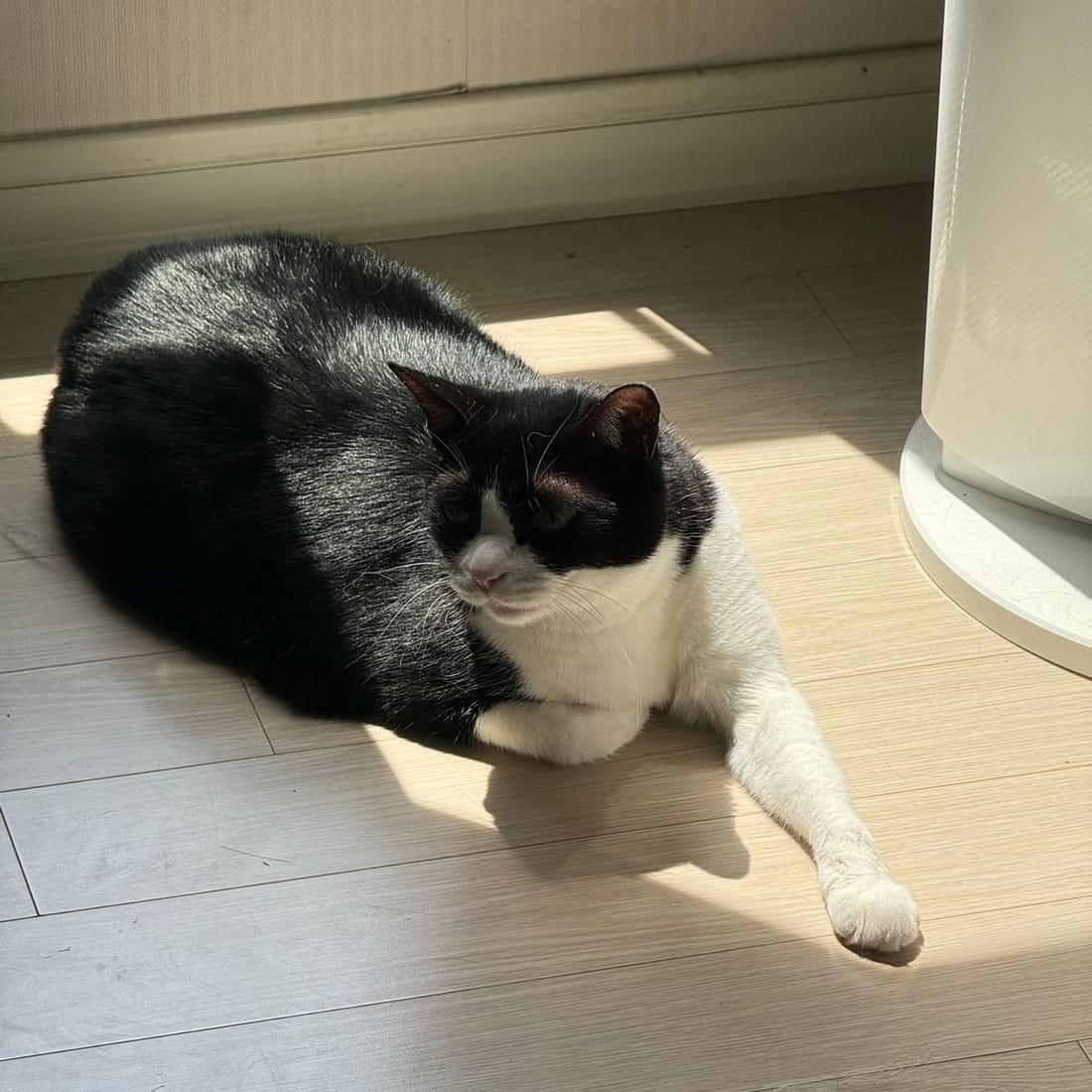
Not every cat is like this, either. Our other cat, Mochi, a black-and-white tuxedo the same age, is the opposite. She’ll flop and roll the second you walk by, headbutt your hand, and tap you with a paw asking for more. She could be petted for an hour. Same house, same routine, completely different wiring. So if you’ve got one biter and one bottomless-affection cat, that’s normal — cats just have very different tolerances.
The realistic goal
You’re not going to turn an overstimulation-prone cat into a lap cat who never bites. What you can do is learn her signals, respect her number, and stop before she has to tell you the hard way. Do that consistently and the bites drop way off, because she stops needing them.
For us, the win wasn’t teaching Yuja to endure more petting. It was learning to read the tension in her body and getting my hand out of the way in time. She still asks for affection every day. I just pet her in short sessions, keep an eye on that tail, and let her walk off whenever she’s done. Fewer bites, calmer cat, and a hand that isn’t covered in scratches.
This article is general information from a cat owner, not veterinary advice. Talk to your vet about your cat's specific situation.