How to Earn a Formerly Feral Cat's Trust: A 6-Year Timeline
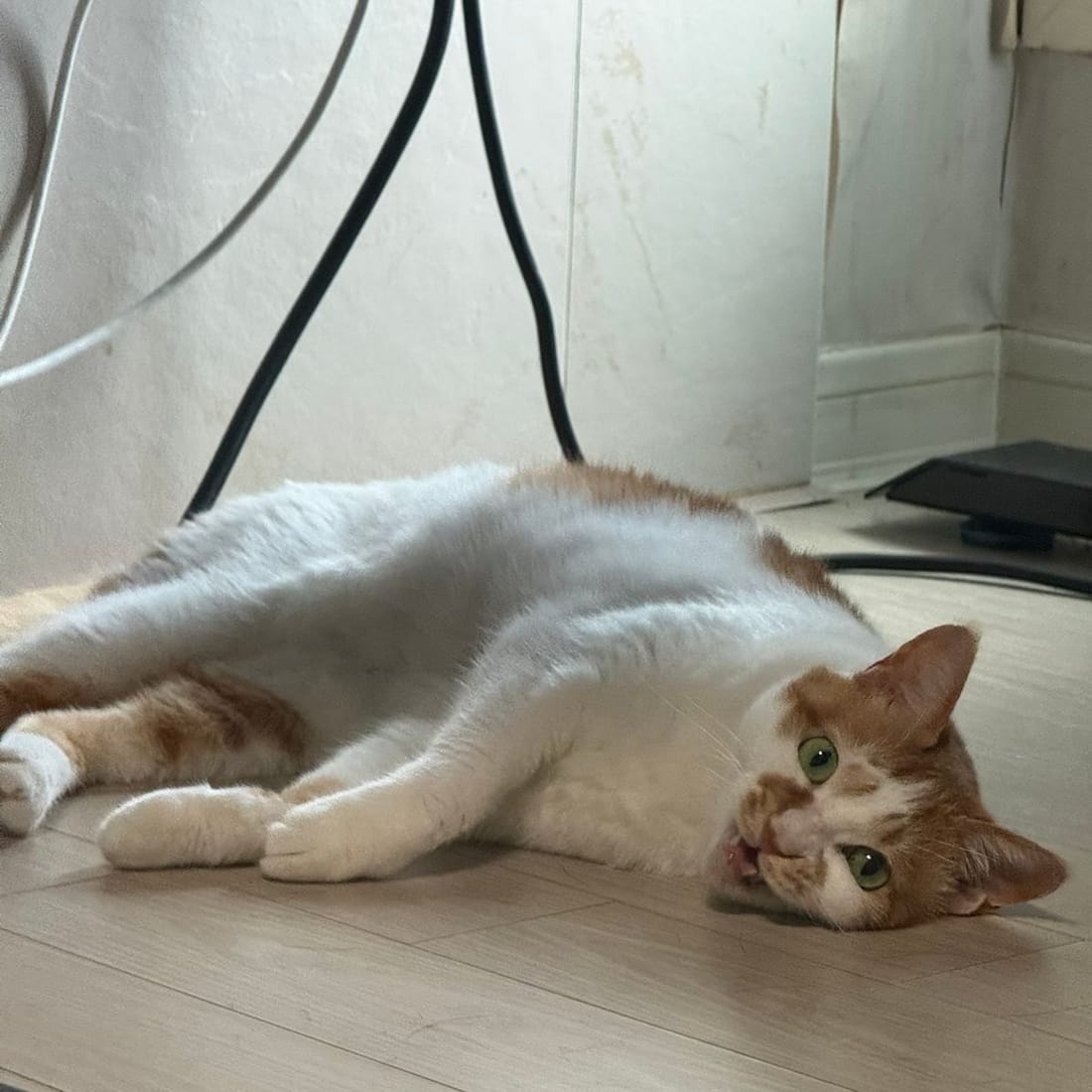
Building trust with a formerly feral cat is measured in months and years, not days, and the biggest mistake is pushing for progress on your schedule instead of the cat’s. Our first cat, Yuja, took two weeks to come out from behind the washing machine and four years before she’d let us touch her paws. Six years in, she still hisses if you pet her twice in a row. That’s not a failure. That’s the pace, and once you accept the pace, everything gets easier.
Here’s what the timeline actually looked like for us, and what you can borrow from it.
Weeks 1–2: Let them disappear
Yuja came to us as a formerly street cat who had been rescued and cared for by family before she landed with us. The moment she arrived, she vanished behind the washing machine and stayed there for two weeks straight.
We did not coax her out. We didn’t reach in, didn’t shine a light, didn’t sit and stare. Instead we moved her food and water bowls behind the washing machine so she could eat without leaving her safe zone. That single decision mattered more than anything else we did that first month. She learned that this new place fed her and then left her alone.
If your cat picks a hiding spot, don’t treat it as a problem to solve. Treat it as their base camp. A cat that has a reliable retreat comes out sooner than one that’s constantly being hunted out of every corner.
Two practical things for this stage:
- Keep the room small if you can. A single quiet room beats free run of the house.
- Feed on a schedule near their hiding spot so they associate you (or at least your footsteps) with food.
Months 1–6: Build a routine they can predict
Feral-raised cats are wired to read patterns for survival. You can use that. Once Yuja started eating, we kept everything boringly consistent — same feeding times, same bowl spot, same slow movements.
This is also where we learned about her feeding quirks, which are tangled up with trust. Yuja won’t eat a full meal at once; she picks at it over several visits. If food sits out past 12 hours, she’ll refuse it, then eat it too late and throw it up. So we started giving her fresh food each time and washing and drying the bowl between meals. The vomiting stopped. We’d assumed it was stress, but it turned out to be plain fussiness.
Why does this belong in a trust article? Because a cat that eats well is a cat whose nervous system is settling. Feeding is where you prove, meal after meal, that you’re safe and reliable. Get that right and everything else has room to grow.
Year 1–2: Presence without pressure
By the end of year one, Yuja was moving around the house but bolting from touch. Anyone who’s had a shy cat knows this stage — they’re around but not with you.
The move here is to be present without demanding anything. We sat in the same room and ignored her. Read, worked, watched TV. No eye contact, no reaching. Cats read direct staring as a threat, so we’d do slow blinks and then look away.
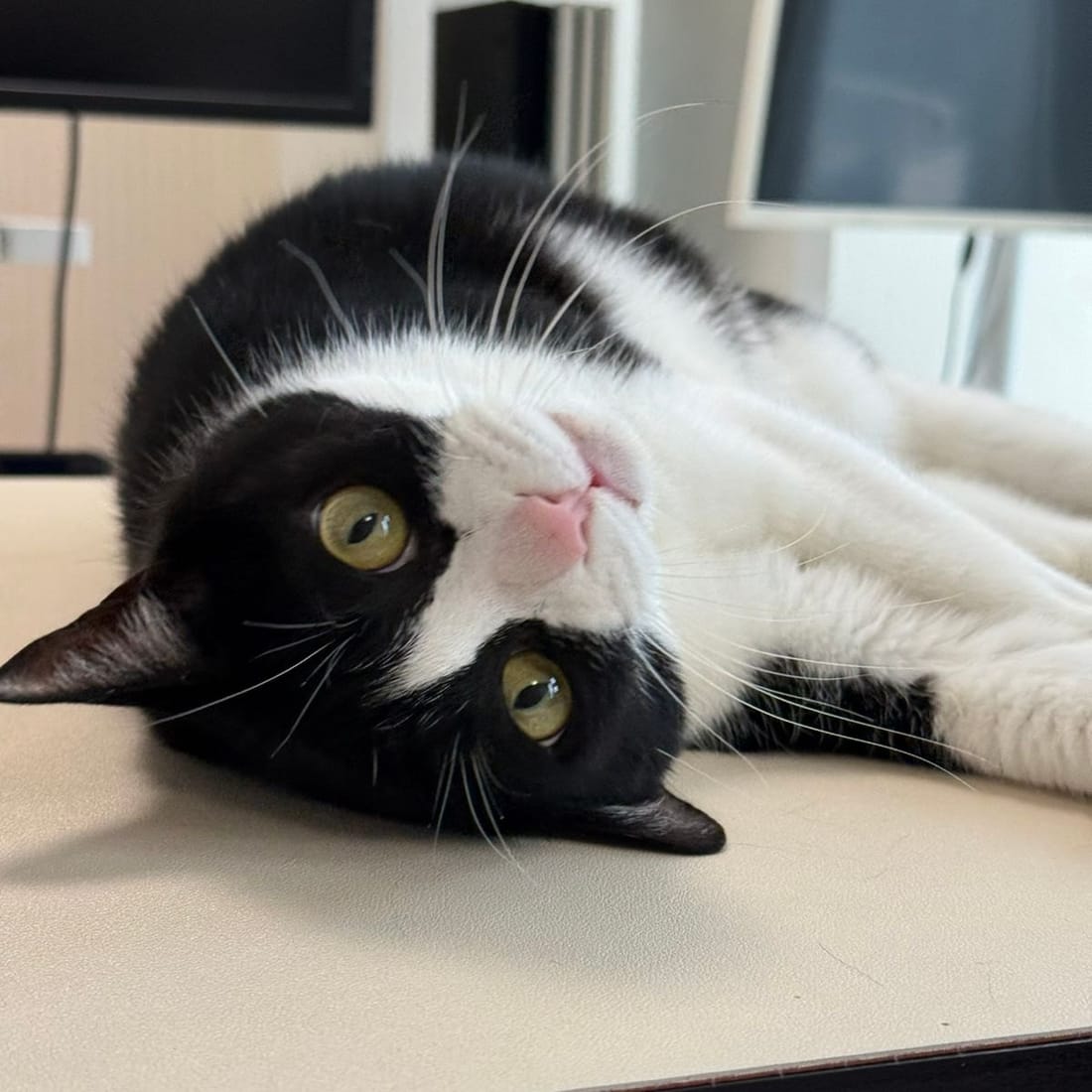
Compare this to our second cat, Mochi, a tuxedo who rolls over the second you walk past and headbutts your hand for scratches. Mochi trusted fast; Yuja needed years. Same house, same food, same people — completely different timelines. If you have a confident cat and a shy one, do not measure the shy one against the bold one. It’ll only frustrate you and rush them.
Year 3–4: The paw milestone
This is the stretch where progress feels invisible and then suddenly isn’t.
For the first few years, brushing a single fingertip against the fur on Yuja’s paw got us bitten, and she’d disappear for three days afterward. Paws are one of the most protected zones on a nervous cat, so we backed off completely and let touch happen on her terms — a cheek here, a chin scratch there, always ending before she wanted us to.
It took four full years before we could actually rest a hand on her paw. Not hold it, not squeeze it. Just touch it and have her tolerate it. That’s the honest headline: four years for one paw.
And here’s the limit we still live with: we’ve never been able to trim her claws properly in six years. She hisses, she nips, she’s gone. We manage the claws other ways and accept that this particular battle may never be won. Trust doesn’t mean the cat becomes a different animal. It means the animal you have feels safe with you.
Year 5–6: Trust with an asterisk
Where we are now: Yuja lets us touch her paws, comes for affection on her own, and lives calmly in a full house. But she’s what people call a tsundere cat — she wants to be petted, and then bites and runs when it goes on too long. Pet her twice in a row and you’ll get a hiss.
We read that as her telling us where the line is, and we respect it. That respect is why she keeps coming back. A cat that trusts you isn’t a cat that tolerates unlimited handling — it’s a cat that knows you’ll stop when they ask.
One note worth keeping in mind: if a cat that’s been steady for years suddenly won’t let you near a body part they used to allow, that can point to pain rather than personality, and a vet visit sorts it out fast. Behavior that’s consistent from day one is temperament. Behavior that changes overnight is worth a look.
What actually moved the needle
If you strip our six years down to what mattered:
| What we did | Why it worked |
|---|---|
| Fed near the hiding spot | Removed the choice between eating and safety |
| Kept routines identical | Gave a survival-wired brain something predictable |
| Sat nearby, ignored her | Presence without the threat of being grabbed |
| Ended every interaction early | Taught her we’d always stop before she panicked |
| Accepted the claw limit | Stopped forcing a battle that damaged trust |
None of this is fast, and I want to be honest about that. If you’re two months in and your cat still won’t come out, you are not behind. You’re right on time for a lot of formerly feral cats.
The goal isn’t a lap cat by Christmas. It’s a cat who stops treating your presence as a threat — and then, years later, walks up on their own to headbutt your hand. When it finally happens, you’ll understand why the slow version was worth it.
This article is general information from a cat owner, not veterinary advice. Talk to your vet about your cat's specific situation.