Should You Leave Dry Food Out All Day?
Yes, you can leave dry food out all day — kibble is shelf-stable and won’t spoil in a normal room. The real question isn’t safety, it’s your cat. Free-feeding is fine for a grazer who self-regulates, and a mistake for a cat that overeats or one so picky they refuse stale kibble. Here’s how to tell which yours is.
Is it actually safe to leave kibble out?
Dry food is designed to sit at room temperature. It won’t grow bacteria the way wet food does within a couple of hours. So from a pure spoilage standpoint, a bowl of kibble on your counter is fine for the day.
The catch is quality, not safety. The fats sprayed on kibble for flavor go stale with exposure to air, warmth, and humidity. You can’t always smell it, but a picky cat can. That’s why some cats hit a fresh bowl eagerly and then ignore the same food six hours later.
Our older cat, Yuja, is exactly this kind of drama. She’ll eat a few bites, wander off, and come back over the next couple hours — but once food has been sitting past the 12-hour mark, she refuses it, and if she does eat it late she throws it up. We ended up refreshing her bowl and washing it every meal, which fixed the vomiting. So “leaving it out all day” technically worked, but stale kibble caused its own problems.
When free-feeding works well
Leaving dry food out all day makes the most sense for cats who graze — a few bites here, a nap, a few bites later. If your cat has held a steady weight for years on an open bowl, there’s no reason to change it.
Free-feeding is a good fit when:
| Situation | Why it works |
|---|---|
| Single cat, steady weight | You can eyeball how much disappears each day |
| Cat naturally nibbles | Matches how cats hunt — small, frequent “kills” |
| You’re gone long hours | No one goes hungry waiting for a meal |
| Cat isn’t food-motivated | No incentive to gorge |
If that’s your cat, the only maintenance is dumping and refilling once a day so the food stays fresh. Grazing is normal, by the way — if you’re worried about it, we wrote about why cats only eat a few bites at a time.
When you should NOT leave food out all day
Free-feeding falls apart in a few common situations. The biggest one is multi-cat households where you can’t tell who’s eating what.
Skip the open bowl if:
- One cat overeats. Some cats — especially those with a rough start on the street — treat a full bowl like it might vanish, and eat until it’s gone. An always-full bowl feeds that.
- You have a picky cat and a hungry one. With food out constantly, the confident eater cleans up whatever the picky one leaves. We deal with this daily and had to build a whole routine to stop one cat from stealing the picky cat’s food.
- You need to track appetite. This is the sneaky one. With a shared open bowl, a cat can stop eating for two full days before you notice. Appetite loss is one of the earliest signs something’s wrong, so if a cat suddenly eats far less than usual, that’s worth a vet visit rather than a wait-and-see.
- Your cat is on a weight or prescription plan. Portion control is the whole point, and a bottomless bowl defeats it.
Free-feeding vs. scheduled meals: quick comparison
| Free-feeding | Scheduled meals | |
|---|---|---|
| Portion control | Weak | Strong |
| Spotting appetite changes | Hard | Easy |
| Best for | Grazers, single cats | Overeaters, multi-cat, diets |
| Effort | Low daily | Two to three set times |
| Food freshness | Sits out longer | Fresh each meal |
There’s no universally “right” answer. A grazer on a scheduled plan will just yell at you between meals, and an overeater on free-feeding will get round. Match the method to the cat.
The hybrid we actually use
We don’t do pure free-feeding, and we don’t do rigid meals either. With two cats who eat completely differently, a middle path works better.
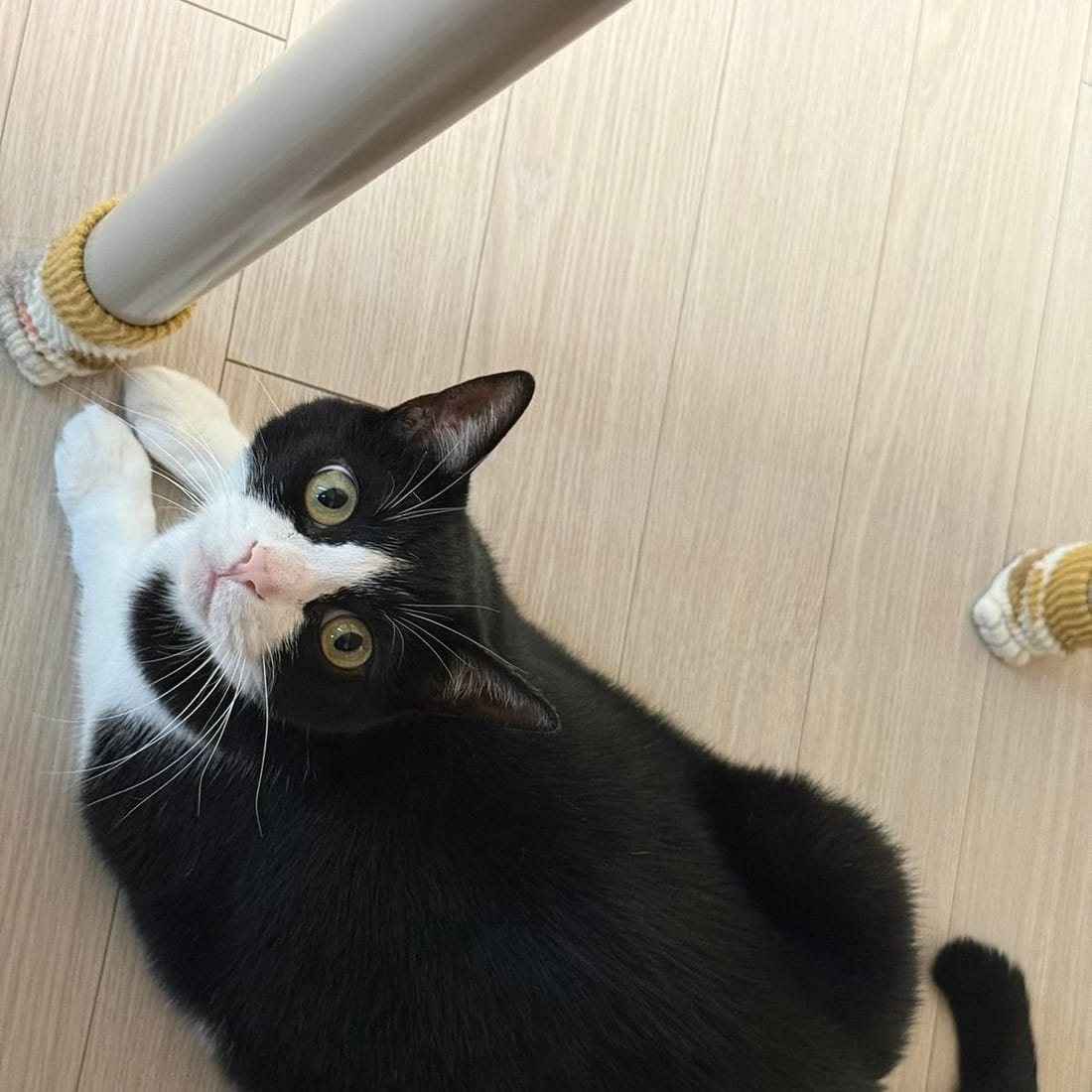
Our system: a measured amount of dry food per cat, offered fresh, and swapped out rather than topped off. Yuja gets small portions she can graze through, and because she won’t touch food that’s been sitting too long, we refresh her bowl instead of leaving one pile out for 24 hours. Mochi, our tuxedo, eats reliably and would happily hoover up leftovers — so we don’t give her the chance.
This means we’re not literally leaving one bowl out all day. We’re leaving food available during the day but keeping it fresh and portioned. It’s a little more work, but it solved both the vomiting and the food-stealing.
If your two cats eat as differently as ours, our full breakdown of feeding one picky cat and one that eats everything goes deeper into the setup.
A few practical rules if you do leave it out
If free-feeding suits your cat, keep it clean and boring:
- Dump and refill once a day. Don’t just top off — old kibble migrates to the bottom and goes stale under the fresh stuff.
- Wash the bowl regularly. Kibble oils build a sticky film that turns rancid and can bother sensitive cats.
- Measure it out. Even for a grazer, pour a day’s portion rather than an endless supply. It keeps you aware of intake.
- Watch the trend. Note roughly how much disappears. If a cat that always cleared a bowl suddenly leaves food for a day or two, don’t shrug it off.
- Store the bag sealed. Kibble left open in the bag goes stale fast, which makes even fresh servings less appealing to a fussy cat.
Leaving dry food out all day is safe for the food and fine for plenty of cats. The decision comes down to whether your cat can be trusted with a full bowl and whether you can still tell when something’s off. If both are true, graze away. If not, portion it — your future self will thank you the first time you catch a skipped meal early.
This article is general information from a cat owner, not veterinary advice. Talk to your vet about your cat's specific situation.