How to Stop One Cat From Stealing the Picky Cat's Food
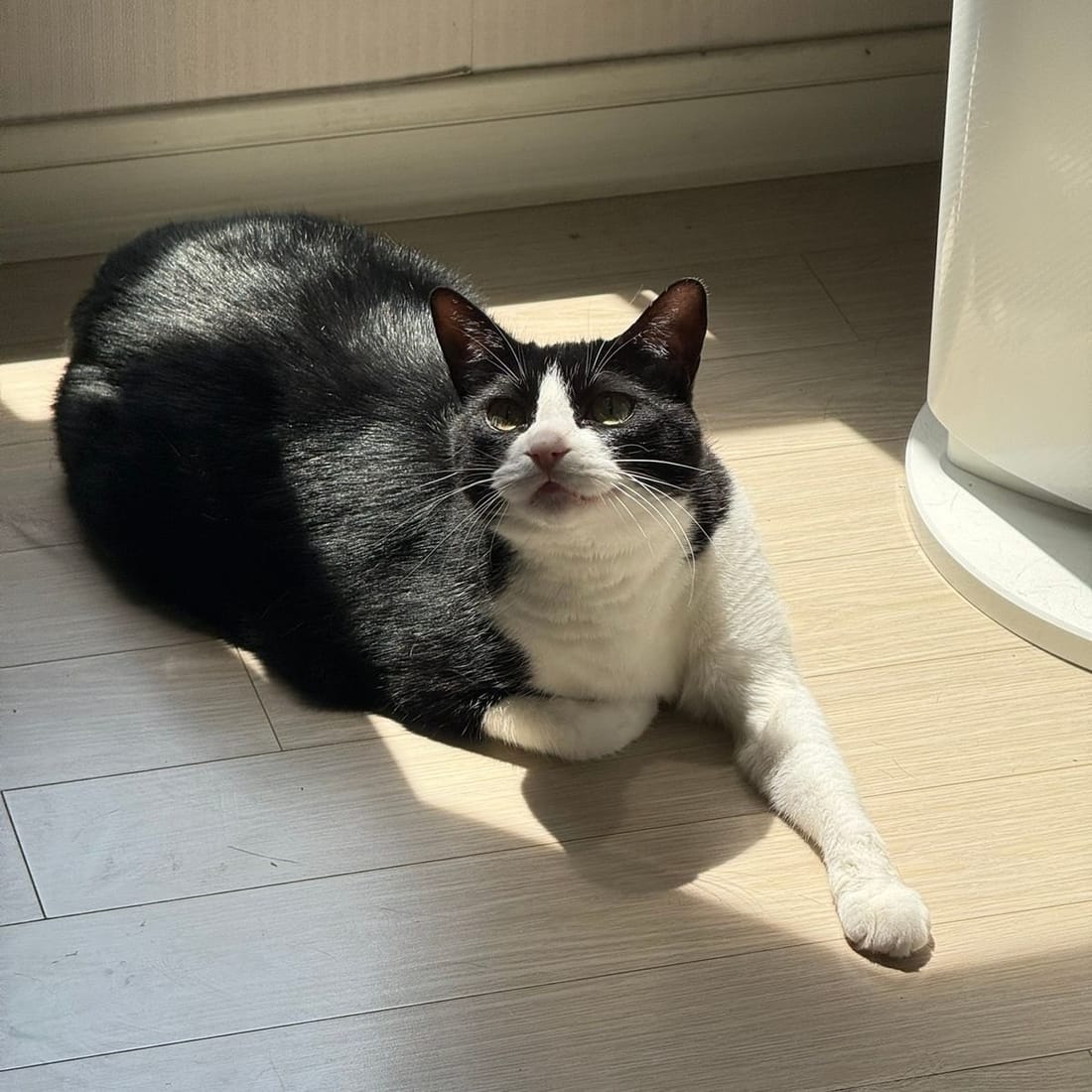
Feed them in separate rooms with the door closed, and pick up the picky cat’s bowl after 15 to 20 minutes so the grazer never gets a shot at the leftovers. That’s the whole trick. Free-feeding does not work in a house where one cat picks at food all day and the other one hoovers up anything left in a bowl. If you want the picky one to actually eat, you have to control both the space and the clock.
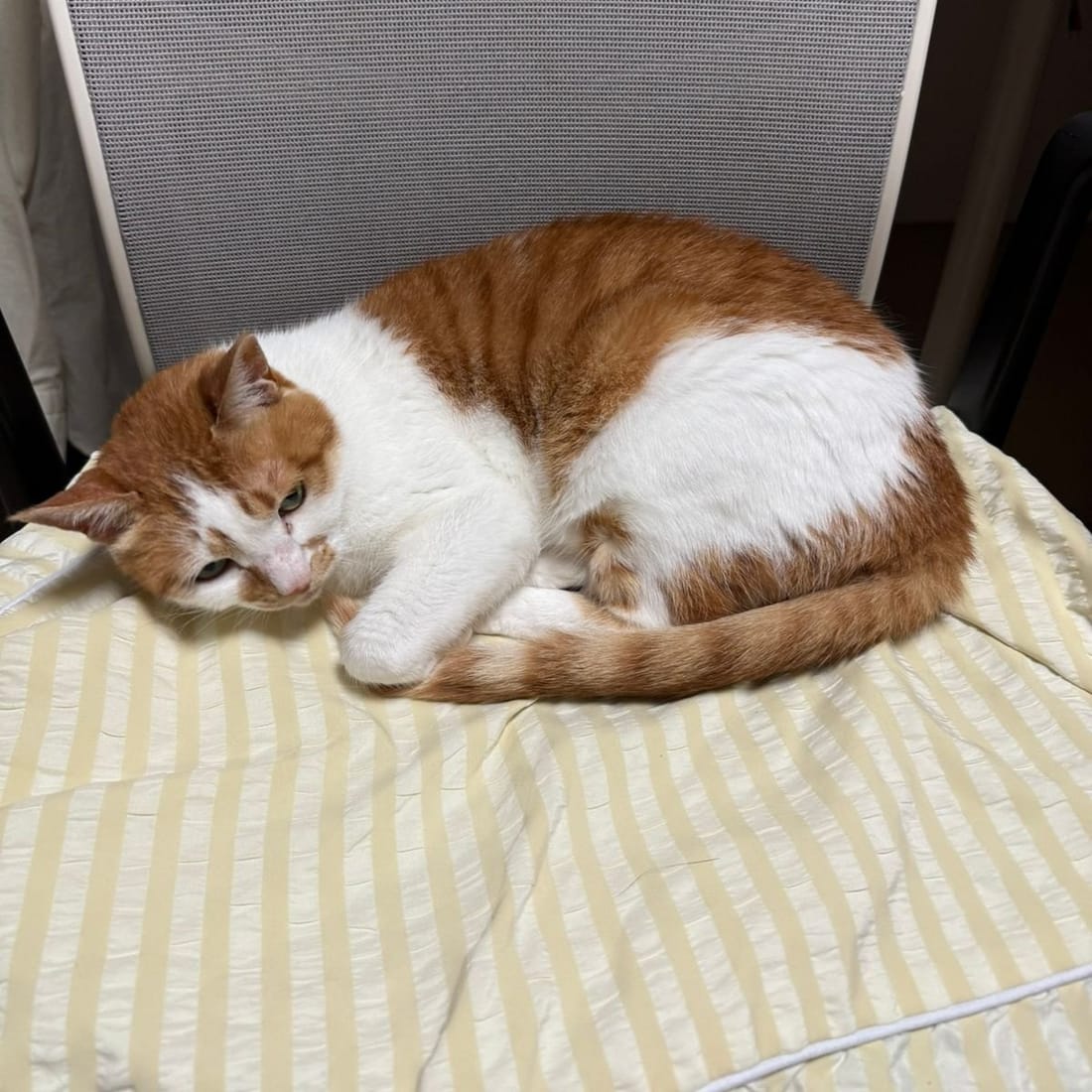
We live this every day. Yuja eats in tiny installments and wanders off between bites. Mochi will happily finish Yuja’s untouched breakfast if we’re not paying attention. Left to their own devices, Yuja would eat less and less while Mochi got round.
Separate the eaters, not just the bowls
Two bowls a few feet apart doesn’t cut it. A confident cat will guard both, or just walk over and eat from the one that isn’t hers. Real separation means a barrier.
What works for us:
- Two rooms. The grazer eats in one room, the picky cat in another, both with the door shut for the length of the meal.
- Timed feeder for one cat only. Microchip-activated feeders (SureFeed is the well-known one, sold on Chewy and Amazon) open only for the cat wearing the matching chip or collar tag. Overkill for some households, worth it if you can’t supervise.
- Height. Some people feed the picky cat up on a counter or cat tree the grazer won’t jump to. This depends entirely on your cats. Mochi would follow Yuja anywhere, so height alone never solved it for us.
The point is the same in all three: while the slow eater is working through her food, the other cat physically cannot reach it.
Put the food on a clock
A picky eater’s biggest enemy isn’t the other cat — it’s the food sitting out getting stale. Yuja nibbles, walks away, comes back, nibbles more. That’s normal for her. But there’s a hard limit.
Once food has been sitting out past roughly 12 hours, Yuja won’t touch it fresh — and if she does eat it late, she throws it up. We learned this the annoying way. So now the routine is:
- Put food down at a set time.
- Give her 15 to 20 minutes of first-pass eating, alone, door closed.
- Leave it a while longer if she’s still grazing, but swap in fresh food and a clean, dry bowl at the next meal rather than topping off the old stuff.
Washing the bowl and drying it every time made a real difference for us — the vomiting basically stopped once we treated each meal as a reset instead of a running buffet. For your grazer, scheduled meals matter too. A cat that knows food shows up twice a day at the same time is far less likely to camp out waiting to raid the other bowl.
Match the schedule to each cat’s style
Picky and confident eaters want opposite things. Here’s roughly how we split it:
| Picky grazer (Yuja) | Steady eater (Mochi) | |
|---|---|---|
| Meal length | 15–20 min alone, then optional extra time | 5–10 min, eats it all |
| Portion | Smaller, refreshed each time | Full portion at once |
| Bowl | Washed and dried every meal | Washed daily |
| Location | Quiet, closed room | Anywhere calm |
You don’t need identical routines. You need routines that don’t overlap. When Mochi is done and out of the room, Yuja gets her space back.
Why the grazer is eating everything
Before you blame greed, rule out a couple of things. A cat that suddenly starts inhaling food, including food it never cared about, and losing weight or acting hungry all the time can be dealing with something medical — so if the appetite shift came on fast, get it checked rather than just re-managing bowls. For most cats, though, it’s simpler: the food is there, so they eat it.
Common reasons the grazer wins:
- Free-feeding. Food always available means whoever’s hungriest, most often, eats most.
- The picky cat eats slowly, leaving long windows of unguarded food.
- Same room, same time. Even calm cats will opportunistically finish an abandoned bowl.
- Higher-value food in the picky cat’s bowl. If you’re tempting the picky one with something richer, of course the other cat wants it too.
Mochi isn’t being naughty. She’s just a cat who likes food, in a house where food used to be sitting around. Take away the opportunity and the “stealing” mostly disappears.
The picky-cat problem underneath
Sometimes people ask this question when the real issue is that the picky cat barely eats anything, so the grazer looks like the villain. If your slow eater is losing weight, the food theft is a symptom, not the disease.
Yuja is genuinely, stubbornly picky in a way that has nothing to do with Mochi. She’ll eat a new food eagerly the first few times — and then, the moment we commit and buy the big bag, she refuses it completely and would rather go hungry. We’ve thrown out more than one full bag this way. So when we protect her food from Mochi, we’re also making sure the small amount she will eat actually goes into her, not her sister.
If that sounds familiar, work both angles at once: separate feeding so she’s not competing, and figure out what she’ll reliably eat. Buy small bags to test. Don’t stockpile a food until she’s proven she’ll eat it past the novelty stage.
A routine you can actually keep
Here’s the version we run, stripped down so it survives busy weeks:
- Morning: both cats fed in separate rooms, doors closed. Mochi eats fast and gets let out. Yuja gets her 15–20 minutes, then we leave her bowl in the closed room if she’s still grazing.
- Evening: repeat. Fresh food, clean dry bowl for Yuja.
- Never leave a bowl accessible to both cats between meals.
Is it foolproof? No. If we forget to shut a door, Mochi finds Yuja’s breakfast within minutes. And Yuja still refuses foods for reasons only she understands. But the actual stealing — the part you can control — is solved by space and timing, not by hoping your cats work it out. They won’t. One likes food, one is fussy, and the manager in that arrangement is you.
Start with closed doors and a 20-minute meal window this week. It’s the single change that fixes the most, and it costs nothing but remembering to shut a door twice a day.
This article is general information from a cat owner, not veterinary advice. Talk to your vet about your cat's specific situation.