Will a Rescue Cat Ever Sit on Your Lap?
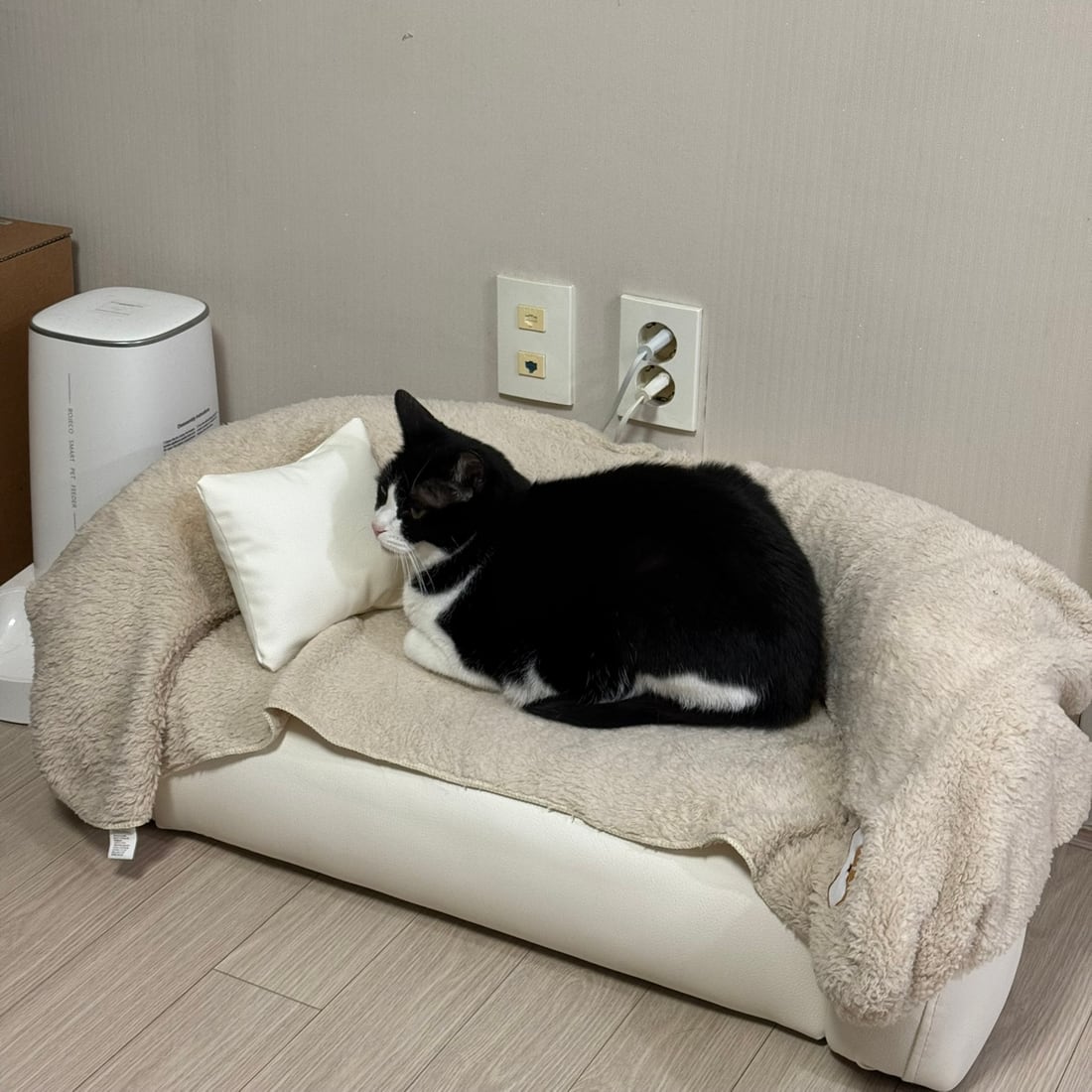
Maybe. Some rescue cats climb into your lap within weeks, and some never do it in their whole lives. It depends far more on the cat’s wiring than on your patience or your technique. We have two cats who came to us together, and after six years one is a lap cat and the other has never once sat on us.
So if you’re waiting, the honest answer is: it might happen, and it might not — and neither outcome means you did something wrong.
What actually decides whether a cat becomes a lap cat?
Temperament, mostly. A lap is one of the least defensible spots a cat can choose. You’re above them, they’re partly pinned, and the escape route runs straight down. A confident, people-oriented cat shrugs that off. A cautious one weighs it every time and usually says no.
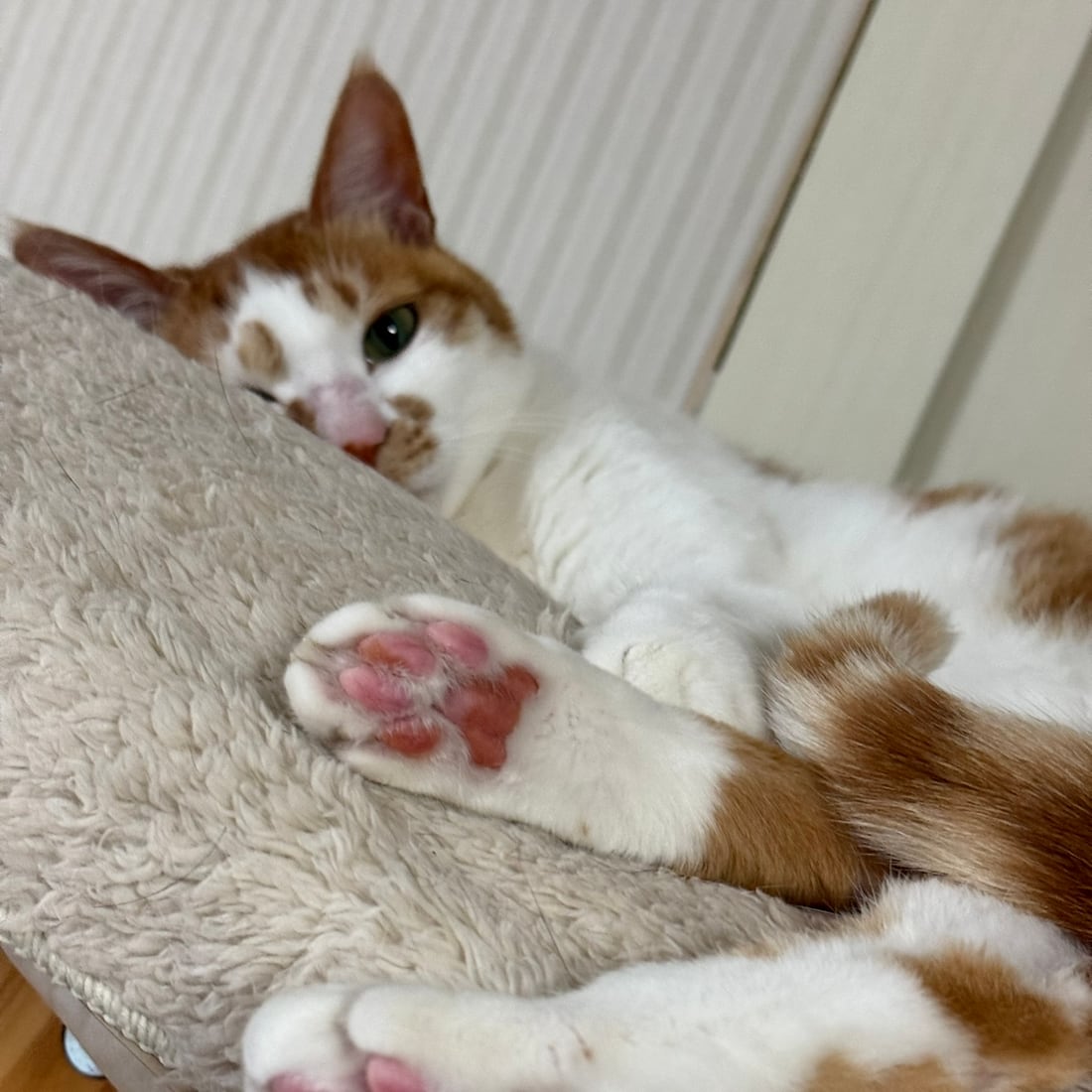
Our two make the case better than any theory. Mochi, our tuxedo, rolls over if you so much as walk past her. She headbutts, paws at us to be scratched, and meets us at the door every single day. Yuja, her orange-and-white older sister, wants attention too — but on a hair trigger. She’ll ask to be petted and then bite and bolt if it goes on too long.
Same house, same people, same six years. One is a natural lap candidate and the other simply isn’t built for it. That’s the single biggest variable, and it’s not one you control.
| Factor | Helps a cat become a lap cat | Works against it |
|---|---|---|
| Temperament | Naturally social, seeks contact | Cautious, easily overstimulated |
| Escape anxiety | Comfortable being “trapped” | Needs a clear exit at all times |
| Early handling | Gently handled young | Little or rough handling |
| Your approach | Low pressure, cat sets pace | Grabbing, holding, forcing |
You can influence the bottom two rows. The top two came with the cat.
How do you make your lap more inviting without forcing it?
You make the lap boring and safe, then you wait. The goal isn’t to get the cat up there — it’s to remove every reason not to.
A few things that genuinely help:
- Sit still and low. A cat is more likely to approach a person who’s settled on the couch than one moving around.
- Don’t reach. When she comes close, resist the urge to grab. Let her investigate your leg, your blanket, the warmth, on her own clock.
- Let her leave instantly. No holding, no “just one more second.” The cat that trusts she can leave is the cat that comes back.
- Reward proximity, not just contact. If she sits beside you instead of on you, that counts. Treat it as the win it is.
The thing we’d underline from six years of this: the fastest way to lose ground is to push. The mistakes we’ve made with Yuja were always the times we moved too fast, and each one cost us weeks. It’s the same principle behind earning a formerly feral cat’s trust over a long timeline — you go at the cat’s speed or you don’t go at all.
What if my cat never sits on my lap?
Then you have a cat that shows love in other ways, which is most cats. Lap-sitting is one dialect of affection, not the whole language.
Yuja has never sat on us and probably never will. But she has her own vocabulary. She’ll come sit near us in a loaf, and — this is the part that surprised us — she starts purring before we even touch her, as a way of asking to be scratched. For her, the purr isn’t “I’m content,” it’s “look at me, come do this.” That’s not less love than a lap cat. It’s just Yuja’s version.
If your cat does any of these, you already have the relationship:
- Sleeps in the same room, or pressed up against you
- Follows you between rooms
- Blinks slowly at you, or headbutts
- Sits nearby and watches you
- Eats calmly while you’re in the room
None of those require a lap. And plenty of otherwise cuddly cats never sit on one simply because they don’t like the confinement — being held or contained makes them feel stuck, not loved.
Does age or time change anything?
Sometimes, slowly. Cats do often soften as they settle in and get older, and a cat that hid from you at month one can be sitting three feet away at year three. We’ve watched exactly that arc with Yuja — from two weeks behind a washing machine to letting us touch her paw four years later.
But softening isn’t the same as becoming a lap cat. Yuja got dramatically friendlier and still never made the jump onto a lap. The change was real; the ceiling was also real. If your cat is trending warmer year over year, that’s the win to celebrate, whether or not it ever ends with her curled up on your knees. We wrote more about that gradual thaw in does a shy cat get friendlier with age.
The honest bottom line
We’d love to hand you a five-step routine that ends with any rescue cat asleep on your lap, but that’s not true, and you deserve the truth. What you can do is make the lap a safe, no-pressure, easy-to-leave place, then let the cat decide.
Mochi decided yes. Yuja decided no, and shows up in a dozen other ways instead. Six years in, we count both as full relationships. If your cat never makes it onto your lap, you haven’t failed — you’ve just got the other kind of cat. Meet her where she is.
This article is general information from a cat owner, not veterinary advice. Talk to your vet about your cat's specific situation.