Does a Shy Cat Get Friendlier With Age?
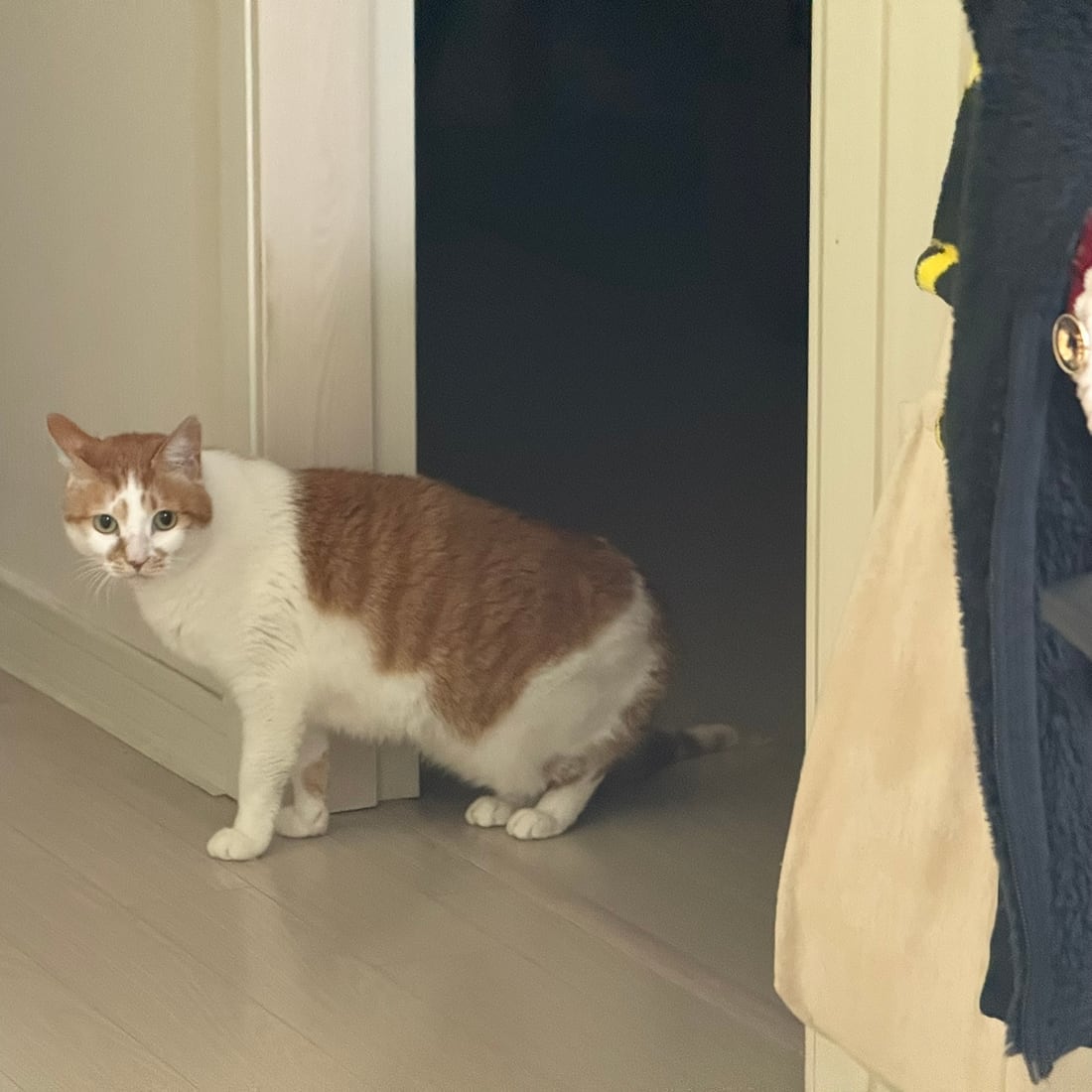
Sometimes, but not the way most people hope. A shy cat usually gets calmer with age rather than cuddlier. The fearful reactions soften, the hiding gets shorter, and trust with familiar people deepens. But a cat who was born wired to be cautious tends to stay cautious about the same things for life. Age smooths the edges; it doesn’t swap out the personality.
I’ve watched this play out for six years with our first cat, Yuja. She’s eight now, and she’s a completely different animal from the one who spent two weeks behind the washing machine when she first arrived. She’s also, in some ways, exactly the same. Both are true at once, and that’s the honest answer to this question.
What “friendlier” actually means for a shy cat
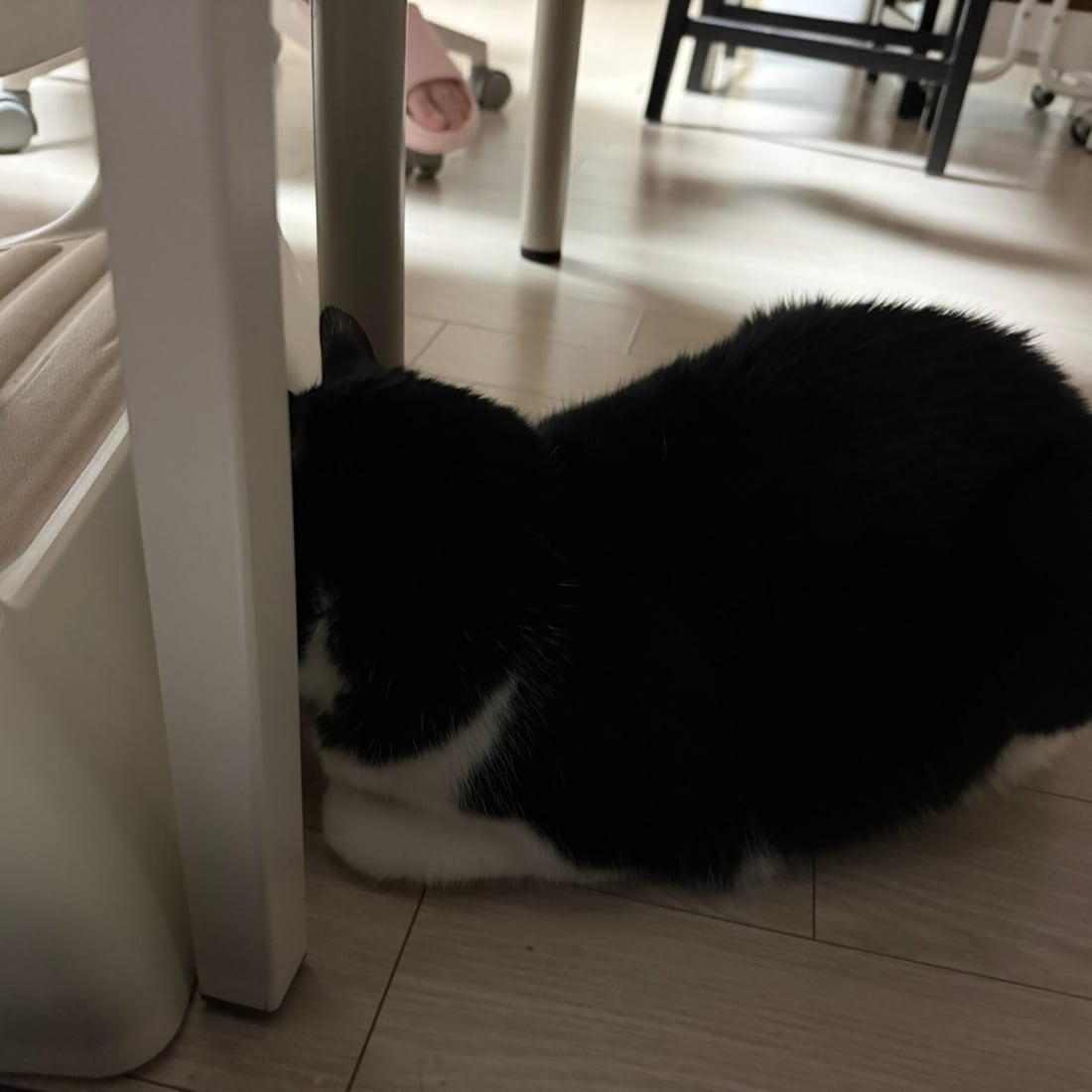
The word “friendly” trips people up. When most people picture a friendly cat, they picture our second cat, Mochi — a tuxedo who flops and rolls the second you walk past, headbutts your shin, and taps you with a paw to demand scratches. She was born that way. No amount of aging turned her into that; she showed up already dialed to eleven.
A shy cat’s “friendly” looks nothing like that, and it never will. For Yuja, friendly means she comes out from under the bed when guests are over, instead of vanishing for three days. It means she sits on the same couch as us. It means she lets me touch her paw — which took four years to earn. That is enormous progress. It is also not a lap cat, and it never will be.
So before you decide whether your cat “got friendlier,” decide what you’re measuring:
- Fear and hiding → these usually shrink with age and stability.
- Tolerance of handling → improves slowly with trust, sometimes for years.
- Active affection-seeking (rolling, headbutting, demanding attention) → this is mostly baked-in temperament. It grows a little, but it rarely appears from nothing.
What age genuinely changes
A few real shifts happen as a cat settles into middle age and beyond.
The startle response calms down. Kittens and young cats are hair-triggers. By six or eight, a cat has seen the vacuum, the doorbell, and the mail carrier enough times that most of it stops registering as a threat. Yuja still hates plastic bag rustling and strangers, but she recovers in minutes now instead of retreating for days.
Routine becomes armor. Six years of the same feeding spot, the same people, the same evening rhythm builds a floor of predictability. Shy cats run almost entirely on predictability. Remove the surprises and you remove most of the fear.
Energy drops. An older cat simply has less fuel for panic and flight. Some of what reads as “she’s gotten sweeter” is really “she’s gotten tired.” That’s not cynical — a calmer cat is genuinely easier to live with and easier to bond with.
What doesn’t change: the core sensitivities. Yuja is still touch-defensive. I can reach her paw now, but two touches in a row and I get a hiss. Six years in, that hasn’t budged, and I’ve stopped expecting it to. The nail trims still don’t happen — she’s the same cat who’d bite over a brushed paw hair, just a slower, mellower version of her.
What speeds it up (and what stalls it)
You can’t rewrite temperament, but you strongly influence how much of it a cat shows. The lever is safety, not affection.
| Helps a shy cat relax | Slows it down |
|---|---|
| Stable daily routine | Frequent household changes |
| Letting the cat set the pace | Forcing handling or holding |
| Hiding spots that are always available | Blocking off retreat areas |
| Low-pressure presence (sit nearby, ignore them) | Direct staring, chasing, grabbing |
| Predictable feeding | Chaotic, high-traffic environment |
The single most useful thing I did with Yuja was give her an escape route and never take it away. When she was hiding behind the washer, I pushed her food and water bowls back there instead of trying to lure her out. Removing the pressure is what eventually let her choose to come out on her own terms.
Chasing affection has the opposite effect. Yuja is a textbook tsundere — she’ll come over asking to be petted, then bite and bolt if I keep going too long. Reading that “stop now” signal and honoring it built more trust than any treat ever did. Every time I stopped before she felt cornered, the next approach came a little sooner.
When a personality change should worry you
Gradual mellowing over months and years is normal aging. A sudden shift is a different story and worth a vet visit rather than a wait-and-see.
If a cat who’s been steady for years suddenly stops letting you touch a specific spot, hides much more, gets snappy out of nowhere, or changes eating and litter habits, that’s often pain or illness talking, not personality. Cats hide discomfort well, and a behavior change is sometimes the first visible sign. A quick checkup rules out the medical stuff fast, and if it turns out to be nothing, you’ve lost nothing.
The key word is sudden. A cat who’s slowly warmed up over three years is doing exactly what shy cats do. A cat who flips overnight is telling you something.
Setting honest expectations
If you adopted a shy cat hoping she’d turn into a Mochi someday, I’d gently reset that. In our house, one cat greets me at the door every single day and the other took four years to let me touch her foot. Both are loved, both are “friendly” by their own measure, and neither is going to become the other.
What you can realistically expect from a shy cat as she ages: less fear, more time spent in the same room as you, deeper trust with the specific humans she knows, and a quieter overall temperament. What you probably shouldn’t expect: a personality transplant into a demonstrative lap cat.
The good news is that the shy-cat version of trust is worth a lot precisely because it’s hard-won. When Yuja walks across the room and settles near me on her own, I know exactly what that cost her to offer. Give it time, keep the routine boring and safe, and let her decide. Most shy cats do soften. They just do it on a timeline you don’t control.
This article is general information from a cat owner, not veterinary advice. Talk to your vet about your cat's specific situation.