Why Does My Cat Sleep Pressed Against Me?
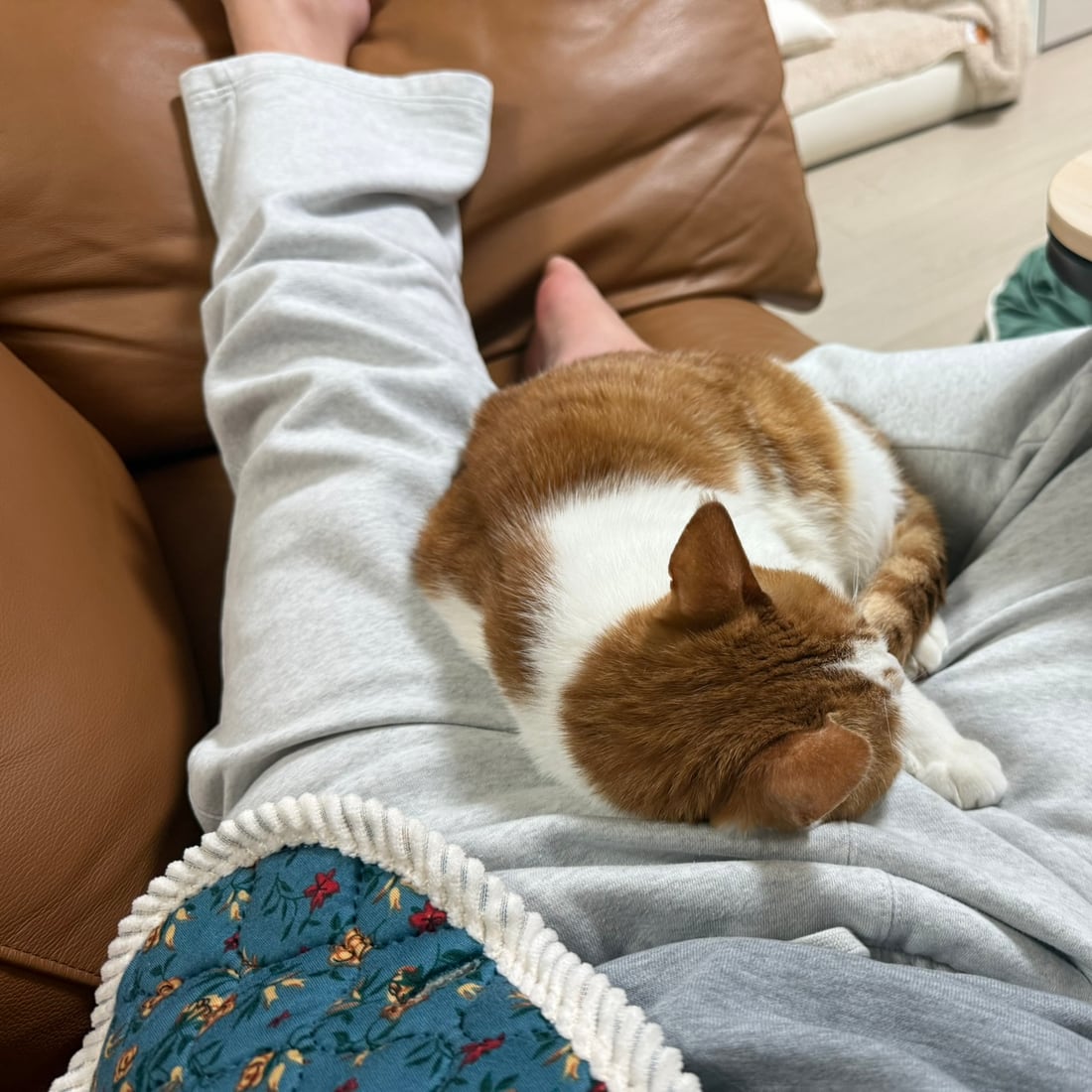
Your cat sleeps pressed against you because you’re warm, safe, and familiar. Sleep is when a cat is most defenseless, so choosing your body over a quiet corner is one of the clearest signs she trusts you and reads you as part of her territory. It’s affection and security rolled into one.
That’s the short answer. The longer one is more interesting, because not every cat does this — and the reasons a cat does or doesn’t tell you a lot about her personality.
What “pressed against me” actually means
Cats don’t sleep next to things they don’t trust. In the wild, a sleeping cat is an easy target, so where a cat sleeps is a security decision first. When yours picks the crook of your knee or wedges into your armpit, she’s outsourcing her safety to you.
There are usually three overlapping reasons:
| Reason | What’s driving it | How to tell it’s this |
|---|---|---|
| Warmth | Cats run warm (around 101°F) and seek heat sources | Prefers you in cold months, moves to sunny spots in summer |
| Safety | Your body blocks one side; your movement is a built-in alarm | Sleeps facing outward, picks spots she can leave fast |
| Bonding | You smell like home; contact reinforces the group scent | Purrs, kneads, or headbutts before settling |
Most of the time it’s all three at once. The warmth gets her onto the bed; the safety keeps her there; the bond is why it’s your bed and not a random warm laptop.
Why does one of my cats cuddle and the other won’t?
This is the part people underestimate. Sleeping style is personality, not a scoreboard of who loves you more.
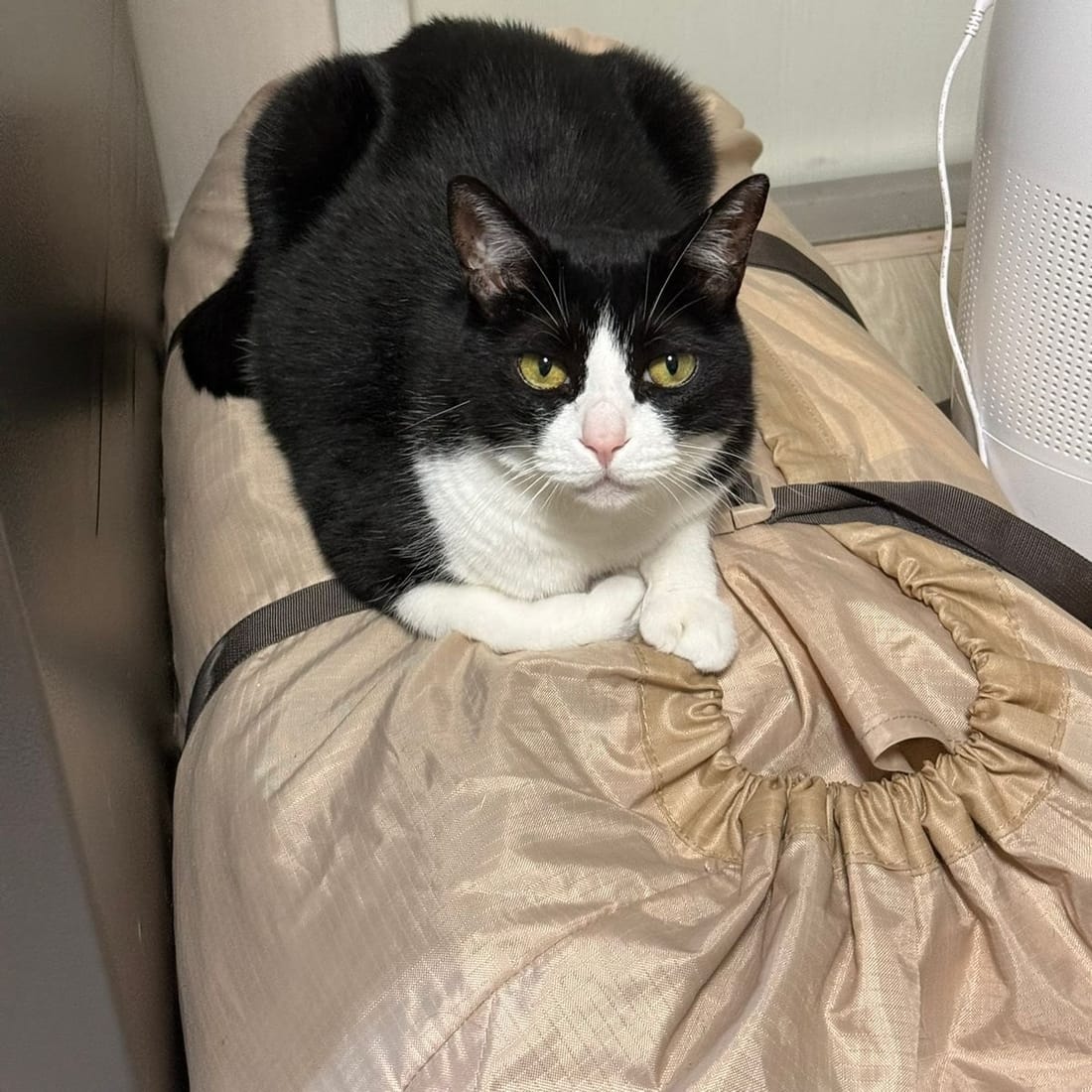
Our two cats are the perfect example. Mochi, our tuxedo, is a full-contact sleeper — she’ll flop against a leg, roll over for a belly rub mid-nap, and meet us at the door every single day. Yuja, our orange-and-white first cat, took four years just to let us touch her paws, and even now she sleeps near us, not on us. Same household, same people, completely opposite sleeping habits.
Neither one is more bonded. Yuja is just a cat who keeps an exit route. If your cat sleeps three feet away instead of glued to your ribs, that’s often the same thing — a slightly more cautious animal, not a colder one. If you’ve got two cats built this differently, we wrote about whether opposite personalities are normal.
Where your cat chooses to sleep says something
The exact spot is a clue to what she’s getting out of it.
- On your chest or stomach — she wants your warmth and heartbeat; often the most bonded, secure sleepers.
- Against your back or side — she wants contact but her own space to bolt; very common with slightly nervous cats.
- Between your feet or on your legs — warmth plus your movement as an early-warning system. Popular with cats who like closeness but not being trapped.
- On your pillow or by your head — drawn to your scent and the warmth your head throws off.
- Near you but not touching — trust without the need for contact. Totally normal, especially for former strays.
A formerly feral cat working up to any of these is a big deal. It rarely happens fast — closeness usually lands somewhere in a multi-year trust timeline, not in the first few weeks.
Is it okay to let her sleep against me?
For most people, yes. Co-sleeping with a cat can lower stress for both of you and it deepens the bond. But it’s a personal call, and there are real reasons to skip it:
- You have cat allergies or asthma.
- You’re a light sleeper and a 3 a.m. repositioning wrecks your night.
- Your cat has fleas or an untreated skin issue.
- You’ve got a kitten under a few months old, who could get squished.
If you want the closeness without the disruption, put a warm blanket or a heated bed right next to your pillow. A lot of cats will take the warm spot two feet away and everyone sleeps better. Yuja does exactly this — she wants to be in the room, not on the person, and a soft spot at the foot of the bed suits her fine.
When a sudden change is worth noticing
Cuddling habits shift with the seasons — more contact when it’s cold, more sprawling apart in summer heat. That’s normal and nothing to worry about.
What’s worth a second look is a sudden, out-of-character change with no seasonal reason: a cat who always slept pressed against you now hiding and sleeping alone, or a normally independent cat suddenly clinging and never leaving your side. Behavior swings like that can track with pain or feeling unwell, so if it comes on fast and sticks around, a vet visit is the quick way to rule things out. A gradual drift as your cat ages or the weather changes is just her being a cat.
The bottom line
A cat pressed against you is telling you she feels safe enough to be helpless next to you — which, for an animal wired to watch its own back, is about the biggest compliment on offer. If yours does it, enjoy it. If yours sleeps a polite arm’s length away instead, that’s her version of the same trust, just filtered through a more cautious personality.
Six years in, we’ve got one of each under the same roof. We stopped keeping score a long time ago.
This article is general information from a cat owner, not veterinary advice. Talk to your vet about your cat's specific situation.