Signs a Rescue Cat Is Starting to Trust You
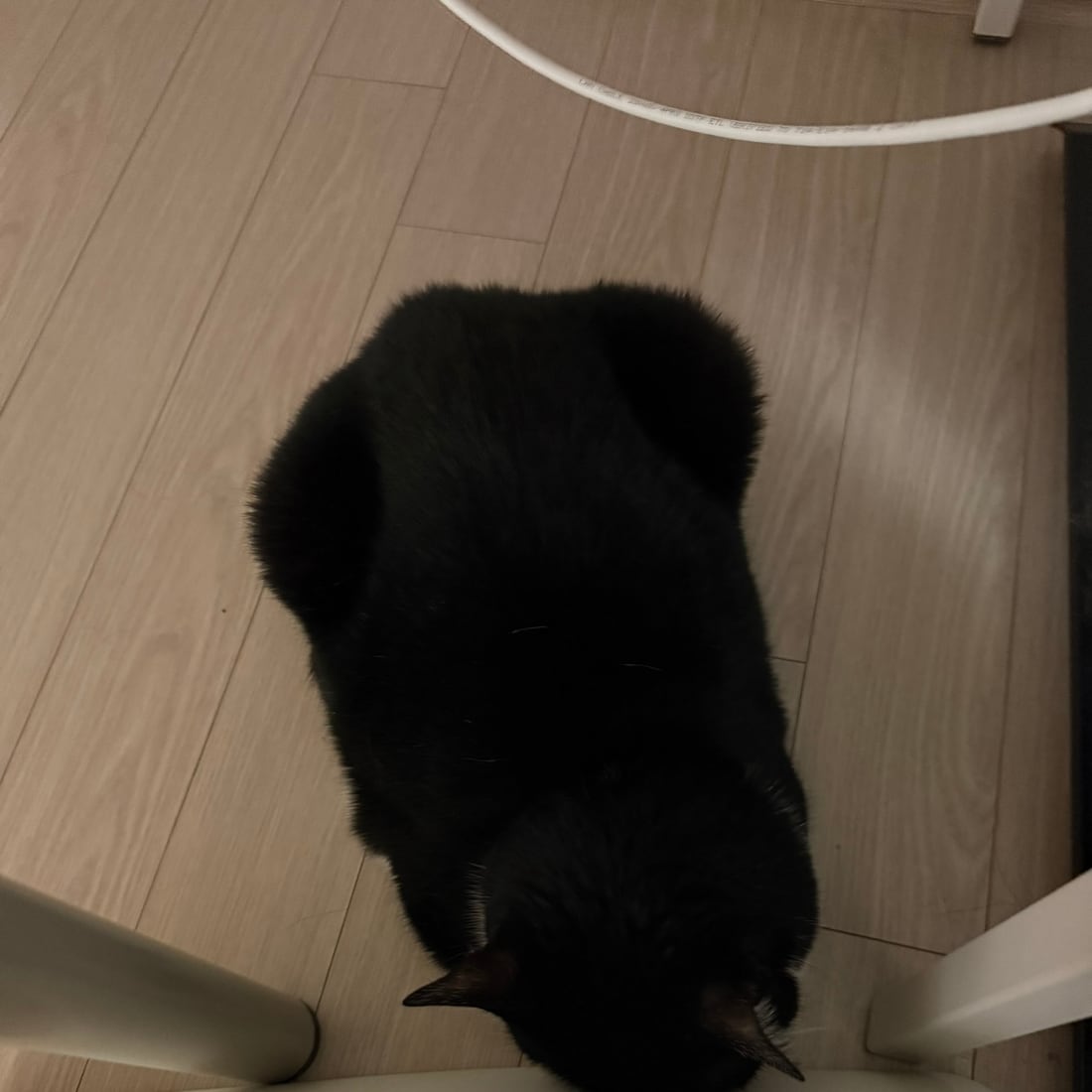
The clearest early sign a rescue cat trusts you isn’t a lap cuddle — it’s that she eats, drinks, and uses the litter box while you’re around. Trust in a scared cat shows up as shrinking distance and dropping vigilance, not sudden affection. The big signs (sleeping near you, asking for touch) come later, and for some cats they come years later.
We learned this the slow way. When Yuja first came to us, she vanished behind the washing machine for about two weeks — more than ten days for sure, though we honestly don’t remember the exact day she came out. Meanwhile her sister Mochi was rolling over for belly rubs on day one. Same house, same people, opposite cats. That gap taught us to stop measuring trust against a fantasy and start reading the small stuff.
What are the first signs a rescue cat trusts you?
The earliest signals are boring on purpose. A frightened cat won’t do anything that leaves her exposed until she feels safe enough. So the first evidence is usually about basic survival happening in your presence.
For Yuja, the turning point wasn’t a moment — it was the litter box. She was hiding somewhere we couldn’t even see, and we were sliding food and water back to her with a long tool because reaching in by hand got us scratched. We couldn’t tell if she was eating. Then one day the litter had clearly been used more, and the food was going down. That was the first real “she’s okay, and she’s not too terrified to live” sign we got.
Early signs, roughly in the order they tend to appear:
| Stage | What it looks like | What it means |
|---|---|---|
| Survival | Eats, drinks, uses litter while you’re home | Feels safe enough to be vulnerable |
| Curiosity | Watches you from a distance instead of fleeing | Threat is downgraded to “unknown” |
| Proximity | Hiding spots move from deep hiding to open shelves | Wants to see you, not escape you |
| Conditional calm | Hisses only when you get close, not on sight | Fear became specific, not constant |
| Contact | Lets you touch, briefly, on her terms | Real trust — often the slowest to arrive |
Why doesn’t my rescue cat act affectionate yet?
Because affection is near the end of the list, not the start. A lot of owners panic when their cat still hides after a few weeks, but hiding and trusting aren’t opposites. A cat can trust you and still want a retreat — the same way you can trust your house and still lock the front door.
The sign to watch isn’t whether she hides, but where she hides. Yuja went from behind the washing machine, to the top of the refrigerator, to slowly coming down and drifting closer over months. She still hissed if we so much as walked past the fridge for a while. But the hiding spot itself kept moving toward us, and that direction of travel mattered more than any single day.
If your cat is still tucked away, we wrote more about what’s normal in how long a rescue cat hides in a new home.

The signs people misread
Two things get read backward all the time, and both happen in our house.
Hissing isn’t a verdict — it’s a thermometer. Early on, Yuja hissed if you looked at her, walked by her, or pointed a phone camera at her to find her. After a few days, she’d stay quiet as long as you didn’t get too close. That shift from “constant” to “conditional” is progress, even though it’s still hissing. Don’t count the hisses — notice when they happen.
Purring doesn’t always mean contentment. This one surprised us. Yuja purrs to demand scratches, not to say she’s happy. She’ll settle into a loaf next to us, and the purr is already running before our hand even reaches her — it’s basically her way of saying “pay attention to me.” So we don’t treat purring as a trust score on its own. We read it next to her body: loose posture, blinking, tail still. Purr plus a tense, crouched body isn’t the same message at all.
Trust often shows up as a paradox
Real trust with a formerly scared cat rarely looks tidy. It looks contradictory.
Yuja lets us touch her paws now — it took four years to get there. But touch her twice in a row and you get a hiss. She wants to be petted and will come ask for it, then bites and bolts when it’s gone on too long. If you’re seeing that push-pull, it’s not failure; it’s a cat who trusts you enough to approach but hasn’t unlearned her caution. We unpacked that specific whiplash in why cats bite mid-petting.
The plastic-bag thing is another paradox. Yuja used to bite and run at the crinkle of a bag. Six years in, she doesn’t flee anymore — she stands and watches, wary but steady. That’s trust doing its slow work: the fear didn’t vanish, but her faith that we’re not a threat now outweighs the startle. We have no way of knowing why the sound scared her so badly to begin with, and we don’t pretend to.
How to encourage it (without pushing)
The single most useful thing we did was almost nothing. We didn’t chase. We fed her, kept her safe, and waited. That’s the whole method.
A few concrete things that helped:
- Let her set the distance. We never dragged Yuja out of her carrier or hiding spot. We opened the door and went about our business. She came out on her own, on her own clock.
- Be boring and predictable. Same feeding routine, same voice, no sudden lunges to pet her when she finally appeared.
- Don’t buy affection with treats — for some cats it won’t work. The classic advice is to bond over snacks. Yuja eats any treat exactly once and refuses it forever after, so we gave up that strategy entirely. Trust came from time, not bribes.
- Read her exits. When she wanted space, we let her have it. Respecting the “I’m done” signal is what makes the next approach possible.
One honest limit: none of this is a schedule you can force. We can’t tell you your cat will take two weeks or two years. Yuja still won’t respond to her name after six years, and connecting two paw-touches in a row is still off the table. Trust with a rescue isn’t a finish line — it’s a direction. If the hiding spots are moving out, the hisses are getting more specific, and she’s living her normal life while you’re in the room, she’s telling you she believes you. Slowly. In her own language.
If she seems to lose ground suddenly — a cat who’s been comfortable for years abruptly hiding, refusing food, or flinching at touch she used to allow — that’s worth a vet visit, since a fast change can be pain rather than mood.
This article is general information from a cat owner, not veterinary advice. Talk to your vet about your cat's specific situation.