Why Does My Cat Sit and Stare at Me?
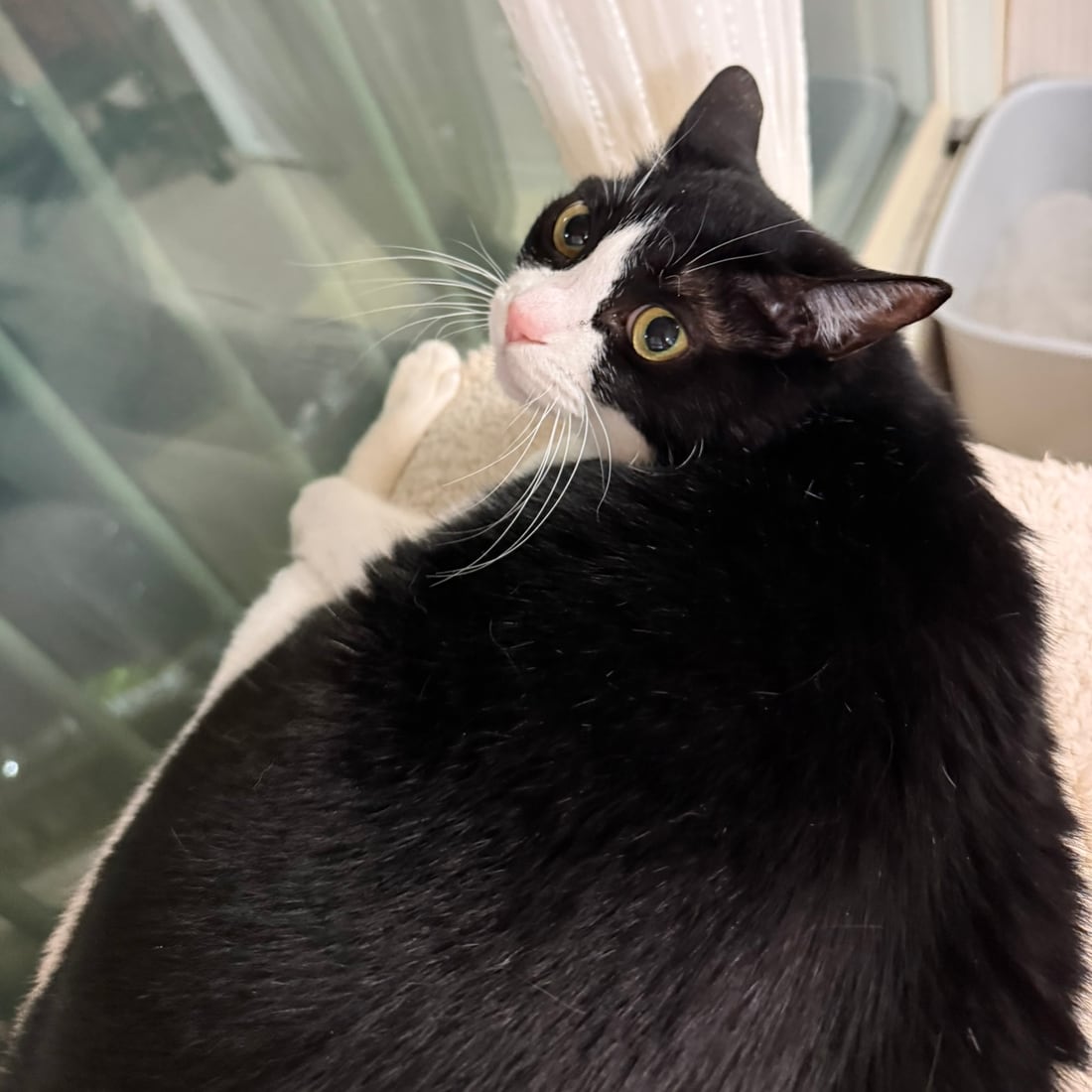
Most of the time, a cat sitting and staring at you means one of three things: she wants something (usually food or attention), she feels safe enough to watch you, or she’s simply reading your next move. It’s rarely creepy and almost never a problem. The trick is looking at the rest of her body, not just the eyes.
We’ve lived with two rescue cats for six years now, and they stare for completely different reasons. Mochi stares because she wants to be scratched. Yuja stares because she’s deciding whether I’m safe to approach. Same behavior, opposite meaning.
What is my cat actually trying to tell me?
The stare by itself doesn’t mean much. What surrounds it does. Here’s how the same fixed gaze reads differently depending on the body attached to it.
| What you see | What it usually means |
|---|---|
| Soft eyes, slow blinks, relaxed body | Contentment and trust |
| Stare near the food bowl or kitchen | ”It’s time, feed me” |
| Stare + walking toward you, tail up | Wants attention or petting |
| Stare from a distance, still body | Watching, deciding, keeping tabs |
| Wide eyes, dilated pupils, tense body | Overstimulated or startled |
| Stare + low tail, ears back | Uneasy — give her space |
Mochi’s stare is the easy kind. She’ll sit a few feet away, lock eyes, then trot over and flop sideways the second I look at her. That’s a request, not a mystery. Yuja’s stare is the harder one to read — she watches from across the room, dead still, and if I move too fast she’s gone. For her, staring is a safety calculation.
Why does my cat stare at me without moving?
A completely still stare is your cat gathering information. Cats are ambush predators by wiring, and stillness is how they assess a situation before committing to it. When Yuja does this, she’s not plotting anything — she’s deciding whether the room is calm enough to come out.
This kind of watchful staring is extremely common in cats that started life outdoors. It took Yuja four years before she’d let me touch her paws, and a big part of that stretch was her just watching me from a safe distance, day after day. The staring was progress, even when it didn’t look like it. If you have a cat that hangs back and observes rather than approaches, that patient watching is often the first stage of trust — we walked through the whole arc in our six-year trust timeline with a formerly feral cat.
A still stare becomes worth a second look only when it’s paired with things that are out of character: bumping into furniture, staring blankly at a wall, or pressing the head against something. A sudden change in a normally alert cat is the part worth mentioning to your vet — not the staring itself.
Is my cat staring because she wants food?
Very often, yes. Cats are pattern machines, and they connect your movements to their meals faster than you’d think. If your cat stares hardest around a certain time of day, near the kitchen, or right after you get up, food is the likely answer.
Yuja takes this to an art form. She doesn’t meow much, but she’ll sit and stare at the empty bowl, then at me, then back at the bowl. What makes it tricky is that she’s an extreme grazer — she eats a few bites, wanders off, and comes back. So the staring isn’t always “I’m starving,” it’s sometimes “refresh this, please.” We learned she won’t touch food that’s been sitting more than about 12 hours, and she’ll flat-out refuse a bowl that isn’t clean and dry. If your cat stares at a bowl that technically has food in it, that pickiness might be why. We dug into that in why a cat only eats a few bites at a time.
The fix for food-driven staring isn’t to feed on demand every time — that just trains more staring. Feed on a consistent schedule so your cat’s internal clock isn’t guessing, and the intensity usually drops.
Why does my cat stare and then slow-blink?
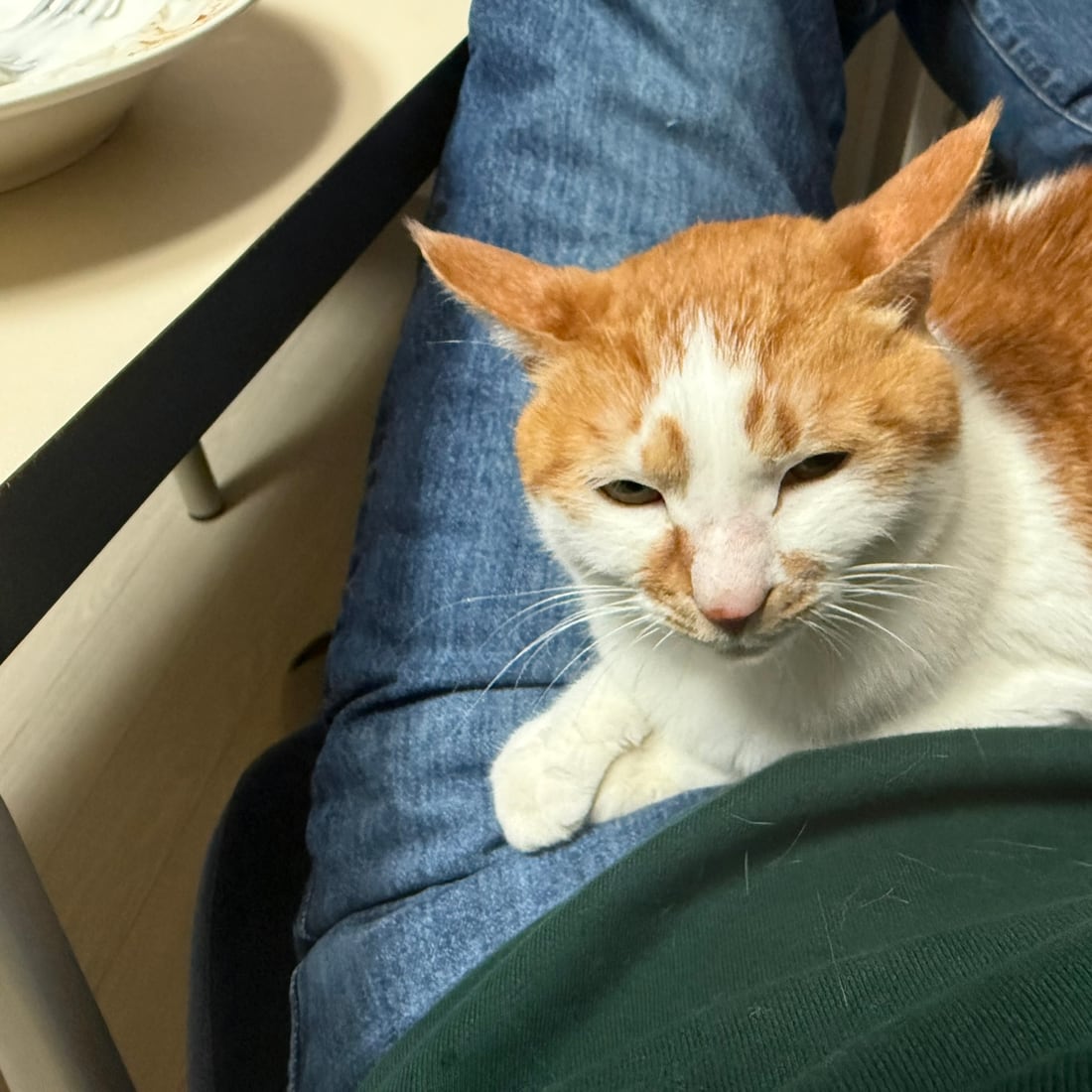
That slow blink is the good stuff. When a cat looks at you, narrows her eyes, and blinks slowly, she’s telling you she feels safe. It’s the opposite of a hard, threatening stare. In cat language, closing your eyes near someone means you trust them not to be a threat.
You can answer it. Meet your cat’s gaze softly, let your own eyes relax, and do a slow blink back. Then look away — holding a long, unblinking stare reads as a challenge and can make a nervous cat retreat. Mochi slow-blinks at me from across the couch constantly; Yuja does it maybe once a week, and honestly that once-a-week blink means more to me than all of Mochi’s rolling around.
When staring goes with biting or overstimulation
Sometimes a stare shifts into something less friendly, especially during petting. A cat that’s staring with a stiff body, twitching tail, and flattened ears is telling you she’s had enough — even if she was purring a minute ago. Push past that and you may get a warning nip.
Yuja is the textbook case. She wants attention, comes over, gets petted, and then — often mid-purr — she’ll fix a hard stare, grab my hand, and leave. It looks like she flipped a switch, but the stare was the warning I missed. If your cat does this, that transition from soft to hard eyes is your cue to stop before the teeth come out. We broke down that whole cycle in why cats bite while you’re petting them.
The short version
A cat sitting and staring at you is almost always normal communication. Read the body:
- Soft eyes, slow blinks → she trusts you. Blink back.
- Stare near the bowl or at feeding time → she wants food. Keep a schedule.
- Still, watchful stare from a distance → she’s assessing, especially if she’s shy or newly adopted. Give it time.
- Hard stare with a stiff body, twitching tail → back off before she bites.
- Sudden, out-of-character blank staring or disorientation → worth a vet check.
Six years in, I can read Mochi’s stare in a second and I still occasionally misjudge Yuja’s. That’s the honest part: staring is a real signal, but every cat writes it in her own handwriting. Watch yours long enough and you’ll learn hers.
This article is general information from a cat owner, not veterinary advice. Talk to your vet about your cat's specific situation.