Why Does My Cat Follow Me to the Bathroom?
Your cat follows you to the bathroom because you’re their favorite thing in the house and you just walked into a small room and closed a door. That combination triggers attachment, curiosity, and habit all at once. It’s normal, it’s usually a good sign, and it rarely means anything is wrong.
The bathroom specifically ticks a lot of cat boxes: it’s a small enclosed space, there’s running water, it’s often warm, and — most importantly — you go in there and become predictable and still for a few minutes. To a cat, that’s a social opportunity, not a bathroom break.
What’s actually pulling them in there
It’s rarely one single reason. Most bathroom-following is a stack of small things landing at the same time.
| What’s happening | Why the bathroom triggers it |
|---|---|
| Attachment | You left the room, and they want to stay near their person |
| Curiosity | A door closing is basically a sign that says “something is happening in here” |
| Routine | You go at the same times daily; cats build their day around your patterns |
| Resources | Running faucet, a warm sink, a rug to sit on — small perks add up |
| Attention | You’re seated and not busy, which is a rare window to get petting |
Notice that none of these are problems. A cat that follows you around is telling you it feels safe near you and wants to be included. That’s the whole thing most people are actually asking when they type this question — is this okay? Yes.
Why does my cat wait outside the door and cry?
Because a closed door is the one barrier a cat can’t solve, and cats hate being shut out of a room their person is in. The crying, the paw sliding under the gap, the thump of a body leaning against the door — that’s frustration, not distress. They know exactly where you are and they want the door open.
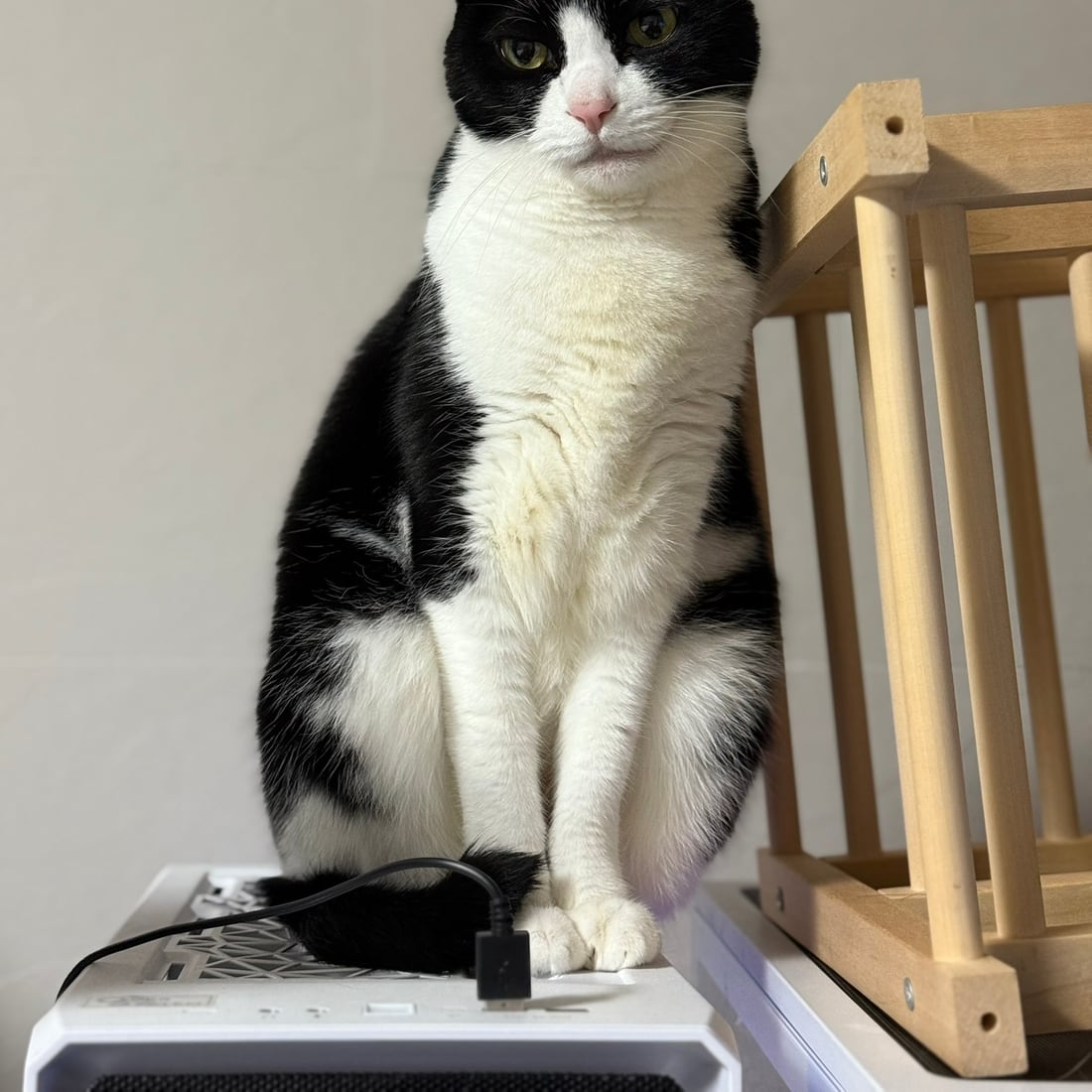
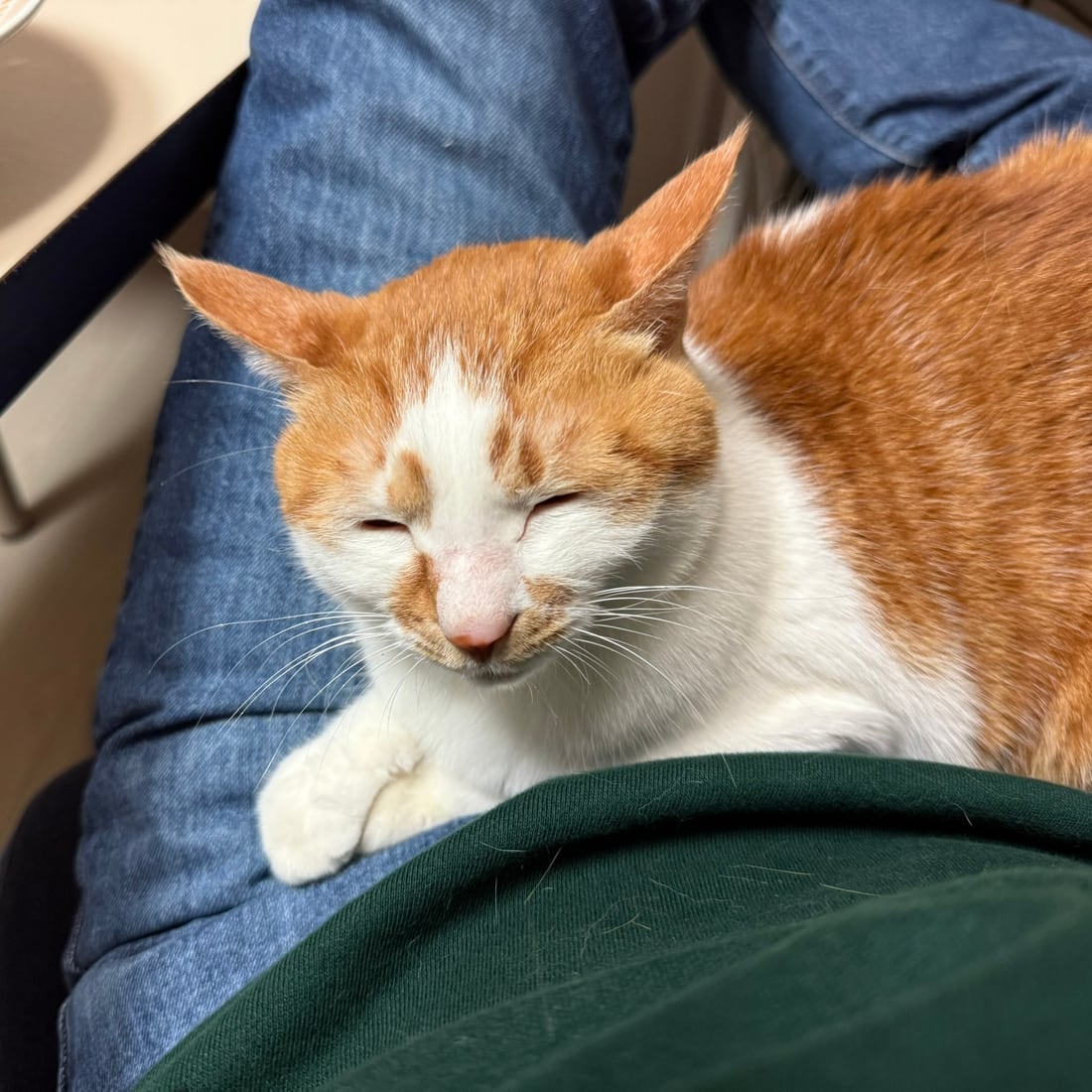
Our two react to this completely differently, which is a good illustration of how much it comes down to personality. Mochi, our tuxedo, will follow me right up to the door and flop over on the bath mat waiting for a chin scratch. If I close her out, she meows twice and reaches a paw under. Yuja, our sensitive orange-and-white cat, doesn’t do the following thing at all — she keeps her distance and watches from the hallway. Same house, same routine, opposite cats. If you’ve got one of each, you already know two cats with opposite personalities is completely normal.
So if only one of your cats does the bathroom escort, that’s not a ranking of who loves you more. It’s temperament.
Is following me a sign of separation anxiety?
Most of the time, no. Following you room to room while you’re home is just companionship. Separation anxiety is about how a cat behaves when you’re actually gone, and it looks different.
Here’s the rough line between “clingy and normal” and “worth paying attention to”:
| Normal shadowing | Worth a closer look |
|---|---|
| Follows you, then settles nearby | Can’t settle, paces, cries constantly |
| Relaxed body, tail up, blinky eyes | Tense, flattened ears, frantic |
| Content to sit while you do your thing | Destroys things or soils the house when alone |
| Has always done it | Started suddenly, out of nowhere |
That last row is the one to trust your gut on. A cat that has followed you to the bathroom for years is just being a cat. A cat that suddenly becomes clingy and vocal after never caring before — especially an older cat — is worth mentioning to your vet, because a real change in behavior can be an early sign of pain, thyroid issues, or fading eyesight or hearing. You’re not looking for the following itself; you’re looking for the change.
Should I be worried about the water obsession?
The faucet fixation is one of the most common bathroom behaviors and it’s almost never a problem on its own. Moving water is interesting, cooler, and — to a lot of cats — more appealing than the water sitting still in their bowl. Some cats genuinely prefer to drink from a tap.
If your cat is suddenly at the faucet a lot more than usual, or drinking a noticeably larger amount, that’s the kind of change worth flagging to a vet rather than shrugging off. Increased thirst can point to things you’d want caught early. But a cat that has always liked the sink and just wants a sip? That’s a preference, not a symptom.
If yours drinks from the tap constantly, a pet water fountain from Chewy or Petco often scratches the same itch and gets more water into them daily — a small win if you have a cat who doesn’t drink much.
What to do if you want your privacy back
You’re allowed to close the door. It won’t damage your bond. Expect a transition period where your cat protests, then adjusts. A few things make it smoother:
- Give them a reason to be elsewhere. A window perch, a warm spot, or a food puzzle timed to when you head to the bathroom redirects the attention.
- Don’t reward the crying by opening the door. If you open up the second they meow, you’ve taught them that meowing opens doors. Wait for a quiet moment.
- Keep it consistent. Cats settle fastest when the rule doesn’t change day to day. Half-closing the door sometimes and not others keeps them guessing and keeps them at the door.
- Let the calm cat in if you want company. There’s genuinely no downside to a cat parked on the bath mat while you brush your teeth, if that’s your thing.
For what it’s worth, I gave up on privacy years ago. Mochi meets me at the front door every single day and treats the bathroom as an extension of that greeting. It stopped feeling like an intrusion and started feeling like the point.
The short version
A cat following you to the bathroom is a normal, generally affectionate behavior driven by attachment, curiosity, and routine. It doesn’t need fixing unless it’s brand new, frantic, or paired with other changes like sudden excessive thirst or crying when you leave the house. If it’s the same devoted little shadow it’s always been, you don’t have a problem — you have a cat who likes you.
This article is general information from a cat owner, not veterinary advice. Talk to your vet about your cat's specific situation.