Why Does My Cat Wait by the Door When I Come Home?
Your cat waits by the door because your arrival is one of the most predictable, rewarding events in her day, and she’s learned to anticipate it. It’s a mix of genuine attachment, routine, and territory — she associates the sound of you coming home with food, attention, and the return of a familiar part of her environment. It’s a good sign, not a needy one.
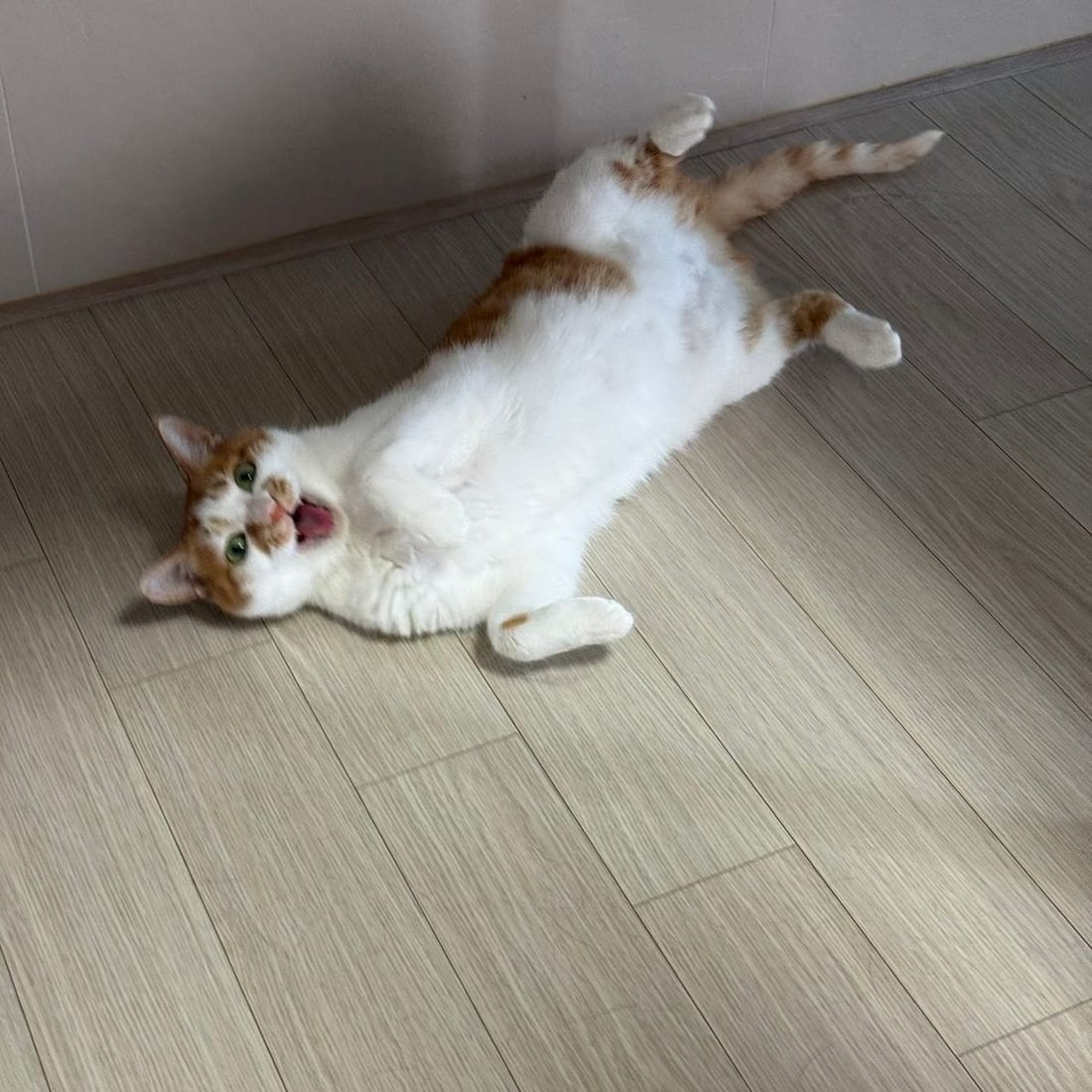
At our place, Mochi does this every single day. The second she hears the door, she’s right there in the entryway, flopping over and rolling around like I’ve been gone a month. Meanwhile Yuja, our other cat, watches from across the room and comes over ten minutes later — if she feels like it. Same house, same schedule, two completely different responses. Both are normal.
What the door greeting actually means
Cats aren’t the aloof loners people make them out to be. A cat who greets you has connected several things: your footsteps or keys, the door opening, and then good stuff happening (feeding, petting, play). Over time that turns your return into an event worth showing up for.
There’s usually more than one thing going on at once:
| What’s driving it | What it looks like |
|---|---|
| Routine and prediction | She shows up right around your usual arrival time |
| Territory check-in | She sniffs your shoes, legs, and bags to update her “map” |
| Food association | She heads toward the bowl or the kitchen after greeting you |
| Genuine attachment | Head-butting, rubbing, rolling, following you room to room |
| Attention request | Meowing, tapping you with a paw, presenting for scratches |
None of these cancel out the others. Mochi greets me and then herds me toward her food bowl and head-butts my ankle. It’s affection and logistics rolled into one.
Why does my cat roll over and show her belly at the door?
Rolling over is a display of comfort and trust, not always an invitation to rub the belly. When a cat exposes her stomach — the most vulnerable part of her body — near you, she’s telling you she feels safe. It’s a social gesture aimed at someone she’s relaxed around.
Mochi does the full dramatic flop and rolls back and forth on the floor when I walk in. That said, a belly-up cat isn’t necessarily asking for a belly rub. Many cats will grab your hand if you go for the stomach. The safest read is to take the roll as a compliment and offer a scratch on the head or cheeks instead, and let her escalate if she wants more.
Why does one of my cats greet me and the other hides?
This comes down to temperament, and it’s completely normal to have one of each. Social, confident cats meet you at the door. Cautious or independent cats greet you later, quietly, or watch from a safe distance. Neither is more bonded — they just express it on different timelines.
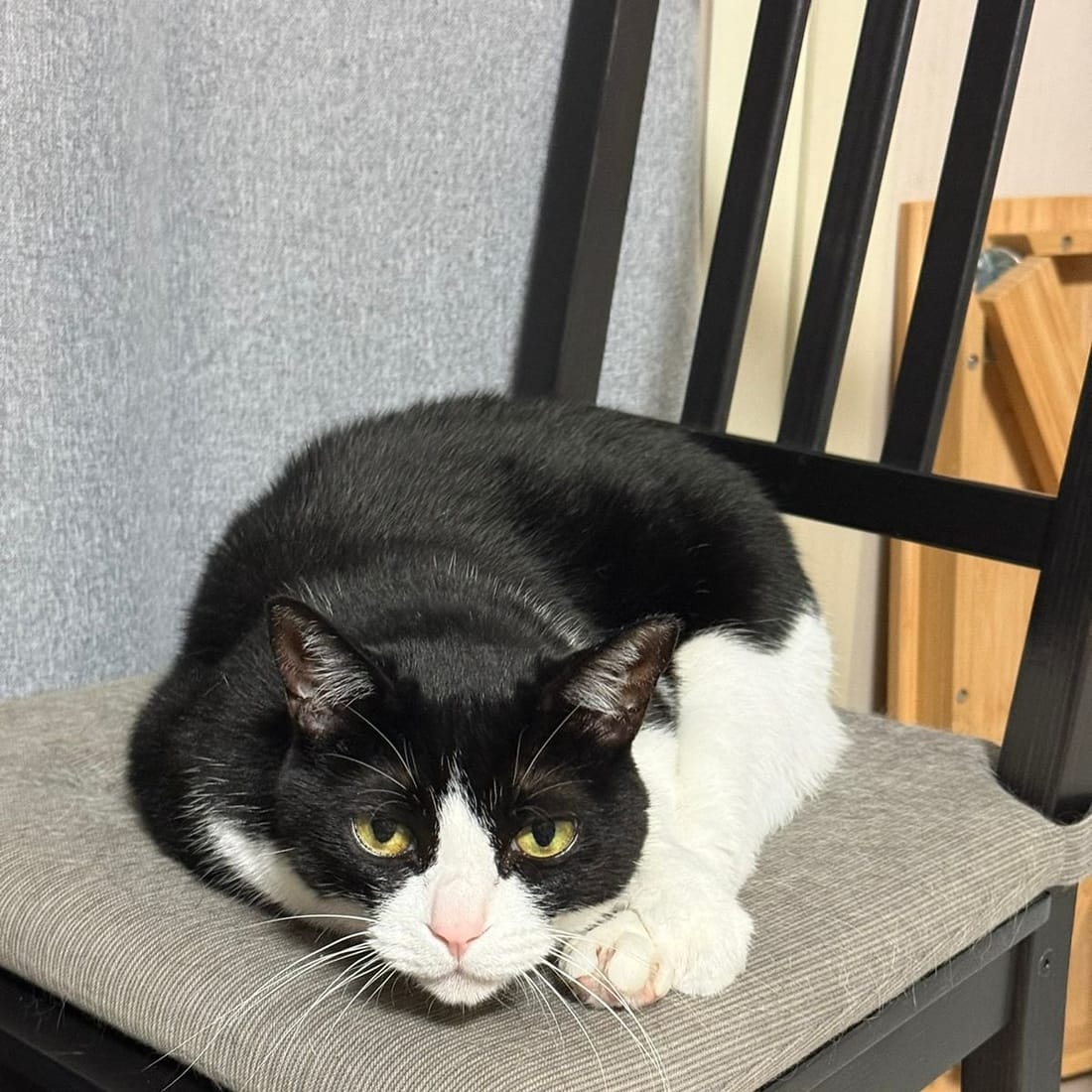
Our two are a textbook split. Mochi is the classic dog-like cat: at the door daily, wants to be near me, taps my leg for attention. Yuja is sensitive and slow to warm up — she spent her first two weeks with us hiding behind the washing machine, and it took years before she’d relax in the open. She still shows love, but on her terms and never at the door. If your cats are this different, we wrote more about why in our piece on two cats with opposite personalities.
A shy cat who doesn’t greet you isn’t rejecting you. She may be greeting you in ways that are easier to miss: appearing in the doorway a few minutes later, sitting nearby while you unpack, or blinking slowly from across the room.
How to respond so the greeting keeps happening
You don’t need to do much — that’s the point. But a few habits keep the ritual strong and don’t accidentally teach her that coming to the door is stressful.
- Acknowledge her. A calm “hey” and a look tells her the greeting worked.
- Let her set the intensity. Some cats want to be scooped up; others just want you to follow them to the kitchen. Read what she offers.
- Skip the loud, sudden excitement. Big energy right in a cat’s face can overwhelm even a social one. Keep it low-key.
- Don’t force the shy cat. If your other cat hangs back, let her come to you. Chasing the greeting away is easy to do.
- Keep the routine predictable. Cats thrive on rhythm. Consistent feeding and attention times make your arrival something she can count on.
If she’s greeting you specifically to be fed, that’s fine — it doesn’t make the affection fake. Food and love are tangled together for cats, and there’s nothing wrong with being both the roommate and the vending machine.
When a greeting change is worth noticing
The greeting itself is never a problem. What can matter is a sudden, out-of-character change in a cat who normally does it.
If Mochi — who meets me at the door every day for six years running — suddenly stopped showing up, hid instead, and skipped meals for more than a day, I’d get her checked. Cats are experts at masking pain or illness, so a big behavior shift in an otherwise routine-driven cat is one of the more honest signals you get. One quiet evening where she stays on the couch is nothing. A pattern change plus not eating is the combination to watch. When in doubt, a vet visit answers the question faster than guessing does.
Absent that kind of change, enjoy it. A cat waiting at the door is one of the clearest signs you’ve built a relationship she values — even if, like Yuja, half your household prefers to make you come find her instead.
This article is general information from a cat owner, not veterinary advice. Talk to your vet about your cat's specific situation.