Why Does My Cat Sit on Whatever I'm Using?
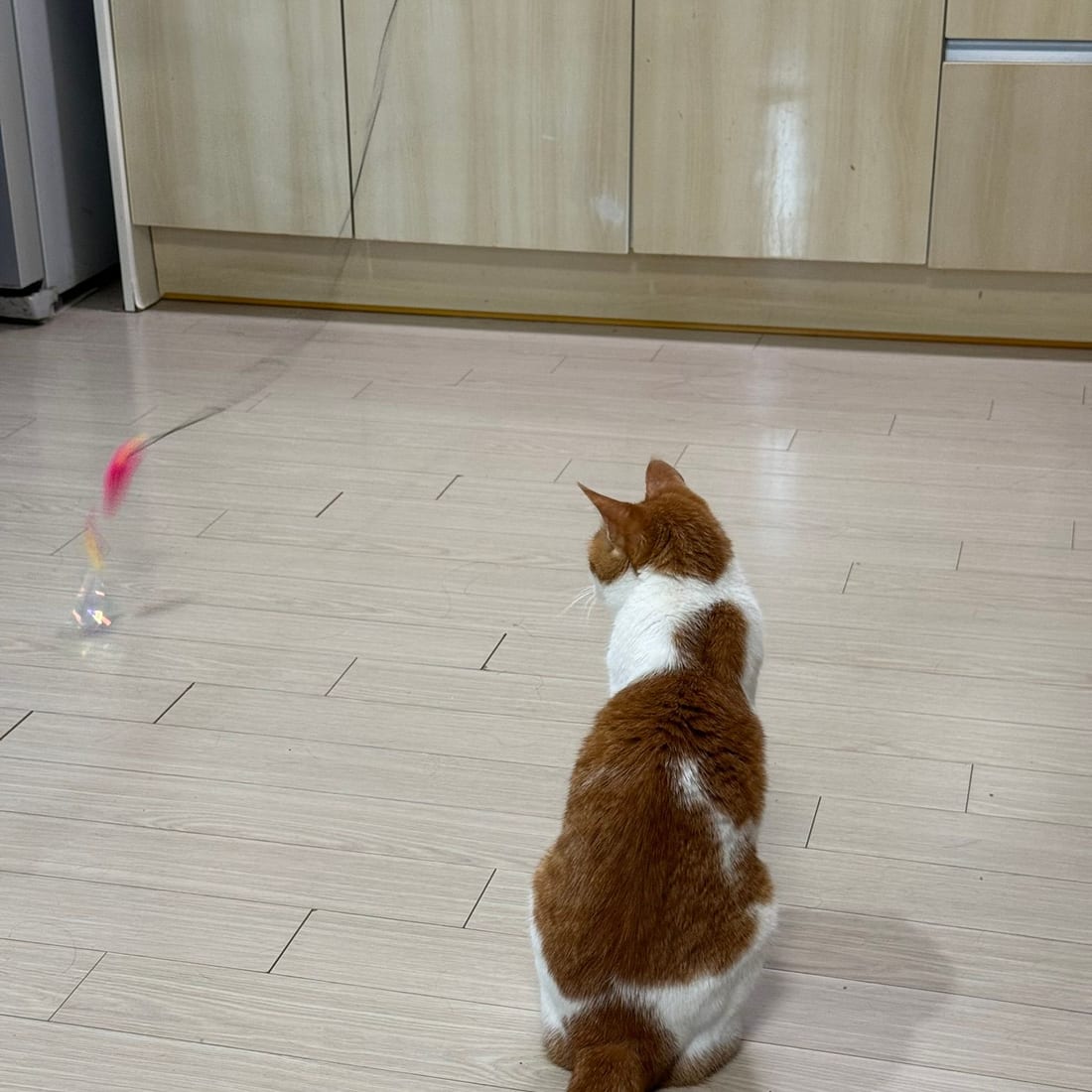
Cats sit on whatever you’re using because that object has two things they want: your scent and your attention. Your laptop, your book, your phone — anything you’re actively focused on is competition, and parking on top of it puts your cat right in the middle of it. It’s an attention move dressed up as a comfort move.
That’s the short version. The longer version is more interesting, because the same behavior shows up in two very different cats in our house for two slightly different reasons.
Why your stuff specifically, and not the empty spot next to it?
Because the empty spot next to it isn’t where your eyes are.
A cat watching you work out the pattern fast: hands on keyboard, eyes down, no attention for them. The item you’re using is the thing drawing your focus away. Sitting on it is the most direct possible way to put themselves back in your line of sight. It’s not subtle, and it isn’t meant to be.
Scent is the other half. The things you handle most carry the strongest dose of you — your worn clothes, the notebook you write in, the warm laptop. Cats layer their own scent onto things that already smell like their people. Mochi, our tuxedo, will plop down on a notebook we were just writing in and sit on it like she owns the desk. The notebook isn’t comfortable. It’s just ours, and she wants to be part of whatever we’re doing with it.
Warmth plays a role too, especially with electronics. A laptop that’s been running is a heated bed to a cat. But warmth alone doesn’t explain why they wait until you’re using something — a cold closed book gets the same treatment the second you pick it up.
The two reasons it happens in our house
We have two cats with opposite personalities, and they both do this for reasons that line up with who they are.
| Cat | What she sits on | What’s driving it |
|---|---|---|
| Mochi (the confident one) | A notebook we were just using, the desk by the laptop | Social — she wants to be in the middle of whatever we’re doing |
| Yuja (the skittish one) | Our lap | Closeness on her terms |
Mochi is the classic case. She meets us at the door every day, rolls over for the lightest touch, and generally wants to be where we are. Sitting on our work is just the desk version of following us around.
Yuja is the surprise. She spent about two weeks hiding behind the washing machine when she first came home, and it took four years before she’d let us touch her paw. You wouldn’t expect her to seek us out. But she’ll climb onto a lap and flop over onto her back. It’s the same underlying pull — our scent, our presence — expressed by a cat who needs everything to be on her schedule. If you’re curious how that plays out, we wrote more about why a cat sits near you but never on you.
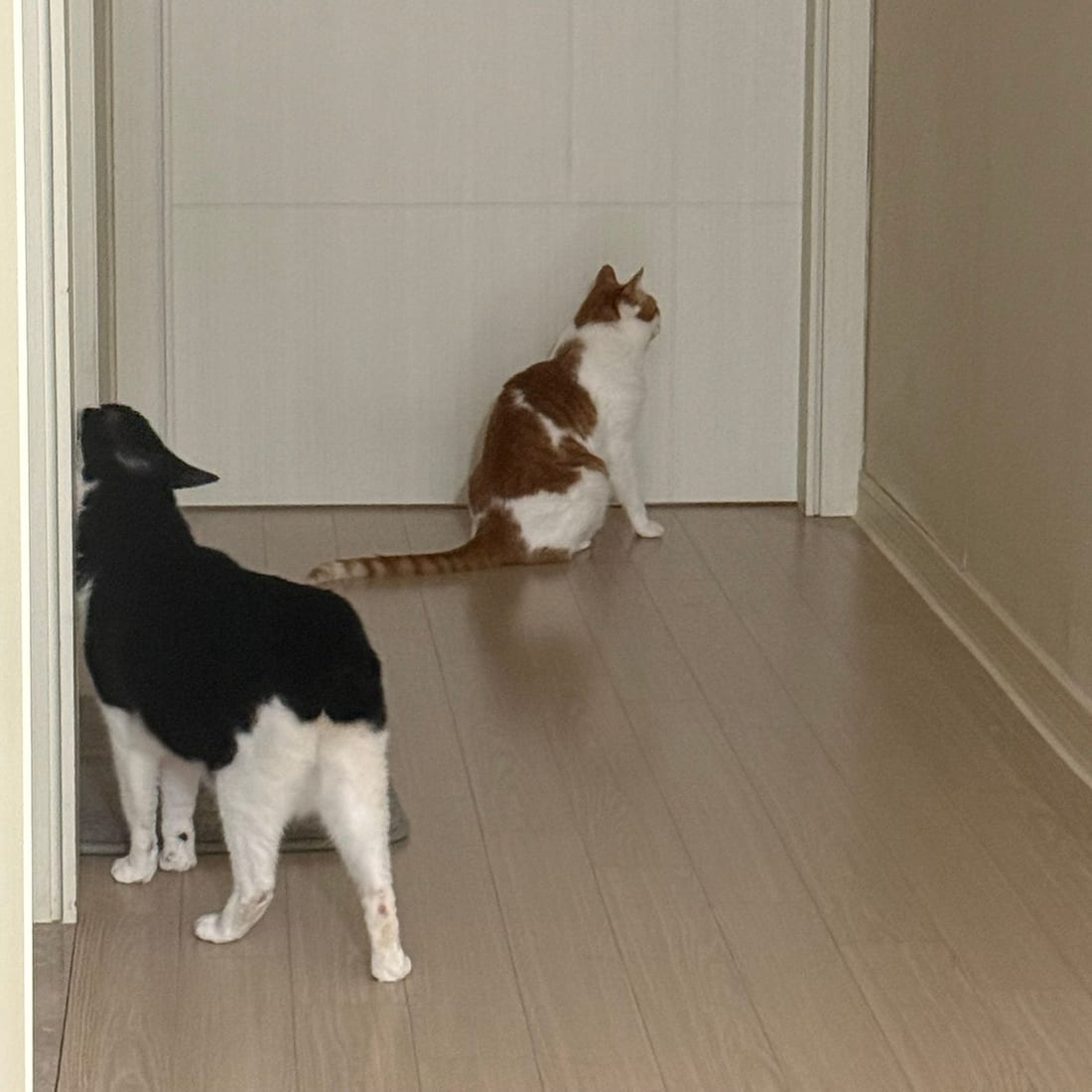
Is this a sign my cat is bonded to me?
Generally, yes. A cat that seeks out your scent and inserts itself into your attention is a cat that’s comfortable with you. Indifferent cats don’t bother.
The fact that even Yuja does a version of this says a lot. For a cat who took years to trust hands, choosing to lie on a lap and show her belly is not a small thing. It doesn’t erase the limits — pet her too long and she’ll still bite and leave — but the act of coming to us at all is the point.
So if your cat is doing this, it’s not a problem to fix. It’s closeness, just inconvenient closeness. The trick is handling it without teaching the cat that body-blocking your keyboard is the fastest route to attention.
What to do when you actually need to use the thing
You don’t have to choose between your cat and getting work done. A few things that usually help:
- Give attention first, briefly. A minute of real focus — scratching, talking, eye contact — often satisfies the cat faster than any amount of nudging them off. They came for your attention; give a little and the urgency drops.
- Move the task, not the cat. It’s easier to slide your laptop six inches or pick up the book than to win an argument with a determined cat. This matters doubly with a nervous cat, where a shove can cost you trust you spent years building.
- Offer a warm alternative nearby. A blanket or bed next to your workspace gives a scent-and-warmth-seeking cat somewhere better to be, while still keeping them close to you.
- Don’t make it a game. Repeatedly pushing a cat off and having them hop right back is, from their side, excellent fun. If you must move them, do it once, calmly, and set them somewhere they’d actually want to be.
With a cat like Yuja, letting her stay is usually the better trade; disturbing her when she’s chosen to be close isn’t worth it.
When to pay closer attention
This behavior is almost always ordinary and social. But any behavior change is worth a glance in context. If a cat that never did this suddenly becomes clingy and glued to you, or an affectionate cat abruptly stops seeking you out, that’s a shift in pattern rather than the pattern itself — and a sudden change in a previously steady cat is worth mentioning to your vet, since discomfort can show up as a change in how a cat wants to be near you.
For the everyday version — the cat who parks on your open book the second you settle in — there’s nothing to solve. Your things smell like you, your attention is the prize, and sitting on both at once is just good strategy on their part. The best response is usually the easiest one: notice them, give them a moment, and move your coffee before it tips.
This article is general information from a cat owner, not veterinary advice. Talk to your vet about your cat's specific situation.