What to Look For in a Nail Grinder for a Squirmy Cat
For a cat that won’t hold still, the four things that matter most in a nail grinder are: low noise, low vibration, a small opening that guards the nail, and enough battery life to finish in one calm session. Skip anything marketed on speed or power. With a squirmy cat, gentle and quiet wins every time.
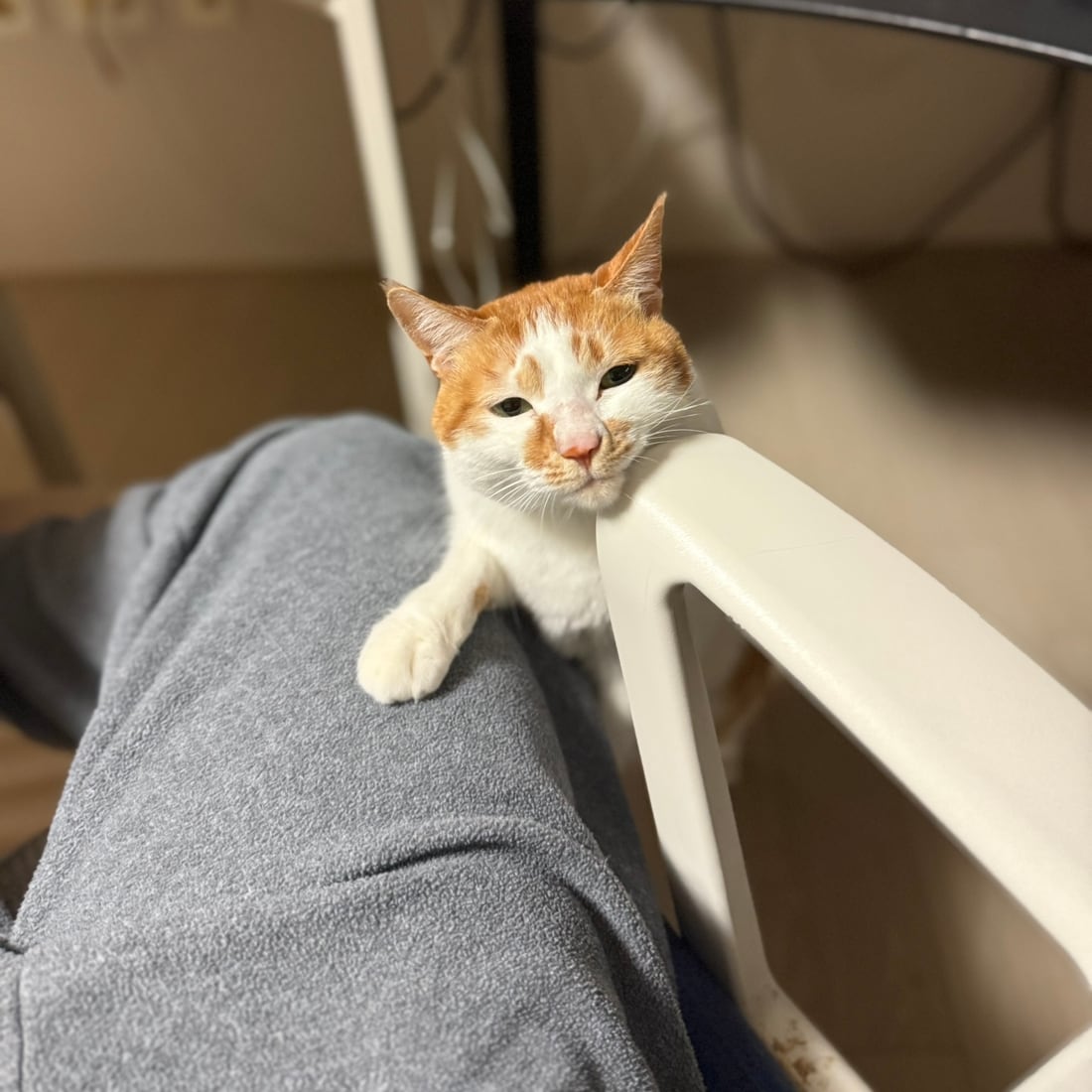
I have one cat who proves this the hard way. Yuja, my orange-and-white first cat, has resisted nail care for six years running — she still hisses and bites if I push it. A loud grinder was never going to happen with her. So everything below is filtered through the question I actually ask now: would this survive one round with a cat who bolts at the sound of a plastic bag?
Why noise and vibration matter more than power
Most product pages brag about RPM and grit. For a nervous cat, those are the least important specs. What sends a jumpy cat off your lap is the sound of the motor and the buzz against her paw — not how fast it grinds.
A powerful, high-speed grinder finishes faster on paper. In practice it’s louder, it vibrates more, and your cat is already gone by nail number two. A quieter, slower unit takes a few extra seconds per nail but lets you actually finish. That trade is worth it.
When you read reviews, ignore the star rating and search the text for the words “quiet,” “loud,” “vibration,” and “hum.” Owners of skittish cats will tell you the truth that spec sheets won’t.
What to look for in a grinder for a squirmy cat
Here’s how I’d rank the features, most important first.
| Feature | Why it matters for a squirmy cat | What to aim for |
|---|---|---|
| Noise level | The #1 reason cats bolt | Quiet enough to talk over |
| Vibration | Felt through the paw, spooks sensitive cats | Low-hum, no rattle |
| Nail opening / guard | Limits exposed nail, prevents over-grinding | Small port sized for cat claws, not dogs |
| Battery / cordless | No cord to fight, no dying mid-session | USB rechargeable, long runtime |
| Two speeds | Start slow for scaredy cats | Low speed you can begin on |
| Weight & grip | You may be holding a wriggling cat too | Light, one-handed |
| LED light | See the quick on dark nails | Nice bonus, not essential |
A note on the guard: many grinders are sold for “dogs and cats.” Dog ports are often too big, so the whole claw disappears in and you can’t see what you’re doing. Look for one with a small opening or a cat-specific setting. On a cat that yanks her paw away every three seconds, seeing the nail clearly is half the battle.
The rechargeable-vs-battery question
Cordless is the only real answer for a squirmy cat. A cord is one more thing to snag when she thrashes, and it tethers you to an outlet when you finally get her calm on the couch.
Between the two cordless types:
- USB-rechargeable — no loose batteries, and most hold a charge long enough for many short sessions. My pick for almost everyone.
- Disposable AA/AAA — fine as a backup, but power drops as the batteries drain, which can change the noise and speed mid-grind and startle a settled cat.
Charge it fully before you start. Nothing breaks a rare moment of cat cooperation like the motor winding down halfway through.
How to actually introduce it without a fight
Buying the right grinder is step one. The cat still has to accept it, and that part is on you.
- Let it sit out, off, for a few days. Near her food, near her nap spot. Boring objects stop being scary.
- Turn it on across the room. Let her hear the hum with zero contact. Treat, walk away.
- Touch it to her leg fur while it’s off. Then briefly on. Build up over days, not minutes.
- Do one nail. Stop. One nail and a treat beats four nails and a bite that sets you back weeks.
If your cat won’t even let you hold a paw yet, the grinder is not your first problem. Start with getting her comfortable with paw handling before any tool comes out, because a grinder near an untouched paw is a guaranteed loss.
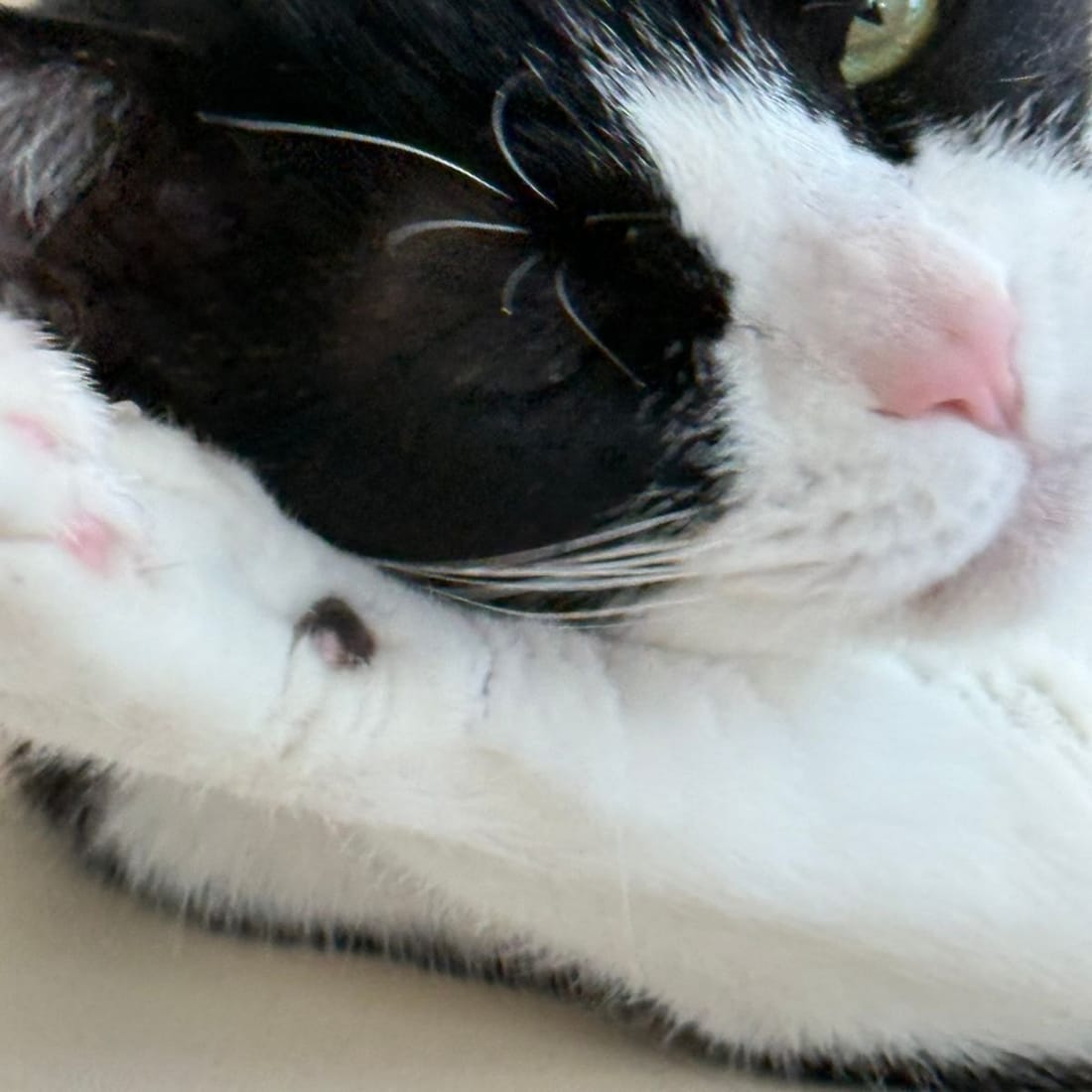
Mochi, my tuxedo second cat, is the easy one — she flops over and lets me do her nails without drama. Yuja is the opposite. Two cats, same house, and the gear that works for one is a non-starter for the other. If your two behave nothing alike, that difference is completely normal.
When a grinder isn’t the answer
Be honest about your cat. A grinder solves the quick-cutting fear and the sudden clip pressure. It does not solve noise sensitivity — for some cats the motor is worse than any clipper.
After six years, I’ve accepted that Yuja may never sit through a full grinder session, and that’s okay. We do what we can and let the vet or a groomer handle the rest when the nails genuinely need it. If that sounds like your situation too, there are real fallback options when you truly can’t do the nails yourself.
One practical safety note: if a cat who normally tolerates grooming suddenly starts fighting paw handling hard, that can signal pain in the paw or joint rather than pure attitude. It’s worth a quick vet look before you assume she’s just being difficult.
The short version
Buy quiet. Buy low-vibration. Buy cordless with a small nail port. Ignore the specs that promise speed and power, because raw power is exactly what scares a squirmy cat off your lap. Then introduce it slowly enough to bore her, and quit while you’re ahead. One calm nail today is worth more than a full set that ends in a hiss and a three-day hideout.
This article is general information from a cat owner, not veterinary advice. Talk to your vet about your cat's specific situation.