Nail Trims Start With Trust, Not Technique
If your cat hisses and bites the second the clippers come out, a fancier clipper won’t fix it. Nail trims start with trust, not technique. Until your cat believes your hands aren’t a threat, the tool in your hand barely matters — and pushing the trim before that point sets you back weeks.
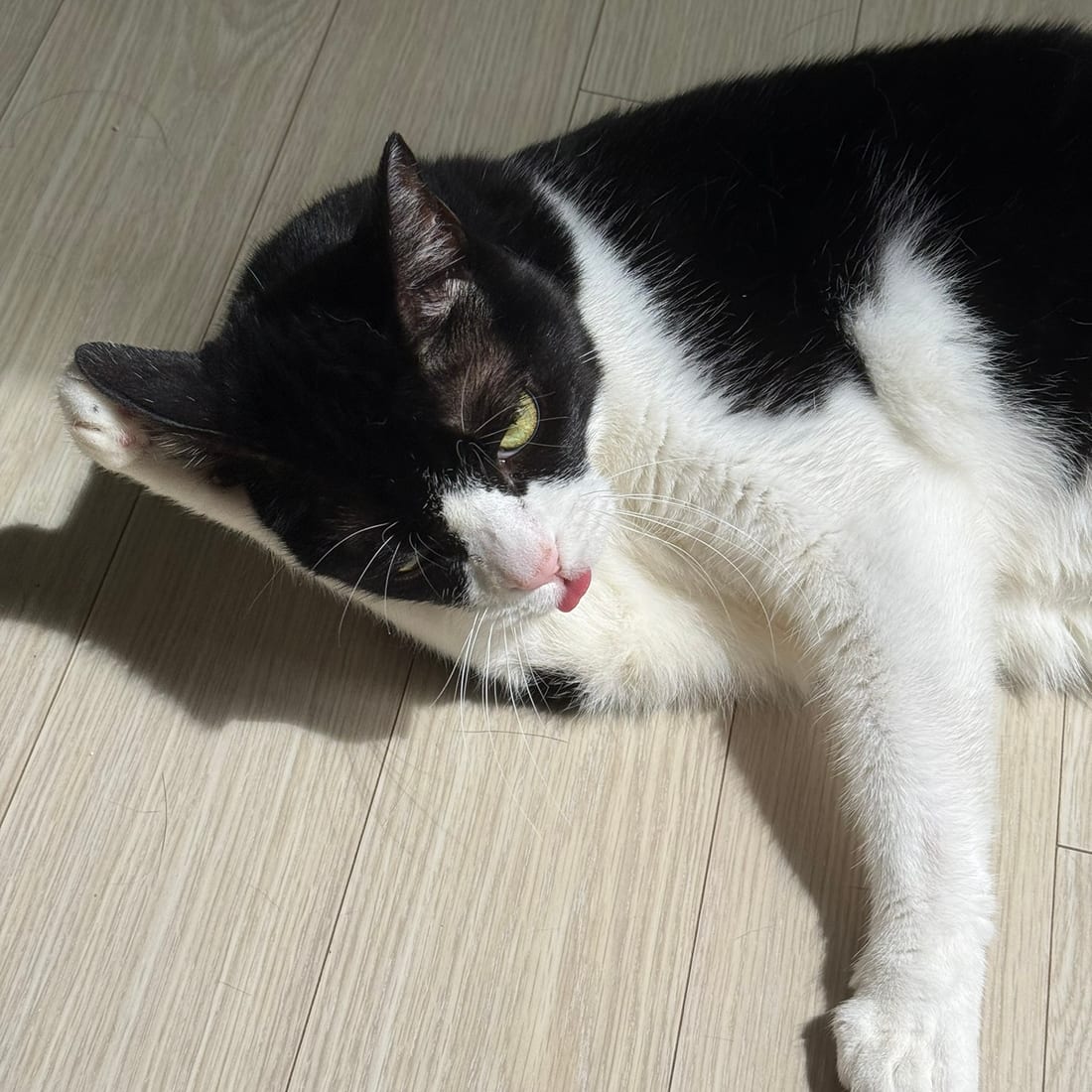
We learned this the slow way. One of our two cats, Yuja, is a formerly outdoor cat we’ve had for six years, and we still can’t do a proper nail trim on her. Not because we lack the right clipper. Because her trust around her paws has a hard ceiling, and no technique gets us past it.
Why does trust come before the clippers?
A nail trim asks a cat to do the two things a scared cat hates most: hold still and let you hold a paw. For a cat that spent time outside, feet are the escape system. A hand clamped around a paw isn’t grooming to her — it’s being cornered.
You can own the sharpest clipper on Chewy and it changes nothing if your cat’s body reads restraint as danger. The clipper is the last five percent. The first ninety-five is whether she’ll sit near you, let a hand approach, and not treat contact as an ambush.
That’s why we tell people to stop shopping for gear first. If your cat panics at touch, the honest next step isn’t a tool — it’s learning to touch her paws without getting bitten, one brief contact at a time, long before a clipper ever appears.
What “start with trust” actually looked like for us
Here’s the real timeline, because vague reassurance doesn’t help anyone. When Yuja first came to us, she hid behind the washing machine for a little over ten days — we honestly don’t know the exact day she started coming out. Back then, a single brushed hair on her paw meant she’d bite and vanish for three days.
It took four years before I could rest a hand on her paw at all. And that’s the current ceiling, not a happy ending:
| Stage | What we could do | What still set her off |
|---|---|---|
| Year 1 | Sit in the same room | Any reach toward her feet |
| Years 2–3 | Pet her head and back | Touching near the paws |
| Year 4 | Rest a hand on her paw, briefly | A second touch in a row |
| Now (year 6) | One paw touch, then stop | Two touches = hiss and leave |
Notice there’s no “full nail trim” row. We never got one at home with Yuja. That’s not us failing — it’s the honest shape of some cats.
Meanwhile our second cat, Mochi, gets her nails trimmed with almost no drama. Same house, same hands, opposite cat. If you have one easy cat and one impossible one, that split is completely normal — it tells you the variable is the cat’s history, not your skill.
Can’t I just win her over with treats?
Sometimes, yes. For a lot of cats, a lickable treat during a trim genuinely rewires the whole event. Try it first — it’s the easiest lever there is.
But it isn’t guaranteed, and I want to be honest about that. Yuja eats any treat exactly once. The first time it’s great; every time after, she refuses it. So we could never build a “treats during trims” routine, because there was no treat she’d take twice. We eventually gave up on the treat strategy entirely with her and built trust through patience instead.
The lesson isn’t “treats don’t work.” It’s that treats are one path, not the path. If your cat is like Yuja, don’t spend months trying to force a bribe that won’t land — lean on calm, predictable handling instead.
How do I build trust before I ever pick up the clippers?
Work in tiny steps, and stop before your cat asks you to. The goal at each stage is that she stays relaxed, not that you finish anything.
- Touch the paw with no clipper in sight. Just a fingertip, once, then withdraw. If she tolerates it, you’ve done the hard part.
- Watch for her line. Yuja gives me exactly one touch. A second in a row breaks it. Learn where your cat’s line is and quit one step early, every time.
- Let the tool be boring. Leave the clipper out near her food or bed so it stops being a surprise object that only appears during scary moments.
- Do one nail, not ten. A single claw and then walking away teaches her the event is short. A wrestling match teaches her the opposite.
- Never chase a session. If she leaves, she leaves. Following her to finish the job undoes trust faster than almost anything.
The through-line for us was always the same: don’t chase, take care of her, and wait. That’s what got Yuja from behind-the-washing-machine to letting a hand rest on her foot. It’s slow. It also works when nothing pushy does.
What if trust just isn’t enough?
Then you stop treating a full home trim as the only acceptable outcome. This is where a lot of owners spiral into guilt, and they shouldn’t.
For Yuja, “enough trust” plateaued at one paw touch. We don’t force the rest. When her nails genuinely need doing, a groomer or vet handles it in a couple of minutes — people who do this all day, with proper handling, safely and fast. If you’re at the same wall, there’s no shame in outsourcing the trim; it’s the responsible move, not a cop-out.
One practical note: if a cat who used to tolerate paw handling suddenly can’t stand it, that’s worth a vet visit rather than more training. A new, sharp reaction to a paw being touched can mean pain, and that’s a quick thing to rule out.
Technique matters eventually — the right clipper, the right angle, cutting only the clear part of the nail. But it’s the last chapter, not the first. Get the trust part right and the trim becomes a two-minute afterthought. Skip it, and no gear on the shelf will save you.
This article is general information from a cat owner, not veterinary advice. Talk to your vet about your cat's specific situation.