Two Cats, Opposite Personalities — Is That Normal?
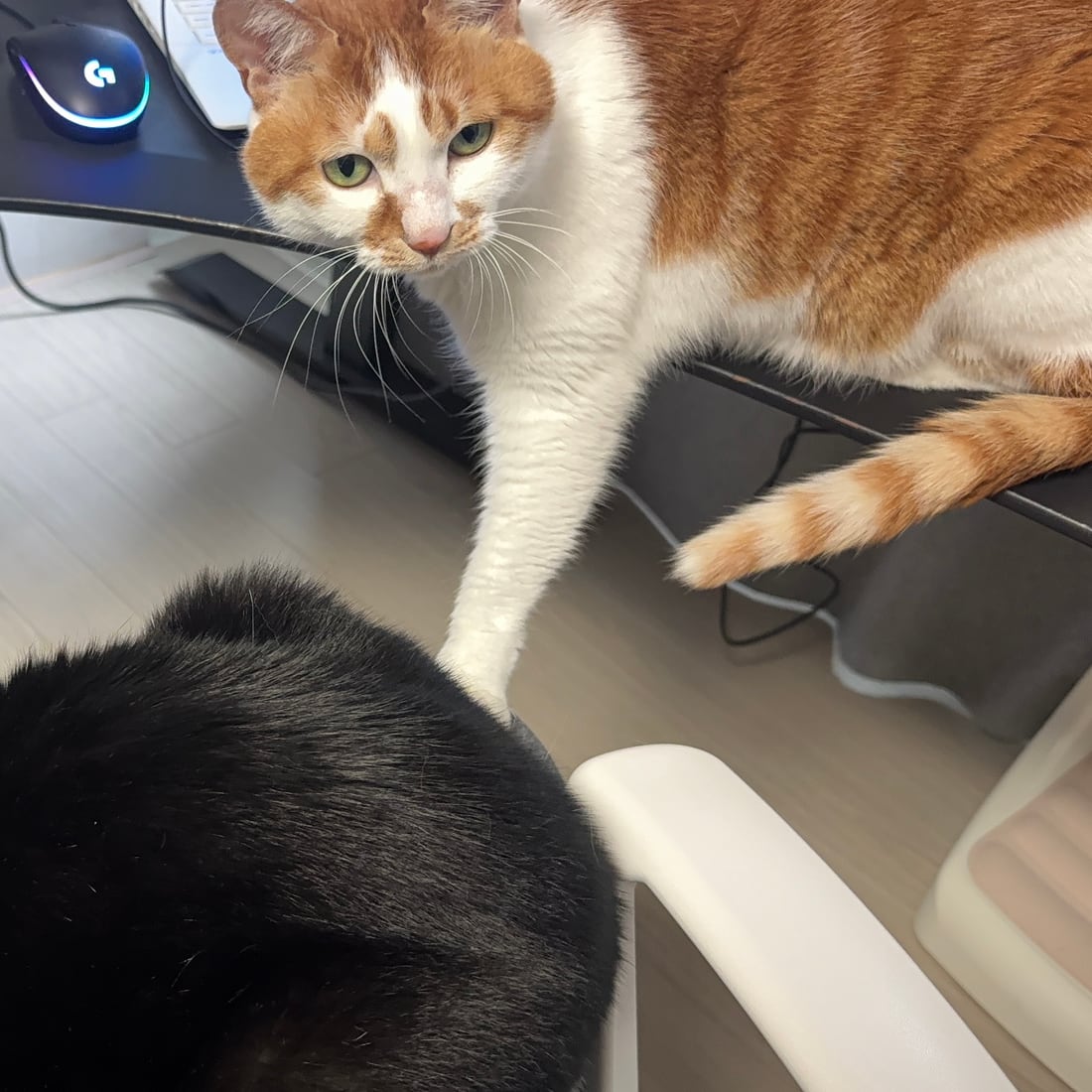
Yes, it’s completely normal. Two cats living in the same home, eating the same food, using the same litter — and acting like they came from different planets. One rolls over for belly rubs, the other bites you for touching a single toe. That’s not a sign you did anything wrong. Cats have personalities as individual as people do, and living together doesn’t sand those differences down. If anything, it makes them more obvious.
I’ve got a front-row seat to this. Our two are the same age, both female, both spayed, both rescued off the street and cared for by family before they came to us. Same starting point. Six years later they could not be less alike.
Meet the extremes
Yuja, our orange-and-white first cat, is the nervous one. When she first arrived she spent two weeks hiding behind the washing machine — I had to slide her food and water bowls back there just so she’d eat. She hisses, she nips, and it took me four years just to be able to touch her paws. Even now, if I pet her too long, she’ll bite and bolt.
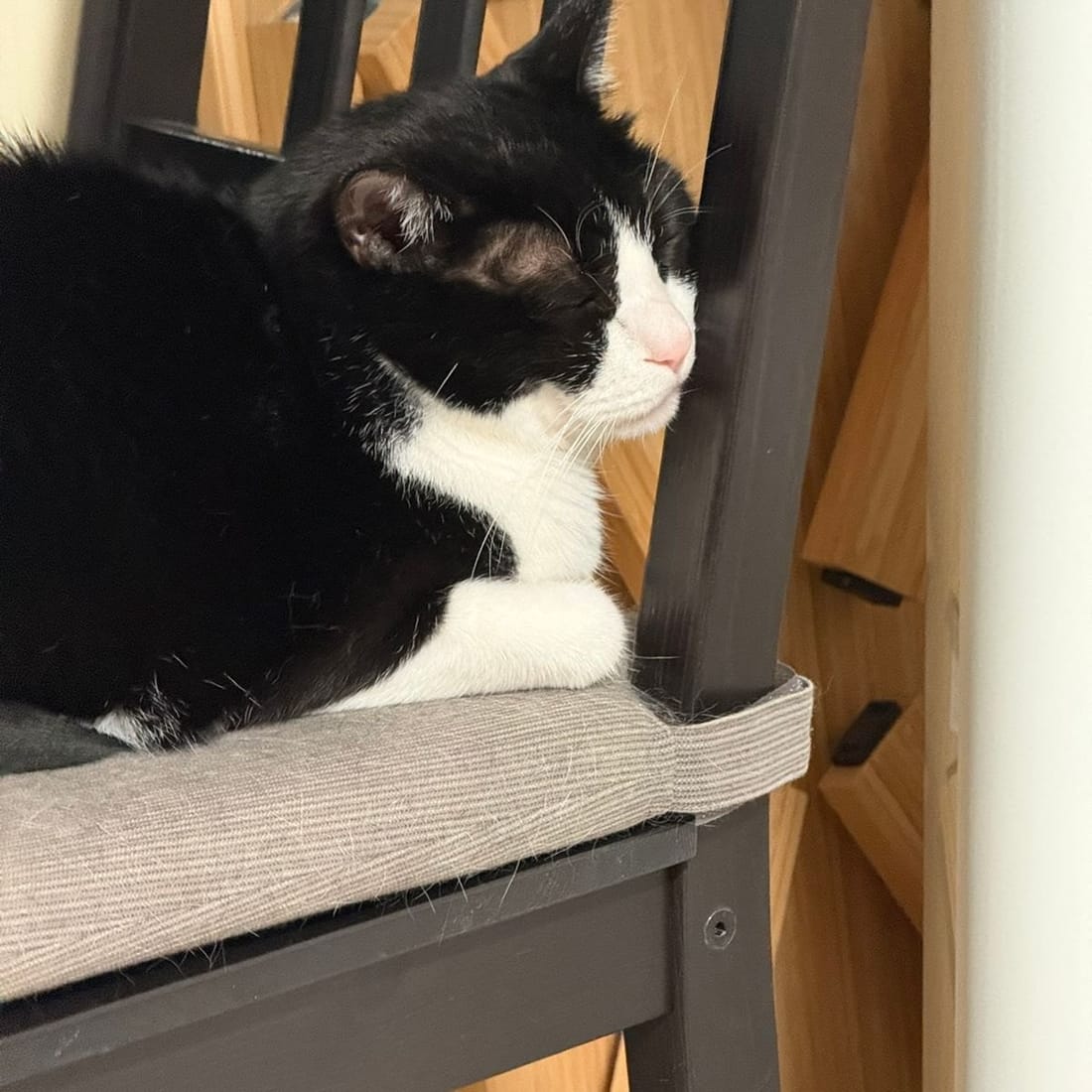
Mochi, the black-and-white tuxedo, is the opposite. She flops over and rolls around if you so much as walk past her. She head-butts my hand, taps my leg with a paw to demand scratches, and meets me at the door every single day when I come home. Same house. Same six years. Wildly different animals.
If your two cats sound like a version of this, you’re not doing anything wrong. This is just what happens.
Why cats in the same home turn out so different
There isn’t one cause. It’s usually a stack of factors:
- Genetics. Some of it is just baked in. Yuja was a street cat, so I assumed her jumpiness was survival wiring. But Mochi came from the same rough start and turned out to be a total lap cat. Their temperaments were different before we ever met them.
- Early life and socialization. The first few months of a kitten’s life shape how it reads humans and other cats. Cats that got gentle handling early tend to be bolder. Cats that didn’t often stay cautious for life.
- Their spot in the pecking order. In a two-cat house, one usually ends up more assertive. Mochi lives under Yuja’s thumb — she gets picked on when she wanders too close, and she’s the one who runs.
- How they cope with stress. Some cats get clingy when nervous. Others withdraw. Yuja disappears; Mochi seeks contact. Two dials, turned in opposite directions.
None of this is something you control after the fact. You can shape the environment, but you can’t personality-swap a cat.
When “different” is actually a problem
Personality differences are normal. A sudden change in either cat is the part worth watching.
If your outgoing cat goes quiet and hides, or your shy cat suddenly gets aggressive, that’s not personality — that’s a shift, and shifts can mean pain, illness, or stress. Cats hide discomfort well. A cat who’s been mellow for years and starts snapping when touched in one spot may be hurting there. That’s the kind of change I’d get looked at by a vet rather than wait out, because the sooner you rule out a physical cause the faster you get answers.
The baseline stuff — one cat being a hisser, the other a cuddler — isn’t a red flag. It’s Tuesday.
Keeping the peace between opposites
The real challenge with mismatched personalities isn’t the cats being different. It’s making sure the bold one doesn’t run the shy one’s life. A few things that help:
Give the shy cat escape routes and high ground. Yuja needs places to retreat where Mochi can’t corner her. Cat trees, shelves, a spot behind furniture — anywhere she can go up or out. A confident cat blocking the only path to the litter box or food is a slow-building stress problem.
Feed them apart if there’s any tension. With Yuja I already feed on her terms because she’s a grazer — she eats in several small rounds, and she won’t touch food that’s been sitting more than about 12 hours. If your assertive cat hovers or steals from the nervous one, separate bowls in separate spots takes the pressure off.
Don’t force the interactions. It’s tempting to want them to snuggle. Most cats that live together tolerate each other more than they adore each other, and that’s fine. Mochi and Yuja aren’t cuddle buddies. They coexist, occasionally squabble, and that’s a normal, healthy multi-cat dynamic.
Meet each cat where they are. Mochi wants contact, so she gets long scratching sessions. Yuja wants control, so I keep touches short — I’ve learned that petting her twice in a row gets me a hiss, so I stop at once. Same affection, delivered on completely different terms.
Common questions
Will the shy cat eventually become outgoing like the confident one? Probably not fully, and that’s okay. Yuja has warmed up enormously in six years — she went from two weeks behind the washing machine to letting me touch her paws — but she’s still fundamentally a cautious cat. Progress in a nervous cat looks like slightly more trusting, not personality transplant. Expecting her to become Mochi would set you both up to fail.
Does the bold cat stress out the shy one just by existing? It can, if the bold cat’s confidence turns into cornering, chasing, or resource-guarding. Watch whether your shy cat can eat, drink, and use the box without being ambushed. If yes, they’re managing. If the shy one is hiding constantly or losing weight, the dynamic needs adjusting — more space, more vertical territory, more separation.
Is it easier to have two cats with similar personalities? Sometimes, but not always. Two very confident cats can clash harder than an odd couple. Two very shy cats might both hide and never come out. Honestly, a bold-plus-shy pairing often works because one leads and one follows. Mochi being a pushover with Yuja isn’t a great look, but it does mean there’s a clear order and less open fighting.
The short version
Two cats with opposite personalities is normal, common, and usually nothing to fix. Your job isn’t to make them match — it’s to give the nervous one room to breathe and the bold one enough attention that it isn’t pestering its housemate. Watch for sudden changes, not standing differences.
I’ve had a hisser and a cuddler under one roof for six years. They will never be the same cat. I stopped wanting them to be a long time ago, and both of them are better for it.
This article is general information from a cat owner, not veterinary advice. Talk to your vet about your cat's specific situation.