When You Genuinely Can't Cut Your Cat's Nails: What to Do
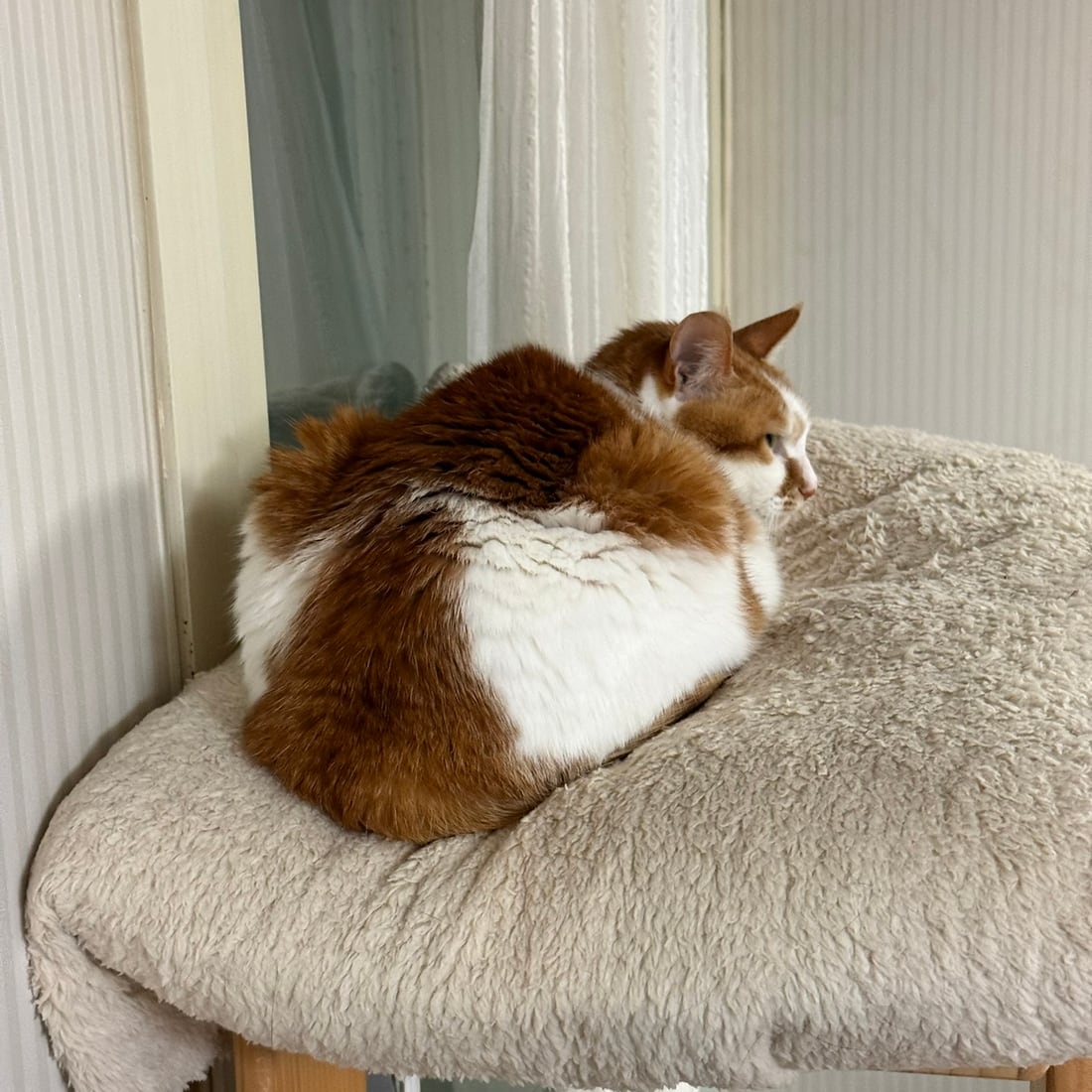
If you truly can’t cut your cat’s nails, you don’t have to. You can manage her claws without clippers, and for some cats that’s the honest end of the road. We know because one of ours, Yuja, has not had a proper nail trim in six years. She’s eight now, indoor-only, and doing fine.
So before you feel like a failing cat owner: there’s a difference between “I haven’t figured out the technique yet” and “this specific cat will draw blood before she lets me near her paw.” The first is worth pushing on. The second is worth working around.
First, be honest about which cat you have
Most cats can learn to tolerate trims with patience. If yours hisses or squirms but hasn’t hurt you, keep reading the standard playbook — short sessions, one nail at a time, treats, stopping before she’s had enough. That usually works within a few weeks to a few months.
But some cats are wired differently from the start. Yuja came to us from the street, rescued and cared for by family before she landed with us. You’d think a former street cat would be tough about handling. She’s the opposite. When she first arrived she spent two weeks behind the washing machine and wouldn’t come out — we had to slide her food and water bowls back there. For the first stretch, even brushing the fur at the tip of her paw got me bitten, and then she’d disappear for three days.
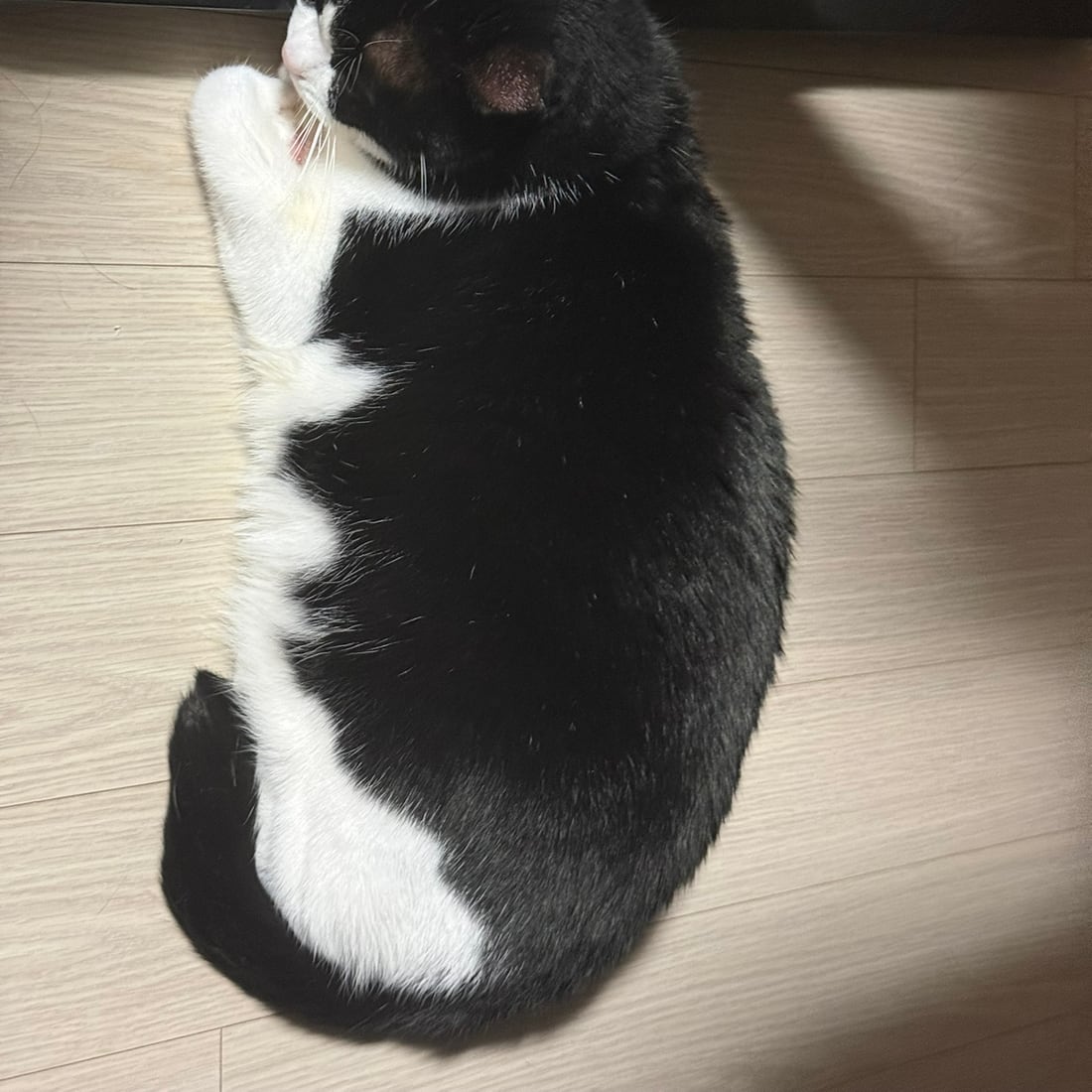
It took four years just to get to where I can touch her paw at all. Today I can rest a hand on her foot. Touch it twice in a row, though, and I get a hiss. That’s her ceiling, and I’ve stopped trying to break through it. Meanwhile our second cat, Mochi, lets me clip all ten with zero drama. Same house, same routine, completely different animals.
The point: if you’ve genuinely put in the time and your cat is in the Yuja category, you are not doing anything wrong by backing off.
What actually keeps unclipped nails under control
A cat you can’t trim is not a cat with dangerous claws forever. Indoor cats manage their nails in ways that don’t require you holding a paw hostage.
Scratching surfaces do most of the work. Scratching pulls off the worn outer sheath of the claw, which is a big part of what a trim accomplishes anyway. Give her options in the spots she already uses:
| Type | Why it helps | Where to put it |
|---|---|---|
| Tall vertical post (sisal) | Lets her stretch and strip front claws | Near where she sleeps or a doorway |
| Horizontal cardboard scratcher | Different angle, catches the cats who hate vertical | By the couch or feeding area |
| Flat sisal mat | Rear-claw wear, cheap | Anywhere she lounges |
You can buy all three at Chewy, Petco, or Target for under $20 total. Put them where she goes, not where you’d like the furniture arranged.
Check the nails you can’t cut. Even if you can’t clip, you usually can look. Watch for a claw curling around toward the paw pad — that’s the one situation where an uncut nail can actually grow into the pad and cause a wound. Front dewclaws (the “thumb” higher up the leg) are the usual troublemakers because scratching doesn’t wear them down.
When you can’t cut, let someone else
This is the option people forget. You don’t have to be the one holding the clippers.
- Your vet tech. A nail trim is a routine, cheap visit at most clinics — often $10 to $20, sometimes free with a checkup. Two experienced people who do this all day can get it done in under a minute with the right hold.
- A mobile groomer or cat-friendly grooming service. Some do house calls, which spares you the carrier fight.
- Ask them to do it while she’s already sedated for a dental or other procedure, if one is ever scheduled. Nails come free with the anesthesia.
I take Yuja to have her nails handled by people who are simply better and faster at the restraint than I am. There’s no shame in outsourcing the one task your cat has decided is a personal insult.
Soft nail caps: worth a mention, not a miracle
Soft plastic caps (Soft Paws is the common brand, on Chewy and at PetSmart) glue over the claw and blunt it. They work for households worried about scratched furniture or kids.
The catch is obvious: to put them on, you have to handle the paw and extend each claw for several seconds — which is exactly the thing your uncuttable cat won’t allow. For a mild squirmer, caps can be a decent middle ground. For a Yuja, they’re a non-starter, because getting the cap on is harder than the trim you already gave up on. I’ve never tried them on her for that reason. If your cat tolerates paw handling but you’re nervous about the clip itself, they’re worth a look.
Reduce the fight instead of winning it
If you want to keep trying — even just to maintain touch tolerance — stack the deck the way we did with Yuja:
- Touch the paw with no clippers in sight. One second, treat, done. Do this for days or weeks before anything sharp appears.
- Never do two in a row when she’s tense. One paw touch, walk away. Ending on a calm note is more valuable than getting one more nail.
- Catch her sleepy, not playful. A cat that just woke from a nap on a warm afternoon is your best window.
- Accept a slow pace. One nail every couple of days still gets you through all ten in under three weeks, and she never learns to dread the whole event.
Notice none of this is “restrain harder.” Forcing it taught Yuja that hands near paws mean danger, and undoing that lesson cost us years. Slow always beats fast with a sensitive cat.
When the claws might actually be a health issue
Most of the time an uncuttable cat is just a personality problem, not a medical one. But if a cat who used to let you touch her paws suddenly won’t — or starts limping, licking one paw obsessively, or reacting like a specific toe hurts — that sudden change is worth a vet visit rather than a behavior fix. A curled-in claw pressing into the pad, an infection, or arthritis in an older cat can all read as “she’s being difficult” when she’s actually in pain. Getting it looked at is faster than guessing.
The honest bottom line
Yes, you can give up on cutting your cat’s nails yourself. Six years in, I have with Yuja, and she’s healthy, indoor, and her claws are managed through scratchers plus the occasional pro trim. Mochi still gets her pedicure from me at home. Two cats, two completely different answers, and both are fine.
Do the maintenance that doesn’t require winning her cooperation — good scratchers, quick paw checks, someone skilled for the actual clip — and let go of the idea that a real cat owner clips at home. Some cats just never sign up for it.
This article is general information from a cat owner, not veterinary advice. Talk to your vet about your cat's specific situation.