Is Your Cat's Picky Eating About Trust, Not Taste?
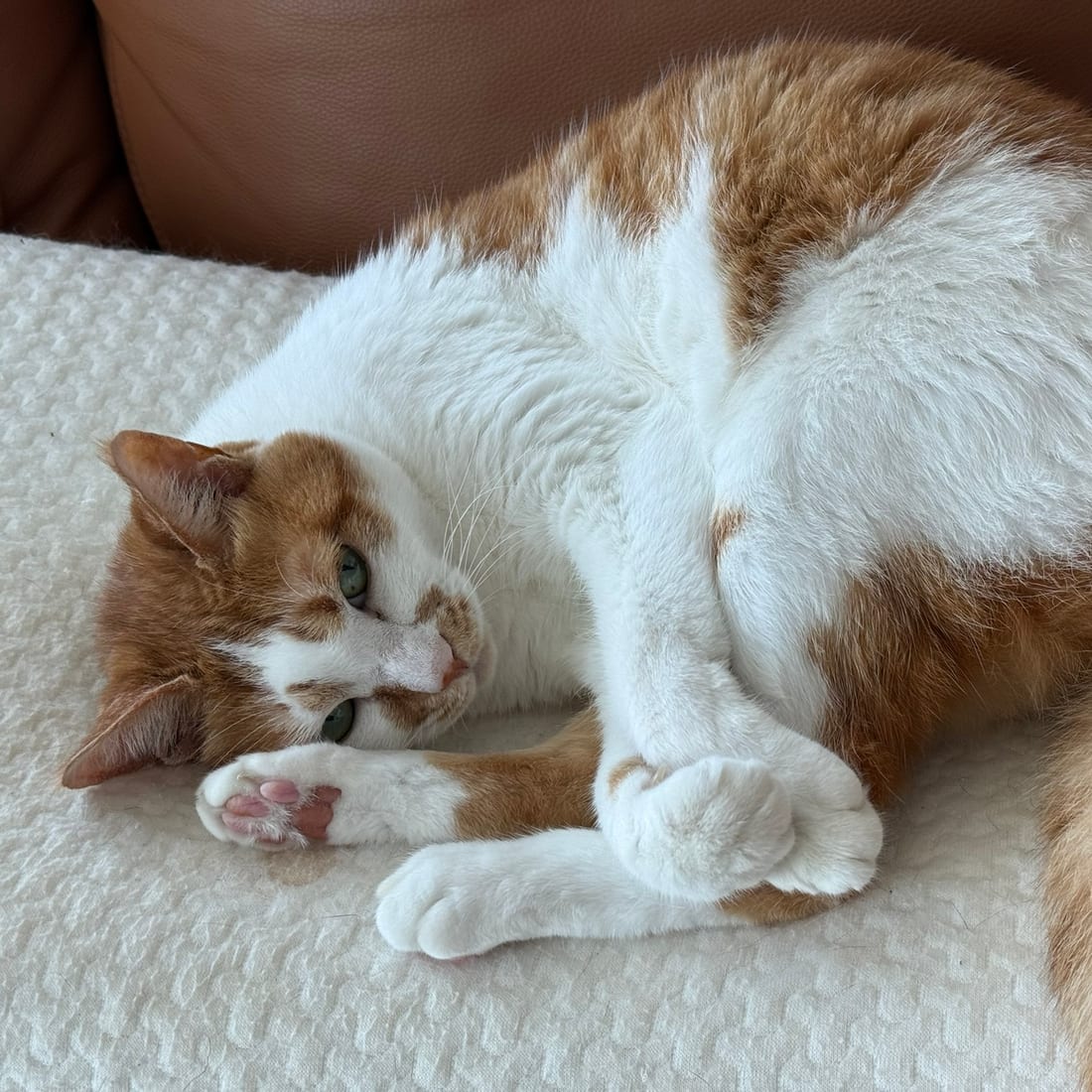
Sometimes, yes — a picky cat is really an anxious cat, and the food is fine. When a cat refuses a meal she ate happily last week, the trigger is often stress, a spooky feeding spot, or a person hovering too close, not the flavor. The clue is inconsistency: if she eats the same food in a calm moment but rejects it when things feel off, that’s trust, not taste.
But it’s not one or the other. Our first cat, Yuja, taught us that a single cat can be both — genuinely fussy about flavor and thrown off by anything that feels unsafe. Sorting the two apart is the whole game.
How can you tell if it’s trust or taste?
The fastest test is to watch when she refuses, not what she refuses.
| Sign | Points to taste | Points to trust/anxiety |
|---|---|---|
| Refuses the same food everywhere, every time | ✅ | |
| Eats fine alone but stops when you watch | ✅ | |
| Won’t touch food in one spot, eats it in another | ✅ | |
| Rejects a new flavor after one taste | ✅ | |
| Appetite drops when the house is busy or loud | ✅ | |
| Eats slowly in tiny bits regardless of setting | ✅ (or just her habit) |
A taste problem travels with the food. A trust problem travels with the situation. If moving the bowl to a quiet corner suddenly fixes things, you were never dealing with a flavor issue.
One caveat before you file anything under “personality”: a cat that was eating normally and then abruptly stops for more than a day needs a vet, not a theory. Sudden appetite loss is a health flag first. Trust talk comes after the physical stuff is ruled out.
What trust-based refusal looked like in our house
When Yuja first arrived, she wedged herself behind the washing machine and didn’t come out for a little over ten days — honestly, we don’t know the exact day she started eating, because we couldn’t see back there. She wasn’t refusing food because she disliked it. She was too scared to eat where she felt exposed.
We ended up sliding her bowl right up to her hiding spot with a long tool, because reaching in by hand got us scratched and bitten. She’d hiss the whole time. Then the next morning the food would be down a little. That’s the definition of a trust problem: the food was fine — the feeling wasn’t. If you’re in that stage right now, our step-by-step for feeding a cat that’s hiding and won’t come out walks through exactly what we did.
Even years later, remnants of that fear shape how she eats. She won’t finish a bowl in one sitting. She grazes, wanders off, comes back. If someone unfamiliar is over, or a plastic bag rustles nearby, she won’t eat at all until things settle. That’s stress overriding hunger — pure trust, no taste involved.

What was actually taste (and never changed)
Here’s where we have to be honest, because “just build trust” is only half the story.
Yuja is extremely picky about flavor in a way that has nothing to do with how safe she feels. She’ll eat a new food eagerly the first time. So we think, great, she loves it, and buy the big bag — and then she refuses it completely. We’ve thrown out full bags this way. Six years of trust hasn’t touched that habit one bit. If your cat does the same, you’re not alone; we wrote up the whole maddening pattern in why she won’t eat the same food twice.
So no, winning her over did not “cure” the picky eating. It fixed the fear-driven refusals — the hiding, the skipping meals when stressed. The taste side stayed exactly as stubborn as day one.
The routine that separated the two problems
Because we couldn’t change her taste, we controlled everything around the meal instead. Over time this made it obvious which refusals were fear and which were flavor.
- Fresh food, clean bowl, every meal. We swap to fresh kibble and wash and dry the bowl each time. She used to eat old, sat-out food late and then vomit — a fresh bowl stopped that. (More on whether this matters: does washing the bowl every meal actually matter.)
- The 12-hour rule. If food’s been down more than about 12 hours, she won’t eat it cleanly, so we don’t leave it that long.
- No hovering. We put the bowl down and walk away. Watching her eat is a stressor for her, not encouragement.
- A calm, low-traffic spot. Away from the door, away from where bags get set down.
Once those variables were steady, a refusal meant something. If she skipped a meal with the routine perfect, it was almost always the flavor — the big-bag betrayal again. If she skipped it and the house had been loud or a stranger had visited, it was stress.
What this means for your cat
Start by making the meal setting boring and safe: quiet spot, fresh food, no audience. Give it a week or two. If her eating steadies, you were dealing with a trust problem, and time plus a predictable routine will keep helping.
If she still snubs specific foods no matter how calm things are, that’s taste, and no amount of patience rewrites it — you manage it by rotating carefully and not over-buying. We buy small first, always.
And skip the trick most articles push: buying trust with treats. It never worked for us. Yuja treats snacks exactly like meals — she’ll take a new one once, then refuse it forever. We gave up on treats as a bonding tool years ago and leaned on routine and patience instead.
The honest takeaway after six years: trust and taste are two separate knobs. You can turn the trust one with time and calm. The taste one? On a cat like ours, it barely moves — and learning to live with that beat fighting it.
This article is general information from a cat owner, not veterinary advice. Talk to your vet about your cat's specific situation.