Do Shy Cats Use Cat Trees? Ours Claimed the Top Shelf
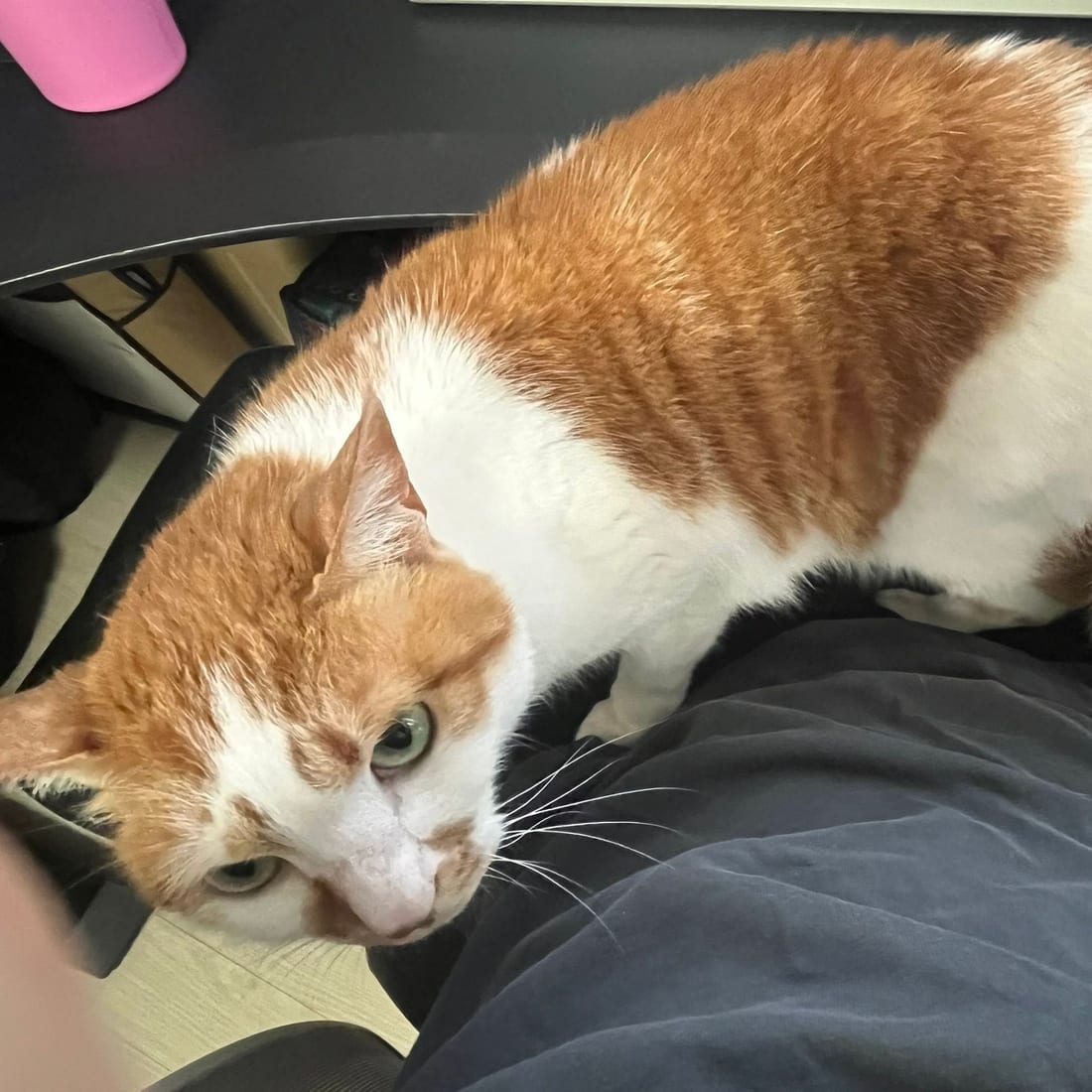
Yes — shy cats often use cat trees, and many of them use the highest shelf more than any other spot. The height is the whole point. A nervous cat wants to watch the room without being cornered, and a tall perch gives her exactly that: a full view of the space and a place nobody can reach from behind.
Our more timid cat, Yuja, is the proof. This is a cat who spent her first days in our home jammed behind a washing machine and who still, six years later, won’t let us touch her paws twice in a row. If any cat was going to ignore cat furniture, it was her. Instead, she claimed the top shelf of the cat tree and made it hers.
Why would a scared cat climb up instead of hiding low?
It seems backwards. A frightened animal should want to be small and tucked away, right? But a cat tree gives a shy cat something a floor-level hiding box can’t: a view.
Down behind the couch, Yuja can’t see what’s coming. Up on the top shelf, she can watch the entire room — who’s walking in, where the other cat is, whether anyone is heading her way. The height does two jobs at once. It puts distance between her and anything that worries her, and it gives her information. For a nervous cat, information is safety.
There’s a second thing people miss. A high perch is a hiding spot that doesn’t cut her off from the household. Behind the washing machine, Yuja was gone — we couldn’t see her and she couldn’t see us. On the top shelf she’s still part of the room, just at a safe altitude. That middle ground is where a lot of trust-building actually happens.
What does a shy cat actually want in a cat tree?
Not what the packaging photos promise. The fancy multi-level condos with enclosed cubbies looked like the obvious pick to us, but Yuja never cared about the covered box section. She goes straight to the open top shelf.
Here’s what has actually mattered for a nervous cat in our home versus what the marketing pushes:
| Feature | What marketing says | What our shy cat chose |
|---|---|---|
| Height | ”Multi-level fun!” | The single highest point, every time |
| Enclosed cubby | ”Cozy hideaway” | Ignored — she wants a sightline, not a cave |
| Placement | Anywhere it fits | Against a wall, full view of the room |
| Stability | Rarely mentioned | Critical — wobble and she won’t use it |
| Window nearby | Occasionally | A big plus; she watches from the top shelf |
Stability is the one nobody talks about and the one that makes or breaks it. A shy cat is already scanning for reasons to bail. If the tree sways when she jumps on it, that’s a reason. A wide, heavy base matters more than an extra level does.

Where you put it matters more than which one you buy
We learned this the slow way. A cat tree shoved into a busy hallway got almost no use. The same tree moved to a quiet corner with a clear line of sight to the room became Yuja’s default spot.
Think about where a nervous cat would choose to stand if she could pick anywhere: back to the wall, facing the entrances, nobody able to sneak up behind her. That’s where the tree should go. Against a wall is better than the middle of a room. A corner is better still. Near a window is a bonus, because a lot of shy cats still want to watch the window even when they won’t come down to greet you.
Keep it out of the main foot traffic. The goal isn’t to force interaction — it’s to give her a spot she can retreat to and still feel connected. Oddly, a reliable high retreat tends to make a cat braver about coming down, because she knows the safe perch is always there.
The two-cat version: same tree, different levels
We have two cats with opposite personalities, and the cat tree shows it perfectly. Looking back through months of photos, there’s a pattern I didn’t notice living it: Yuja on the top shelf, our confident one, Mochi, stretched out on a lower level with her paws dangling off the edge. Same tree, same room, two completely different relationships with it.
Mochi uses the tree like furniture — she’ll flop anywhere and nap in the open. Yuja uses it like a lookout tower. Neither is wrong. If you have one shy cat and one bold one, a tree with multiple levels lets them share the same piece of furniture without being in each other’s space, which is its own small win.
What we almost never see is the two of them piled together on the same level. In every photo they’re on separate shelves, separate beds, separate sides of the room. If your two cats keep their distance even when they share furniture, that’s normal — opposite personalities really are a thing, and a tall tree gives each of them a layer of their own.
What if your shy cat won’t touch it at all?
Some won’t, and that’s not a failure. Before you give up, run through the basics:
- Is it in a quiet spot with a good view? Move it before you write it off. Location fixes most “my cat ignores the tree” problems.
- Is it stable? Push on it. If it wobbles, she knows.
- Does she have a lower option she already trusts? A cat who’s still in the deep-hiding stage may not be ready for anything out in the open yet.
That last point matters. A tree is for a cat who’s past the behind-the-washing-machine phase. When Yuja first arrived, no amount of good furniture would have coaxed her out — she needed low, dark, enclosed hiding spots first. The top shelf came years later, after the trust was already there. The tree didn’t build the bond. It gave her a better place to be once the bond existed.
If your cat is still hiding and the tree sits untouched, don’t take it personally. Keep offering the safe, low spots, keep not chasing, and leave the tree where she can see it. Plenty of shy cats come around to height on their own timeline — ours took her sweet time, and now that top shelf is the first place I look when I can’t find her.
This article is general information from a cat owner, not veterinary advice. Talk to your vet about your cat's specific situation.