Best Hiding Spots to Give a Nervous Cat
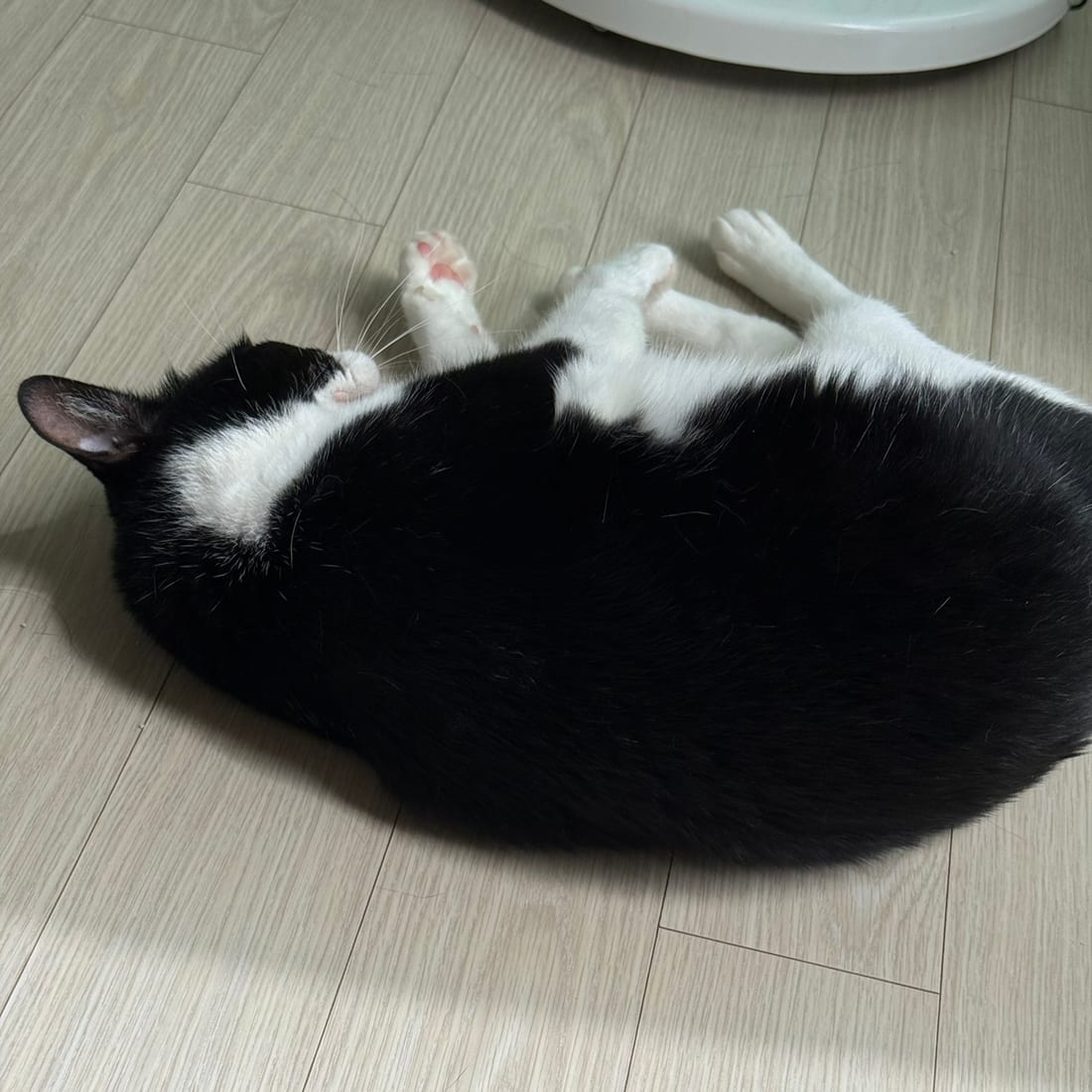
A nervous cat feels safest in a spot that’s dark, enclosed, and has one exit she controls — think behind furniture, under a bed, or up high on a cabinet. The single biggest thing you can do is let her choose the spot herself instead of assigning one. The place she picks tells you more than any product ever will.
We learned this the hard way with Yuja, who spent her first days with us wedged behind the washing machine — a spot we never would have offered on purpose.
What makes a hiding spot feel safe to a cat
Cats aren’t hiding to be difficult. A scared cat is looking for a place where nothing can sneak up behind her and she can watch the room. That usually means one of three things:
| Feature | Why it helps | Example |
|---|---|---|
| Enclosed / walls on most sides | Removes the “attack from behind” worry | Behind furniture, inside a covered bed |
| Elevated | Height feels safer; she can see approaching threats | Top of a cabinet, tall shelf, cat tree |
| Single controlled exit | She decides when to leave, not you | Under a bed against a wall, a box with one opening |
| Dark and quiet | Less sensory input to react to | Closet corner, gap behind an appliance |
Notice what’s not on the list: expensive, cute, or in a spot that’s convenient for you. A hiding spot works when it meets your cat’s terms, not yours.
Why the spot your cat picks beats anything you buy
When Yuja first came to us, we didn’t set out a hiding box. She found the washing machine on her own. It was dark, tight, backed against a wall, and completely out of our reach — everything a scared cat wants. We couldn’t even see her without slipping a phone camera into the gap, and she hissed at the camera alone.
Here’s the part that surprises people: both our cats ignore boxes. The whole “cats love boxes” thing is nearly gospel, and it’s just not true in our house — never has been. So if you buy a cardboard cat fort and your cat won’t touch it, that’s not a failure. It means her idea of safe is somewhere else.
That’s why the best move isn’t shopping — it’s offering a few different kinds of options and watching which one she claims. A cat who chose her spot trusts it. A cat who was placed in one didn’t get a say.
Good hiding spots you can set up today
You can improve the odds without buying anything special. Some ideas that map onto what actually calms a nervous cat:
- A gap behind or beside furniture. Pull a bookshelf or couch a few inches off the wall so there’s a defended nook. This is often the first spot a rescue cat claims.
- Under a bed, against a wall. One open side, dark, low traffic. Classic for a reason.
- Up high. A cleared cabinet top, a sturdy shelf, or a cat tree with an enclosed cubby. Yuja eventually moved from behind the washer to the top of the fridge — height was a step up, literally and emotionally.
- A covered bed or cave — offered, not forced. These work great for some cats. Set one out in a quiet corner and let her decide. If she ignores it for two weeks, it’s not the right shape for her.
- A carrier with the door removed. This does double duty: it becomes a safe den, and it stops the carrier from only meaning “vet day.” If your cat panics at the sight of the carrier, this is worth trying — we get into that more in choosing a carrier for a cat that panics.
Whatever you set out, put food and water nearby but not on top of her. When Yuja wouldn’t leave the washer, we slid her bowls into the gap using long tongs — after she scratched and bit us reaching by hand. It let her eat without giving up her safe spot, which is the whole point.
What not to do with a hiding spot
The worst instinct — and I’ve felt it — is to drag a scared cat out because you want to see she’s okay. Don’t. Pulling a cat from her spot teaches her the spot isn’t safe either, and you lose ground you can’t easily get back. We wrote a whole piece on why you shouldn’t pull a hiding cat out of its spot because it’s that important.
A few more things we’d skip:
- Don’t block every hiding option to force socializing. It backfires. What we did instead was let Yuja keep the choice while gently steering it. Once she’d moved to the fridge top on her own, we blocked the path back to the washer — not to trap her, but so her default became a better, more visible spot. She kept a safe place; it was just an upgrade.
- Don’t stare or reach in. For Yuja, just walking past or making eye contact set off hissing for weeks. Give her the room without giving her attention.
- Don’t expect a timeline. Yuja was behind the washer for a little over ten days — honestly, we don’t know the exact number of days, and that was six years ago. Some cats settle in a weekend, some take weeks.
How long until she stops needing the hiding spot
She may never fully stop, and that’s fine. A confident cat still likes a den. What changes is that hiding stops being a full-time job.
For us, the shift from “hides constantly” to “comes out but keeps a bolt-hole” happened gradually and unevenly. Yuja went from hissing at anyone who walked by, to tolerating us if we didn’t get too close, to coming down from the fridge on her own terms. The one thing I did the whole time wasn’t a technique. It was this: I didn’t chase her. I fed her, and I waited.
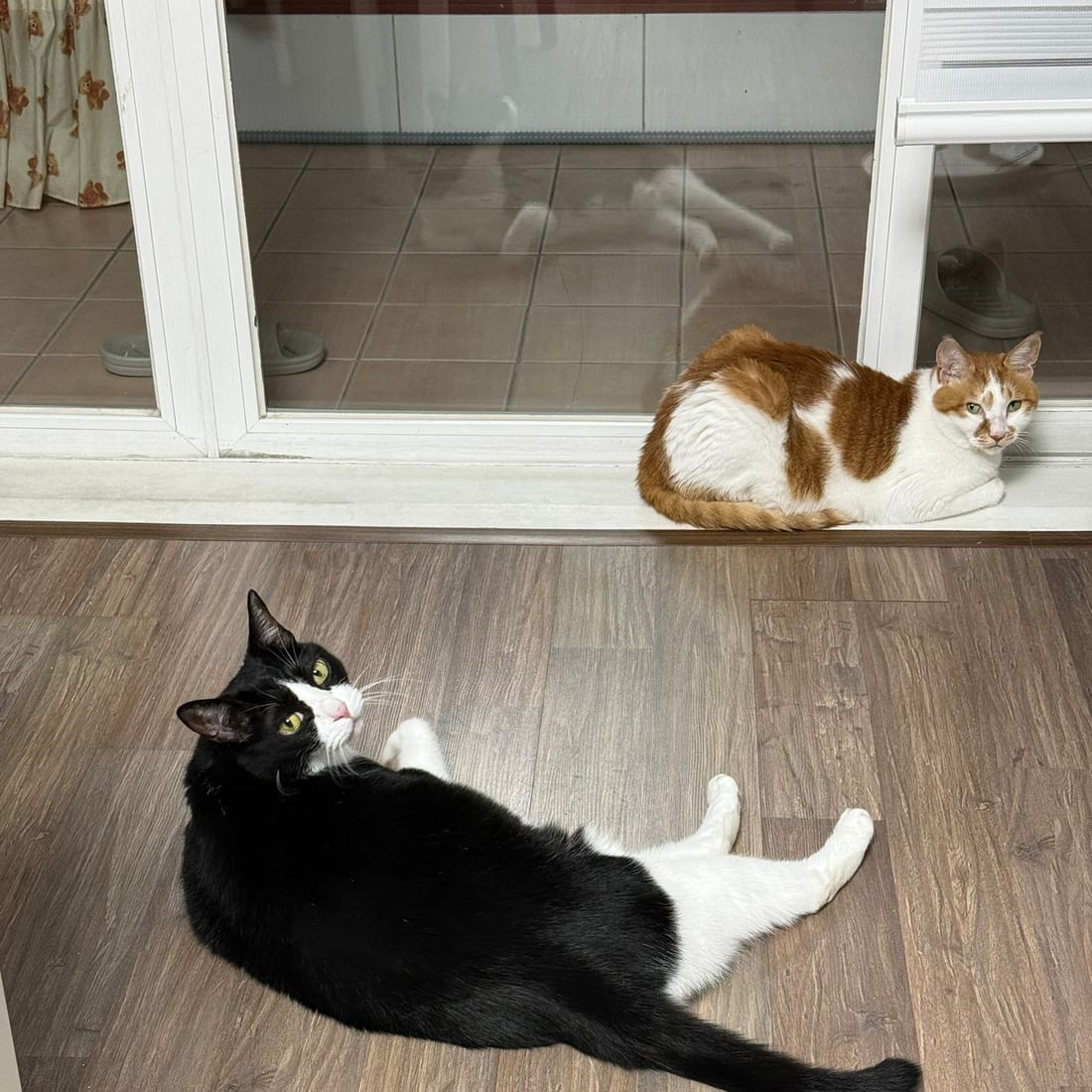
Meanwhile Mochi, who came to us at the same time, was eating and flopping around like she’d always lived there. Same house, same people, opposite cats. So if your nervous one is taking forever while nothing seems wrong, that contrast alone is normal.
One practical note worth keeping: hiding is expected, but a sudden change isn’t. A cat who was comfortable and suddenly won’t come out — or one who stops eating and drinking while hidden — is worth a vet visit, because pain and illness send cats into hiding too. If you’re not sure whether she’s eating back there, here’s how to tell if a hiding cat is eating and drinking without dragging her out to check.
Give her the dark, enclosed, high-up options. Then let her pick, and let her stay. The spot she chooses is the first place she’ll feel safe enough to start trusting the rest of the house — and you.
This article is general information from a cat owner, not veterinary advice. Talk to your vet about your cat's specific situation.