Halloween With a Shy Cat: Doorbells, Strangers, and Hiding
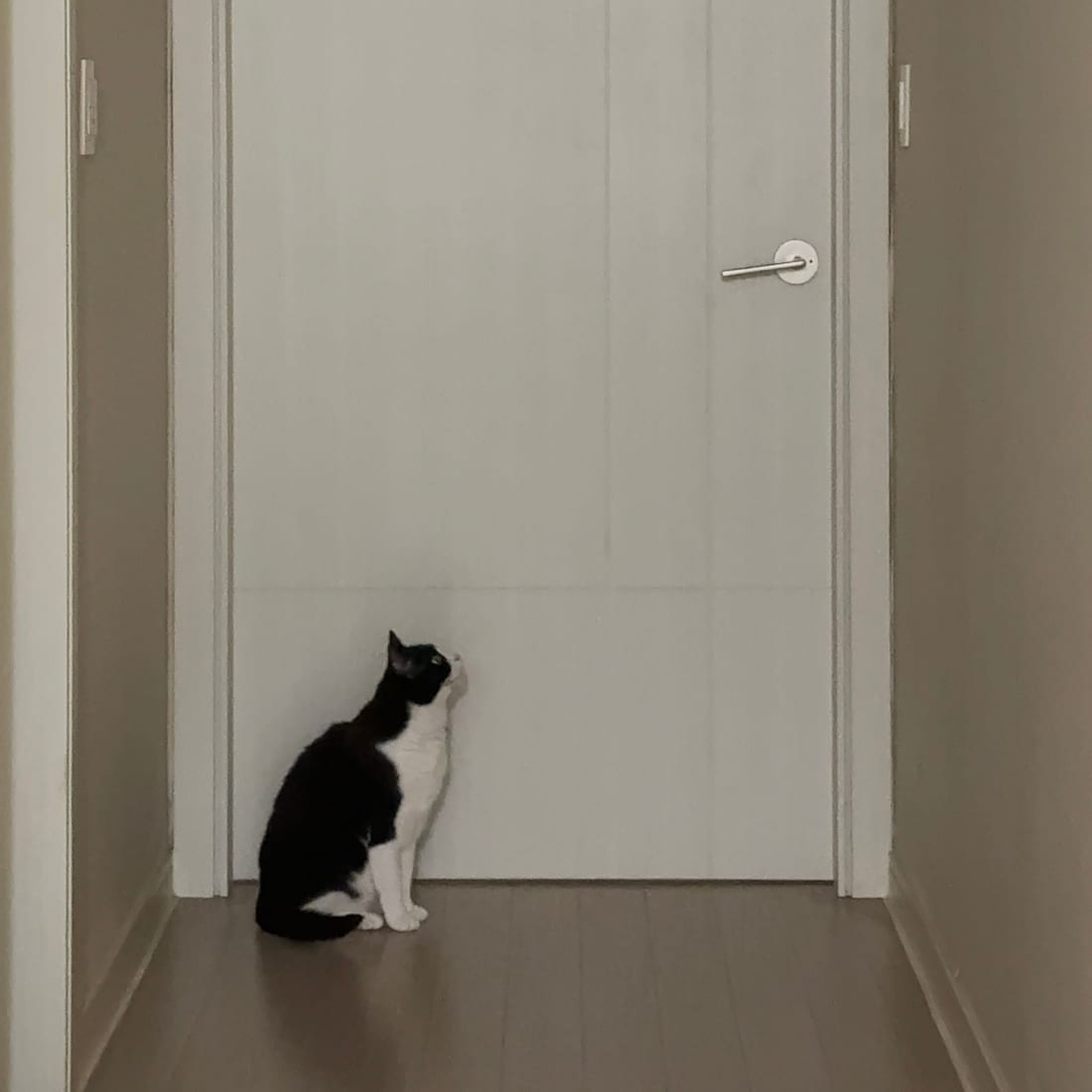
Let your shy cat hide, and set her up to do it before the first doorbell rings. Pick a quiet back room, put food, water, and a litter box inside, add some background noise, shut the door, and leave her alone for the evening. Don’t drag her out to “meet” anyone, and don’t keep her near the front door while strangers come and go.
That’s the whole plan. Everything below is just the detail of why it works and how we handle a night like this with a cat who treats a plastic bag like a threat.
Why Halloween is uniquely bad for a nervous cat
Most scary things in a cat’s life happen once and stop. The vacuum runs, then it’s over. A guest comes, then leaves. Halloween stacks all of it, on repeat, for hours: a doorbell every couple of minutes, strange voices right outside, the front door opening to cold air and movement again and again.
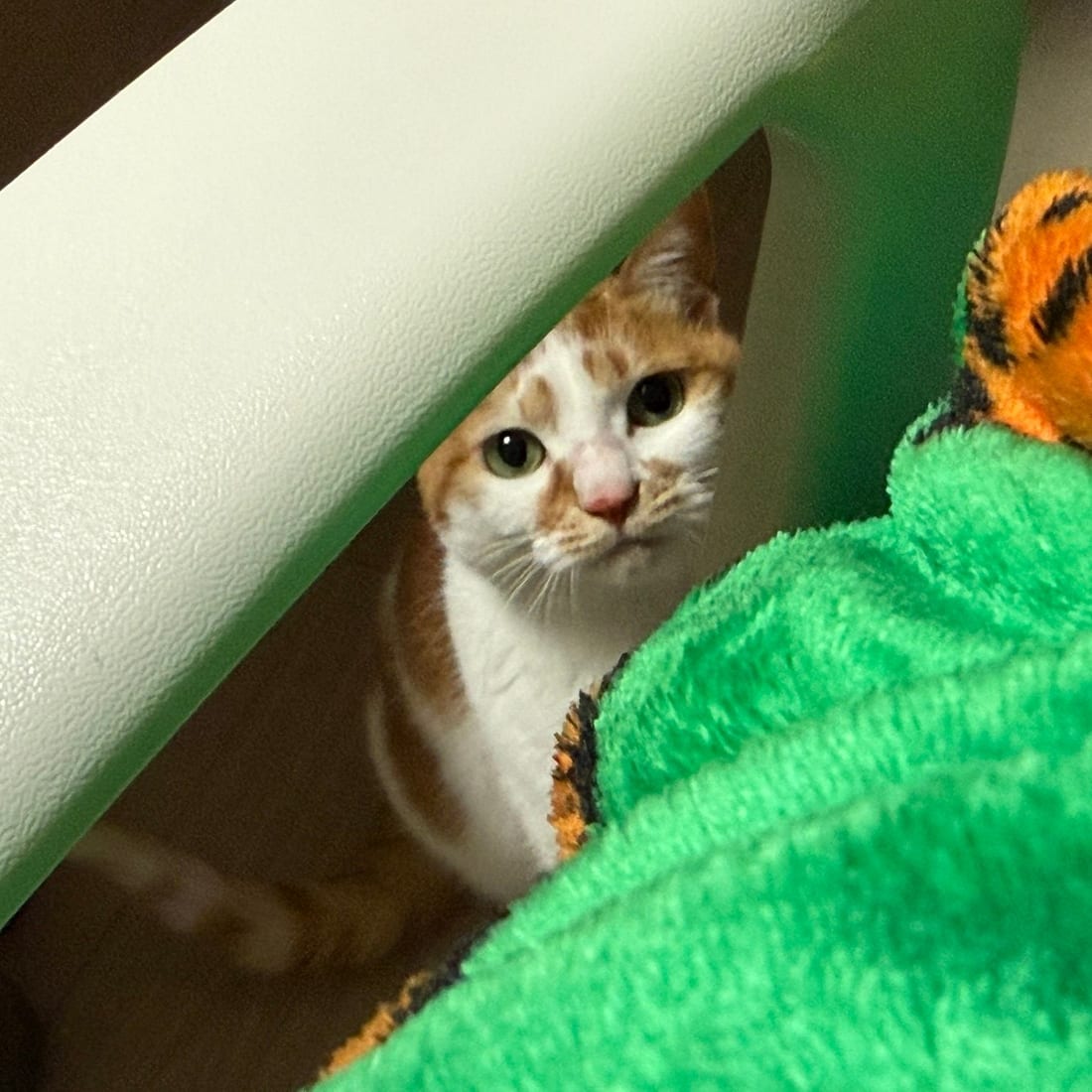
Our Yuja is the sensitive one. Six years in, she’s come a long way, but sudden sounds and unfamiliar people still send her straight into a gap behind furniture. One knock she can ride out. Twenty knocks across an evening is a different thing. The problem isn’t any single event — it’s that the night never lets her reset between them.
Mochi, our tuxedo, barely notices. Same house, same door, totally different cat. If you’re wondering why two cats react so differently to the exact same chaos, we wrote about that split here.
Where should my cat be during trick-or-treating?
In a closed room as far from the front door as your home allows, set up before anyone arrives. The goal is distance from the door plus a shut door between her and the noise.
Here’s what we put in the room:
| Item | Why it matters on Halloween |
|---|---|
| Food and fresh water | So she never has to cross the loud zone to eat |
| Litter box | A stressed cat may need it more, not less |
| Her usual hiding spot or a covered bed | Familiar cover lowers the panic |
| A sound source (fan, TV, soft music) | Masks the doorbell and voices |
| A worn t-shirt or blanket of yours | Your scent is a steady signal in a weird night |
Set this up a few hours early, not minutes before. If you move a nervous cat into a strange room right as the doorbell starts, you’ve added a second stressor on top of the first. Let her drift in and settle while the house is still calm.
One hard rule: get her behind that door before the first knock. A frightened cat near a front door that keeps opening is a genuine escape risk, even one who’s never once tried to go outside. The open door plus a startle is all it takes.
Let her hide — don’t pull her out
The instinct to check on a hiding cat is strong, especially when you can’t see her. Resist pulling her out of wherever she’s wedged herself. Hiding is the coping mechanism, not a problem to fix. When we yank a scared cat out of her spot, we teach her the spot isn’t safe either, which only pushes her somewhere harder to reach next time.
When Yuja first came to us, she spent about two weeks behind the washing machine — a little over ten days for sure, though honestly I don’t know the exact day she started coming out. What I learned in that stretch is the thing that still applies on a loud night: the fastest way through is to stop chasing and let her be. I slid her food and water back to her and waited. I didn’t reach in to reassure her, because to her, a hand reaching into her hiding spot was the threat.
So on Halloween, if she’s crammed behind the couch or under the bed, leave her there. Peek with your eyes if you need to confirm she’s okay — I’ve literally used my phone camera to check a gap I couldn’t see into — but don’t haul her out to comfort her. Being left alone is the comfort.
How to handle the door without making it worse
You can’t stop the doorbell, but you can shrink how much of it reaches her.
- Mask the sound. A fan or TV in her room turns a sharp doorbell into muffled background. This does more than anything else we do.
- Consider a “no doorbell” sign. A note asking trick-or-treaters to knock softly or just take candy from a bowl on the porch cuts the worst trigger entirely. Some years we skip answering altogether.
- Keep your own energy flat. Cats read us. If you’re tense and rushing to the door every two minutes, that reads as alarm.
- Don’t introduce her to anyone. Costumed strangers are not a socialization opportunity for a shy cat. Nobody needs to see her. She needs to not be seen.
When I absolutely have to do something loud near Yuja, I’ve found two moves that help: either I talk steadily so she knows the scary thing is attached to me, or I act completely indifferent, like I haven’t noticed her at all. On Halloween, the indifferent approach usually wins — the less I make it about her, the faster she settles.
What about the food and candy?
A nervous cat may skip her evening meal entirely, and that’s normal for one stressful night. Yuja eats in small amounts across the day anyway, and a disruption like this can push her off food for the evening. She catches up once the house is quiet. If your cat is still refusing food the next day, that’s when it stops being “just Halloween” and becomes worth a vet call.
Keep candy, especially chocolate, well out of reach — not that most cats go for it, but bags left on low tables are easy to knock down. And if you’ve got the kind of cat who chews odd things, mind the candy wrappers and decoration bits on the floor. Our Mochi has a real thing for rubbery, stringy materials, so loose wrappers would be exactly her flavor of bad idea.
The honest version
You’re not going to turn a scared cat into a party cat for one night, and you shouldn’t try. The win on Halloween is small and quiet: she spends a few loud hours in a safe room, eats a little late, and comes out when the house goes still. That’s success. No breakthrough, no cute photo with a pumpkin — just a cat who got through the noisiest night of the year without being forced to face it.
That’s really the whole philosophy with a fearful cat, holiday or not. Don’t chase, provide what she needs, and wait. Halloween just turns the volume way up on the waiting.
This article is general information from a cat owner, not veterinary advice. Talk to your vet about your cat's specific situation.