Do Rescue Cats Remember Living Outside?
Not the way you’d remember a bad day. Cats don’t seem to store street life as a story they can replay. What they do keep is the association — a specific sound, smell, or object tied to how it made them feel. So a rescue cat can look perfectly settled indoors and still bolt at one particular thing years later, because the feeling got stored even if the event didn’t.
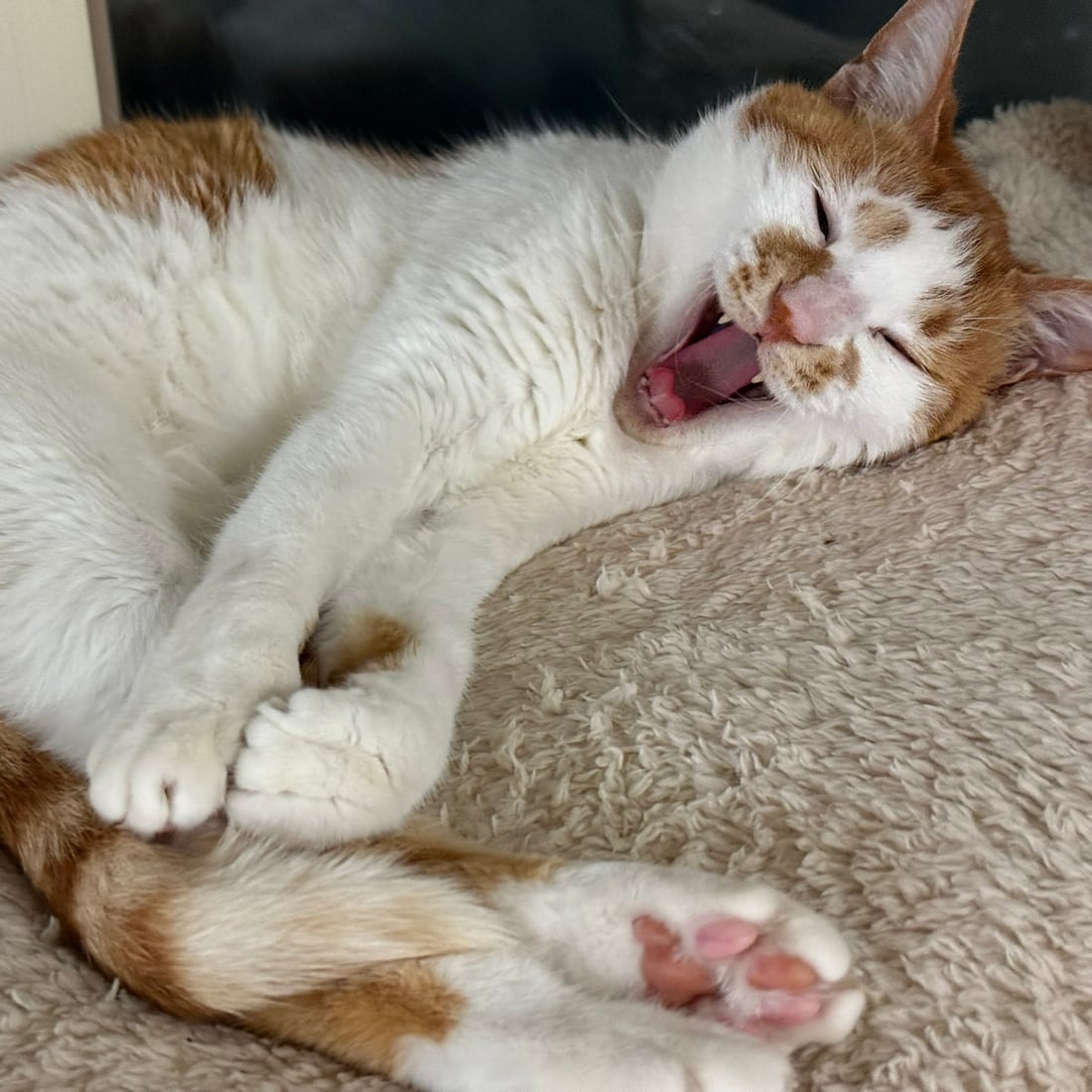
We’ve watched this play out for six years with Yuja, our orange-and-white first cat who lived outside before she came to us. She’s a completely different animal than she was in week one. But a handful of reactions have never left, and they tell you a lot about what “remembering” actually looks like in a cat.
What does a cat actually “remember” from the street?
Think of it less like a diary and more like a set of reflexes. A cat that had a scary experience with something doesn’t picture the scene — it just feels the alarm bell when that thing shows up again. The trigger fires, the body reacts, and the cat has no idea why any more than we do.
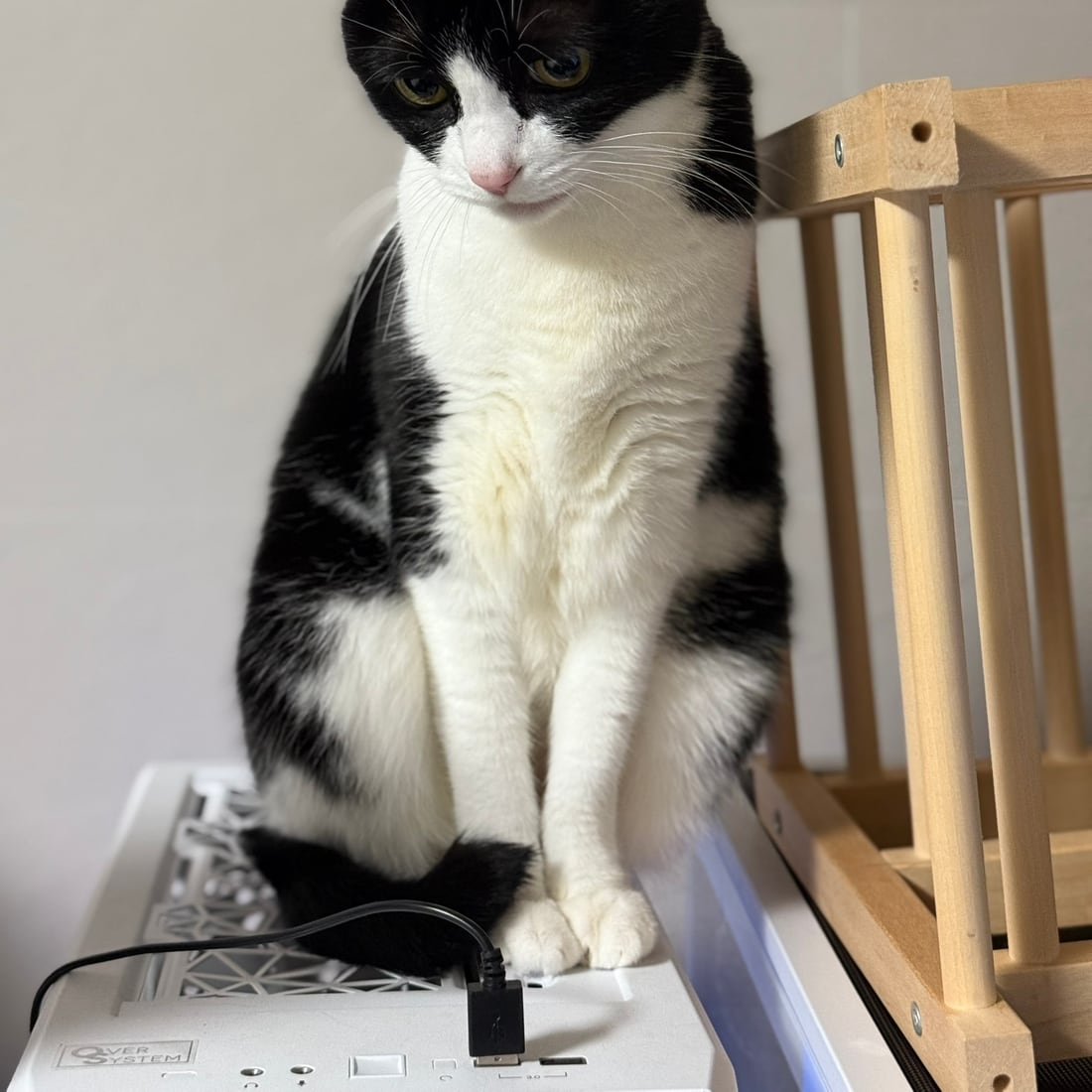
Here’s how that split shows up in Yuja versus her sister Mochi, the black-and-white tuxedo who came to us the same time but settled in immediately:
| Behavior | Yuja (lived outside, took years to trust) | Mochi (adjusted fast) |
|---|---|---|
| First two weeks in the home | Hid behind the washing machine, over ten days | Ate, roamed, acted at home right away |
| Plastic bag sounds | Used to bite and flee; still wary | No reaction |
| Being touched | Took 4 years before we could touch her paws | Rolls over for belly rubs on contact |
| New food | Refuses a food the second time; we’ve thrown out full bags | Eats anything, every time |
| Strangers at the door | Vanishes | Sometimes greets them |
Same house, same people, same food bowls. The difference is what each cat carried in with her. That contrast is the whole reason we started writing about them, and if you’re seeing it in your own pair, two cats with opposite personalities is more normal than it looks.
Why does she still react after years indoors?
Because the trigger is faster than her thinking. The clearest example in our house is plastic. Yuja used to hate the sound of a plastic bag so much it looked like more than a startle — it looked like a trauma response. She could be sitting calmly, getting scratched, totally content, and one rustle would flip her into biting and running. It was the single stimulus that could undo a good moment instantly.
We have no way of knowing what happened to her before us. Our best guess is that something during her outdoor life tied that sound to something bad — but that’s a guess, and it will stay a guess. We can’t confirm it and we’re not going to pretend we can.
What we can tell you is that six years didn’t erase it, they softened it. Today she doesn’t run. She’ll stand still and watch, alert but not panicked. That’s real progress you can see. And then there’s the part we still don’t understand: leave a plastic bag sitting on the floor and she’ll walk over and chew it. Scared of it when it moves toward her, drawn to it when it’s still. Cats don’t owe us consistency. We wrote more about that whole contradiction in why plastic bag sounds set some cats off.
Does the street memory ever fully fade?
Partly, but plan on some of it staying. The pattern we’ve lived is that the big, dramatic reactions shrink over time while a stubborn core stays put. Yuja’s timeline looked roughly like this:
- First two weeks: Behind the washing machine. We fed her by lowering the bowls back there with tongs after she scratched and bit our arms. We honestly don’t know the exact day she started coming out — the gap was too dark to see into.
- First year or two: Out in the open but hissing if you looked at her or walked past.
- Year 4: We could finally touch her paws. Two touches in a row still earns a hiss.
- Now, year 6: She asks for scratches, she watches plastic instead of fleeing, but paws, strangers, and anything moving toward her fast still hit a wall.
So did she forget the street? Some of it, functionally, yes. The panic that ruled her first two weeks is gone. But the reflexes that protected her out there haven’t been deleted — they’ve just gotten quiet enough to live around.
How to live with a memory you can’t erase
You don’t argue a cat out of a fear. You stop stepping on the trigger. That mindset — manage it, don’t cure it — is what actually changed daily life for us.
With the plastic problem, we do two things when we can’t avoid it (cleaning the litter box, for example):
- Say her name and keep talking. We want her to register that the scary sound is attached to us, not to some threat. A steady voice does more than silence.
- Or act like we never saw her. No eye contact, just get the job done and leave. Sometimes the least threatening thing is to be boring.
The rest of the time, the fix is simpler: we keep plastic away from her entirely. There’s no prize for forcing exposure. A few practical rules that have held up over six years:
- Don’t chase the backstory. You’ll rarely get it, and it won’t change what you do today.
- Map the triggers instead. Learn the two or three specific things that set your cat off, and design around them.
- Count small wins. “Stands and watches” instead of “bites and runs” is a genuine milestone, even if it never becomes “doesn’t care.”
- Let the calm cat be the calm cat. Mochi never needed any of this, and that’s fine. Not every rescue carries the same weight.
If you’re earlier in this process and mostly seeing a cat that won’t come out from under the bed, our full six-year trust timeline walks through what the slow version really looks like.
The honest answer to whether rescue cats remember living outside is that they remember the feeling more than the facts. You can’t reach into that and delete it. But you can build a home where the trigger almost never shows up — and where, when it does, your cat has six years of evidence that this time, it’s just you.
This article is general information from a cat owner, not veterinary advice. Talk to your vet about your cat's specific situation.