Why Cats Squeeze Into Tiny Gaps (And Whether to Block Them)
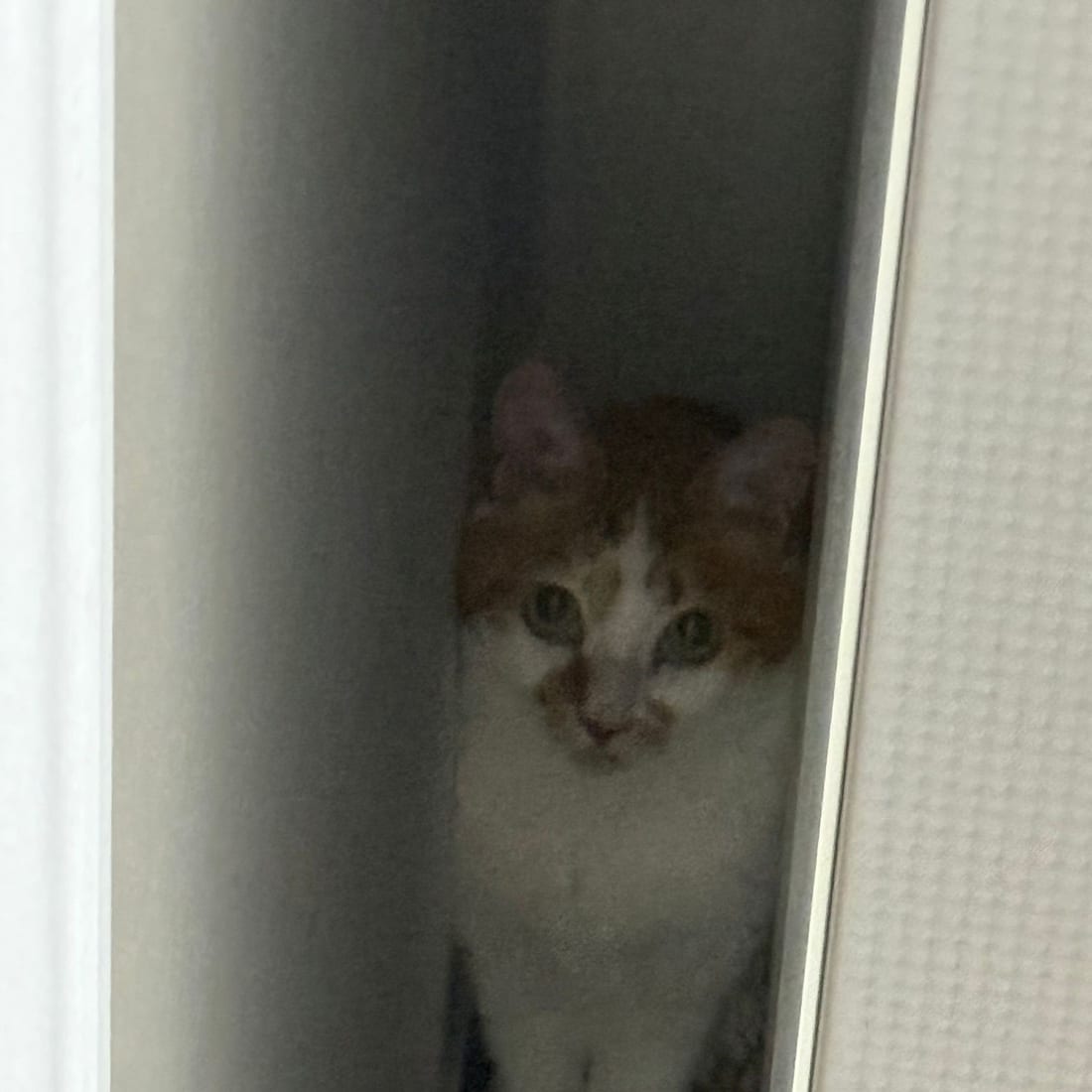
Cats squeeze into tiny gaps because a space with walls pressing in on most sides feels safe — it blocks ambushes and still lets them watch the room. For a nervous or formerly stray cat, a gap behind the fridge or between the couch and a scratcher is a control panel, not a trap. You usually shouldn’t block these. Only seal off a gap that’s an actual hazard.
Why does my cat wedge into gaps instead of using the bed I bought?
Because the gap does something the bed can’t: it covers her back.
A cat in a wide-open bed has to stay alert on every side. A cat crammed into a narrow slot only has one direction to watch — the opening. Everything behind and beside her is solid wall. That’s a huge amount of security for very little effort, which is why a $40 cushion loses to a three-inch slot behind a bookshelf.
Yuja, our skittish orange rescue, does this constantly. In our photos she’s pushed herself into the gap between a cabinet and the wall with just her back legs sticking out, peering at the room from the shadow. She’ll do the same thing under the blankets, leaving only her spine and back feet showing. It’s not that she has nowhere soft to go — she has a cat tree and a windowsill she also uses. The gap just serves a different need.
This isn’t unique to anxious cats, but anxious cats lean on it hardest. If you’ve wondered why the pricey bed sits empty, we got into that in why cats ignore the expensive bed and sleep on a chair.
Is it a hiding spot or a lookout?
Both — and the difference matters when you’re deciding whether to worry.
A true hiding spot is where a cat goes to disappear: deep, dark, hard to reach, and she stays put even when the room is calm. A lookout is a snug spot she chooses while staying engaged — ears up, eyes tracking you, ready to come out. The same gap can be either depending on her mood.
| Hiding (stress) | Lookout (comfort) | |
|---|---|---|
| Body | Pressed flat, tense | Loaf or relaxed |
| Eyes | Squeezed shut or wide, avoiding you | Soft, following the room |
| Reaction to you | Flinches, hisses, retreats deeper | Watches, blinks, maybe comes out |
| When | After a scare, new home, vacuum | Any ordinary afternoon |
| How long | Hours to days | On and off, briefly |
Yuja first went to a gap out of pure fear. When she arrived, she vanished behind the washing machine for a little over ten days — honestly we never knew the exact day she started coming out, because we couldn’t see back there. That was hiding. The slots she wedges into now, six years later, are lookouts. She watches us from them and strolls out when she feels like it. Same behavior, completely different meaning.
When should I block a gap?
Block it only if it’s genuinely dangerous or unreachable — not just because you’d rather she sleep somewhere cute.
Here’s how we sort it:
| Situation | What we do |
|---|---|
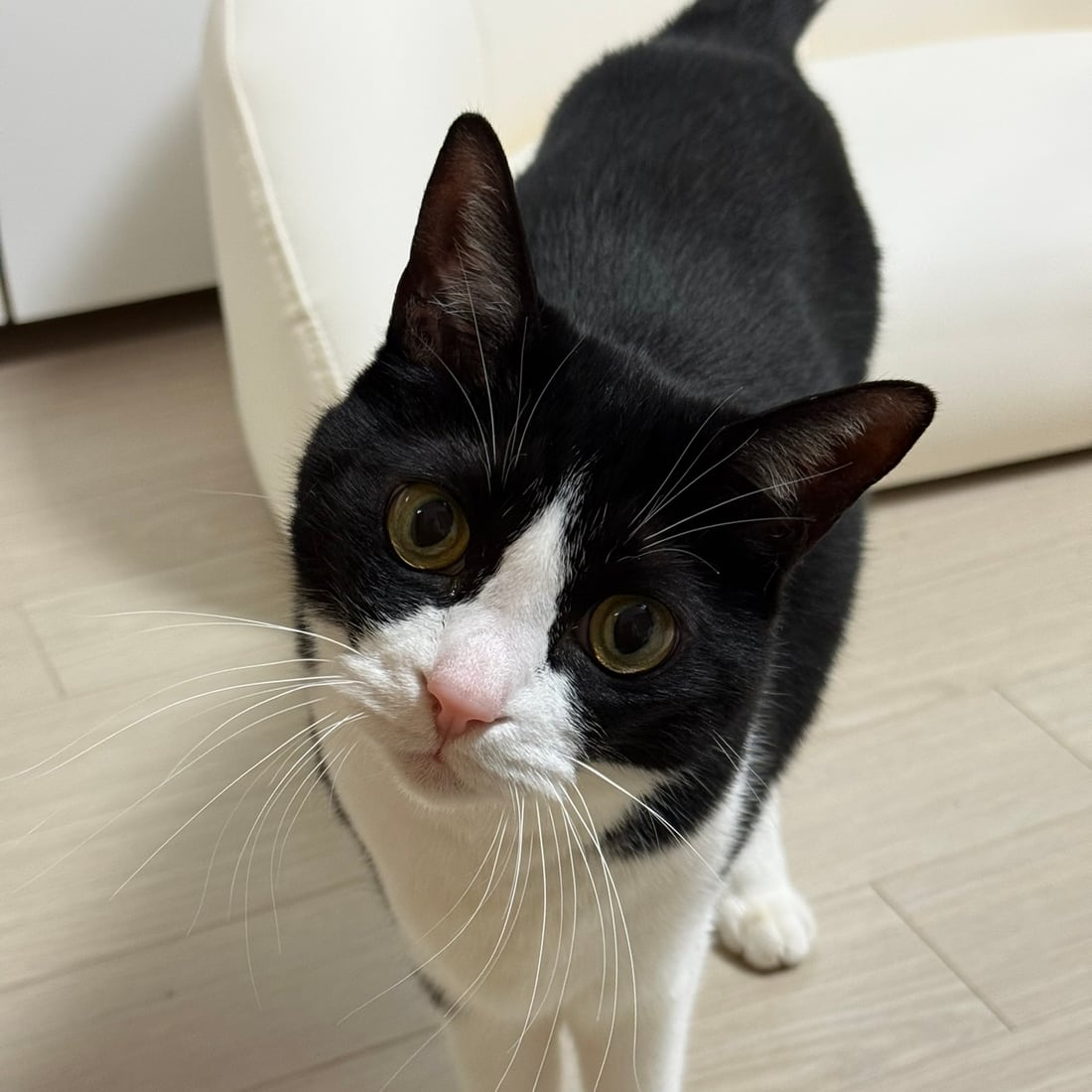
| Gap behind a running appliance with exposed cords | Block it. Mochi is drawn to rubbery, cord-like textures, so this is a real risk in our house. |
| Spot you physically can’t reach in an emergency | Block or modify, so you can get her out if she’s hurt or sick. |
| Gap where she gets wedged and can’t back out | Narrow it so she can’t enter, or widen it so she can. |
| Safe gap she uses as a lookout | Leave it. This is a win, not a problem. |
The one time we actively intervened wasn’t to remove a gap — it was to nudge Yuja toward a better one. After she moved from behind the washing machine to the top of the fridge, we quietly closed off her route back to the washer. We didn’t take away her hiding; we just made the unreachable, impossible-to-check spot off-limits so she’d settle somewhere we could actually monitor. That’s the whole philosophy: don’t strip a scared cat of cover, just don’t pull her out of the spot she chooses either.
If you remove a safe gap, a nervous cat doesn’t stop hiding. She finds a new spot, and the new one is almost always worse — deeper, darker, harder for you to reach.
What if she’s wedged in there and won’t eat?
This is the one scenario where a gap goes from quirk to concern.
When Yuja was behind the washing machine, we had no way to see her, so we tracked whether she was okay by what we could measure: the food and water went down a little each day, and eventually the litter box got heavier. Those were our proof she was alive and functioning, long before she’d let us near her.
Use the same approach. A cat choosing a snug lookout on a normal day is fine. A cat who’s crammed into a gap for days, isn’t touching food, and won’t come out for anything is a different situation — and if that’s sudden, especially in a cat who normally comes out, it’s worth a vet visit to rule out pain or illness. Cats hide when they hurt, and a new fixation on wedging into tight spaces can be your first clue something physical is off.
For the step-by-step on confirming a hidden cat is actually eating, we walk through it in how to tell if a hiding cat is eating and drinking.
Does the gap habit go away on its own?
Often it shifts rather than vanishes. As a cat gains confidence, snug low gaps tend to give way to high, open perches — cat trees, shelves, the top of the fridge.
You can watch this happen over years. Yuja still slides into gaps, but now she also spends plenty of time stretched across the top shelf of the cat tree and sitting out in the open looking up at us, mouth open, asking for something. The gap didn’t disappear from her toolkit; she just added better options and uses the gap less.
So if your cat is slowly trading hiding slots for perches where she can be seen, that’s not a loss — it’s trust showing up. And if she keeps a favorite gap forever, that’s fine too. A lookout she loves isn’t a problem to solve. It’s just where she likes to sit with her back to the wall.
This article is general information from a cat owner, not veterinary advice. Talk to your vet about your cat's specific situation.