Why Does My Cat Purr Before I Even Touch Her?
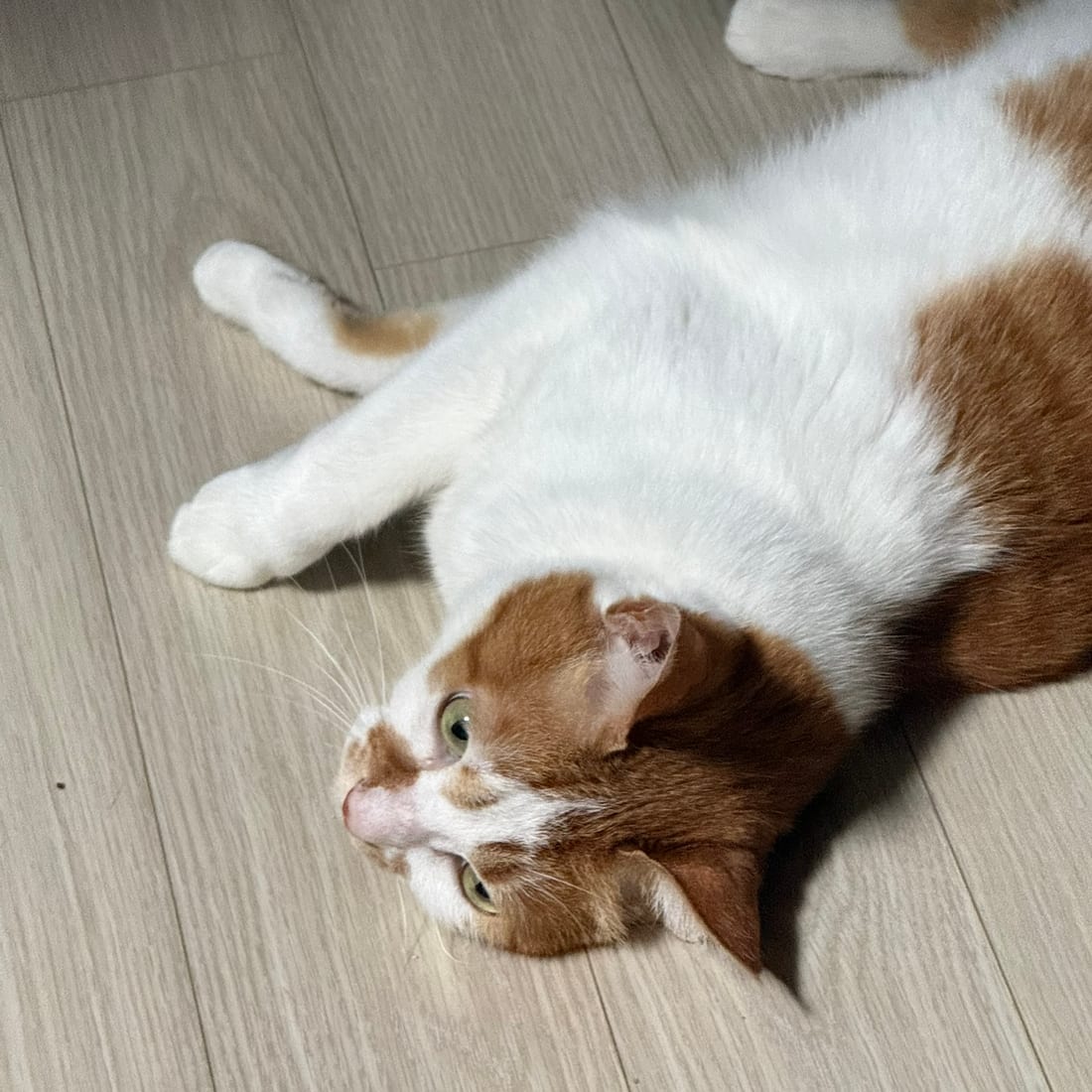
If your cat purrs before you’ve laid a finger on her, she’s most likely asking for something rather than telling you she’s already content. In our house the purr shows up the moment she wants to be scratched — it’s a request, a “come deal with me” signal, not a reward for petting that hasn’t happened yet.
That surprised us, because the internet treats purring as the universal happy sound. With our cat Yuja, it works almost backwards.
Isn’t purring supposed to mean a cat is happy?
That’s the popular version, and it’s not wrong — just incomplete. Purring is more like a general-purpose vibration cats produce in lots of situations, including some that clearly aren’t happy ones. Cats purr at the vet. Kittens purr while nursing. Some cats purr when they’re frightened or in pain, apparently to self-soothe.
So “purring equals happy” is a shortcut, not a rule. The useful question isn’t whether she’s purring but what she’s doing while she purrs. The context around the sound tells you far more than the sound itself.
Why does my cat purr right before I touch her?
Because she’s making a request, and the purr is part of the ask. Yuja, our orange-and-white rescue, is not a lap cat. She’s the sensitive one — it took us four years just to touch her paws, and she still hisses if you push it. So when she seeks us out, it stands out.
Here’s the pattern we see almost daily. She’ll come over, settle into a loaf position beside us, and set herself up to be scratched. By the time our hand starts moving toward her, the purr is already going. She hasn’t been touched yet. The purr came first.
That timing is the whole point. If the purr were a response to feeling good, it would start after the scratch. Starting before means it’s part of the setup — her way of flagging, “I’m here, pay attention to me.” Our best read is that she’s using it as a look-at-me signal.
Where did she learn to use a purr this way?
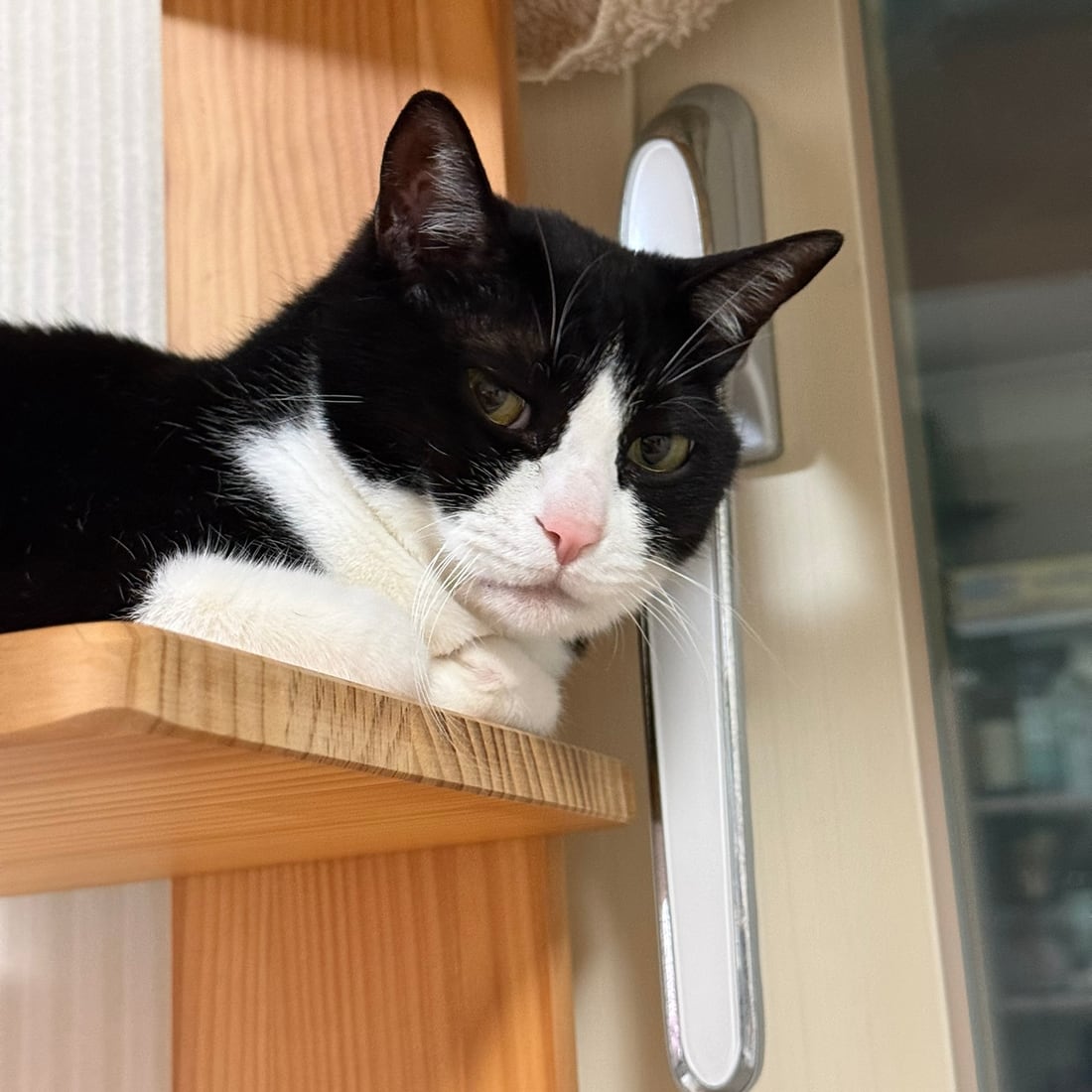
We think she picked it up from our other cat, Mochi — but repurposed it. Mochi is the friendly tuxedo who flops and rolls for attention constantly, and she purrs in the more typical, easygoing way. Yuja seems to have noticed the sound getting Mochi results and adopted it, but wired it to a different job: demanding, not relaxing.
We can’t prove that, and we won’t pretend to. Cats aren’t reading a manual on what purrs “mean.” What we can say is that with Yuja the purr reliably lines up with wanting attention, not with already having it.
| Situation | What the purr probably means |
|---|---|
| Cat sets up next to you and purrs before contact | A request — “come pet me / notice me” |
| Cat purrs while being petted, body loose | Contentment, the classic version |
| Cat purrs at the vet or while hiding, body tense | Self-soothing under stress |
| Cat purrs around the food bowl at mealtime | Solicitation — “feed me now” |
| Cat purrs, then bites or walks off | Got what she wanted, or overstimulated |
How do I tell a “please” purr from a “happy” purr?
Watch the body, not the volume. The sound is nearly identical; the posture and timing aren’t. A demand-purr usually comes before you engage and pairs with an expectant setup — the cat positioning herself, eyeing you, maybe a paw tap or a headbutt thrown in.
A contentment purr shows up during attention, when the body is already loose and settled. Here’s the quick contrast we go by:
- Timing. Before contact = request. During contact = contentment.
- Posture. Alert loaf, facing you, watching = asking. Melted, half-closed eyes, kneading = content.
- What follows. If she leans into your hand and stays, that was a real “yes.” If she got her scratch and left, the purr did its job.
With Yuja there’s a catch that keeps us honest: even a good scratch has a short shelf life. Two scratches in and she may whip around and grab your hand. So her purr can start as a genuine request and still end in a nip once she’s had enough — which is its own topic if your cat bites you mid-petting.
When a purr is worth a second look
Most demand-purring is nothing to worry about — it’s just a cat being a cat and getting what she wants. But because cats also purr to self-soothe when they hurt, an unusual purr matters. If a normally quiet cat suddenly purrs in a tense, constant way while hiding, hunching, refusing food, or acting off, that pairing is worth a vet visit to rule out pain. The purr alone isn’t the alarm; the purr plus a cluster of “not herself” signs is.
For a healthy cat who’s simply learned that a purr summons a human, there’s nothing to fix. Honestly, we find it a little charming. Yuja spent about two weeks hiding behind the washing machine when she first arrived, hissing if we so much as pointed a phone at her. A cat who now walks up, plops down, and pre-announces that she’d like a scratch is a cat who’s decided we’re worth asking. That took six years.
The short version
A purr before you touch her is a message, not a verdict. Most often it means “notice me” — she’s opening a request and expects you to answer. Read the timing and the body around it: purr-before-touch with an alert, expectant posture is an ask; purr-during-touch with a loose, melted body is contentment.
And keep the old rule in perspective. Purring is a tool cats use for lots of things, from asking for dinner to calming themselves down. In our house it turned out to mean “pay attention to me” — which, coming from a cat who once wouldn’t let us in the room, is a purr we’re glad to hear.
This article is general information from a cat owner, not veterinary advice. Talk to your vet about your cat's specific situation.