Why Does My Cat Sit in the Empty Bathtub?
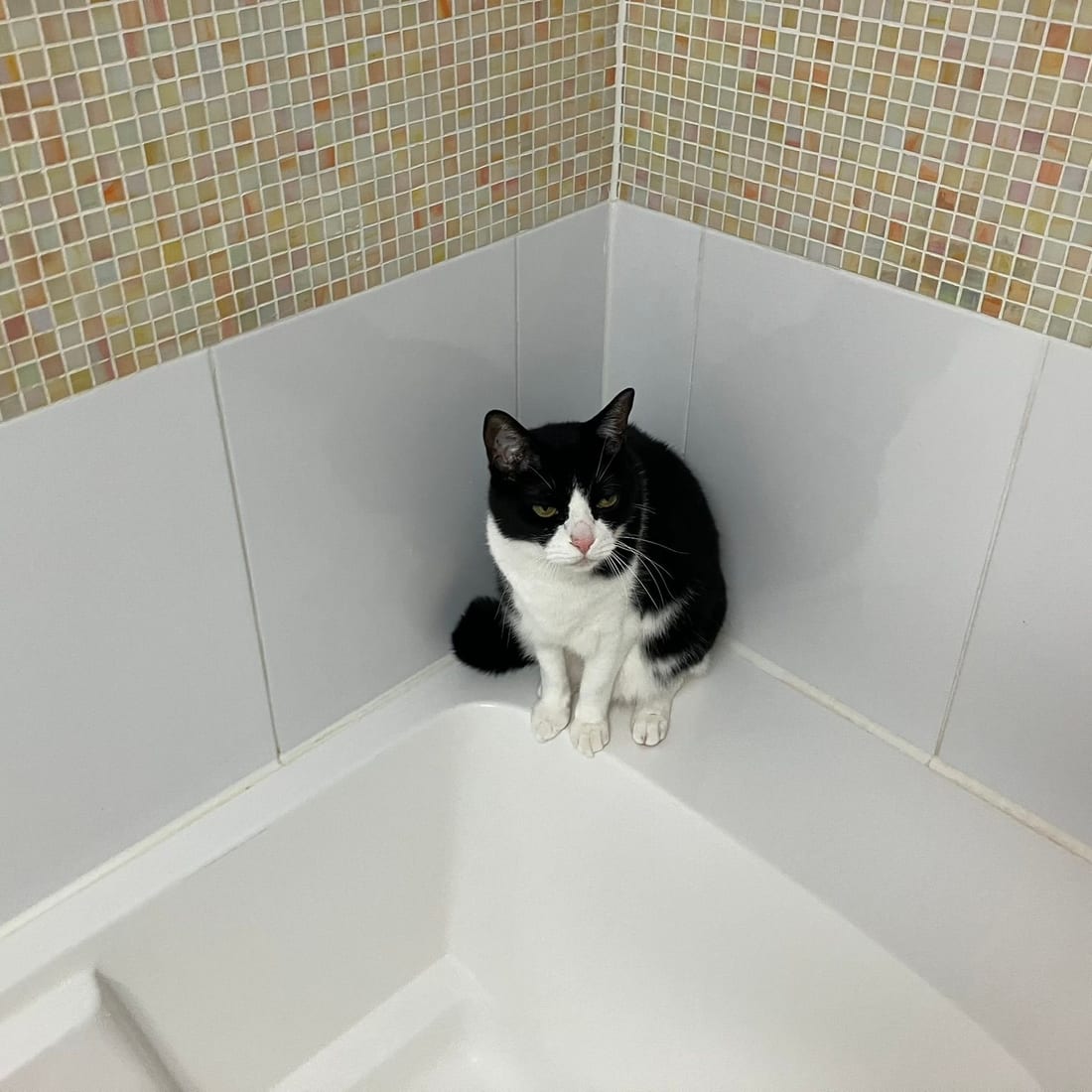
Cats sit in empty bathtubs because the surface is cool, the walls are smooth and curved, and sitting down low inside one feels enclosed and safe. It hits three things cats like at once: a firm place to press against, a cool spot when they’re warm, and a lookout with solid sides. It’s a normal quirk, not a problem.
Mochi, our tuxedo, does this. We have a photo of her just sitting in the empty tub, upright, looking around like she’s inspecting the room. Nothing was wrong. She wasn’t hiding or sick. The tub was simply a spot she wanted to be in that day.
What’s the appeal of a hard, empty tub?
From a human angle, a bathtub is the least cozy place in the house — cold, hard, slippery. That’s exactly why some cats like it.
| Feature of a tub | Why a cat might want it |
|---|---|
| Cool porcelain or acrylic | A warm cat uses it to dump heat, like lying on tile |
| Smooth, curved walls | Pressing a body or head against a solid surface feels secure |
| High sides, open top | Enclosed on three sides but with a clear view out |
| Small, defined space | A contained spot is easier to feel in control of |
| Echoey acoustics | Some cats seem to enjoy how their own voice sounds |
Not every cat wants all of these. A cat lying stretched flat on the bottom is probably cooling off. A cat sitting upright with its sides against the wall is more likely after that walls-around-me feeling. Watching the posture tells you which one you’re getting.
Is my cat too hot, or just weird?
Both are common, and you can usually tell them apart by the season and the sprawl.
A heat-seeking tub visit tends to happen on warmer days, and the cat lies out long and flat against the cold bottom, sometimes on its side. That’s a cat trading your warm couch for a cool floor. Cats do the same thing on bathroom tile, kitchen floors, and the inside of a sink.
A “this is just my spot” visit looks different. The cat sits upright or loafs, stays alert, and might do it year-round. That’s closer to picking any odd resting place. We’ve written before about why cats skip the expensive bed and sleep on a chair — the tub is the same instinct turned up a notch. Comfort, to a cat, isn’t only about softness.
Is it a hiding spot or a resting spot?
This is the distinction that actually matters, because a nervous cat using the tub to hide is telling you something different than a relaxed cat lounging in it.
A resting cat in the tub is loose. Eyes half-closed, maybe sleeping, ears neutral, breathing slow. It leaves when it feels like leaving. Nothing about the scene is tense.
A hiding cat is tight. It’s wedged against the far end, watching the door, flinching at sounds, and it went in right after something stressful — a vacuum, a guest, a loud delivery. The tub, in that case, is doing the job a closet or a gap behind furniture usually does: a small space with a wall at its back.
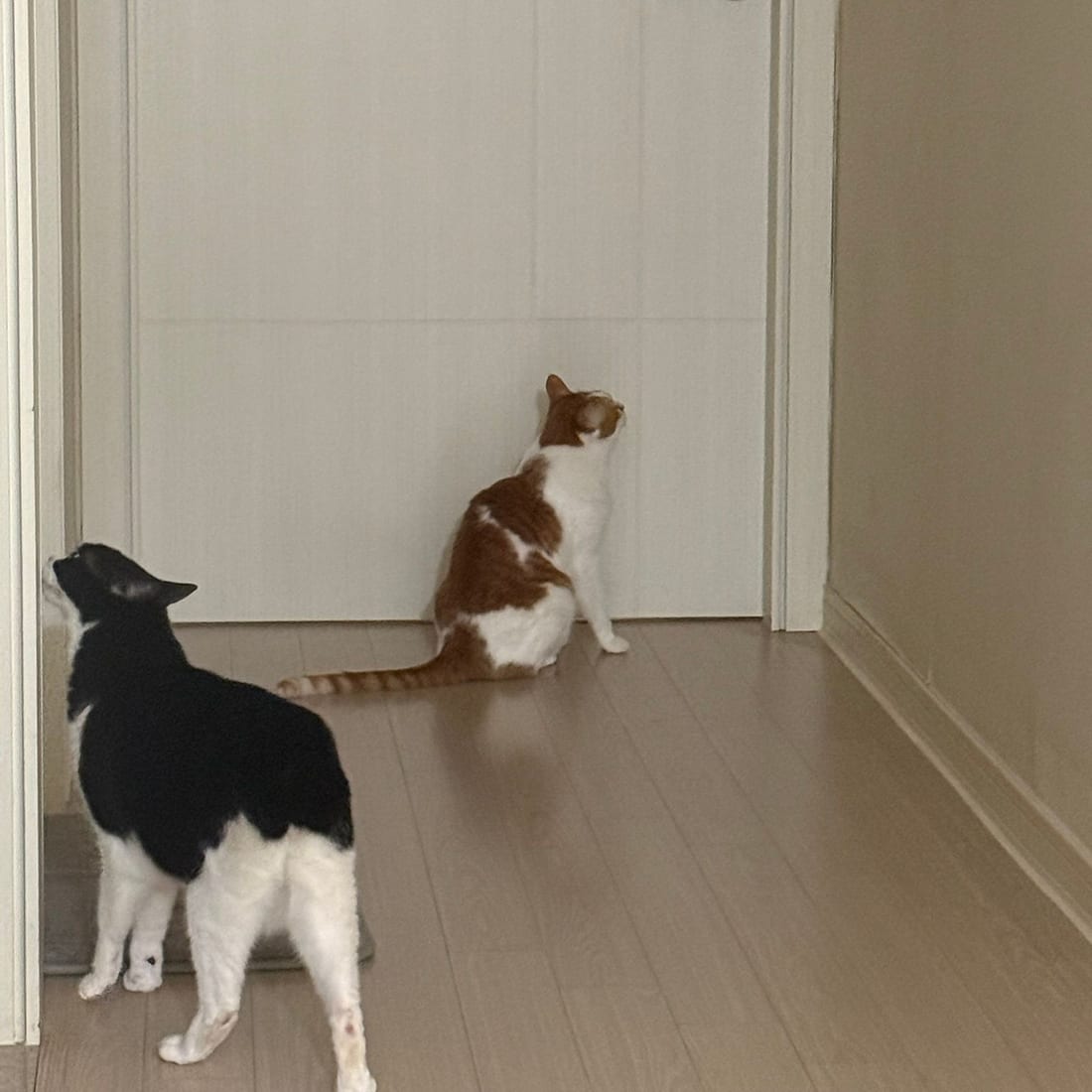
Our other cat, Yuja, is the anxious one, and she hides in tight spots constantly — gaps between the wall and appliances, behind curtains, under blankets with just her back feet showing. If your tub-sitting cat matches that pattern, treat it like any hiding behavior and don’t drag them out. We’ve covered why pulling a hiding cat from its spot backfires and it applies here too. Let them use the tub, and look at what sent them there.
With Mochi it’s not hiding. She’s the confident one — she greets us at the door every day and rolls over for belly rubs. Her tub sits are relaxed, not panicked. That’s the difference in one house, with two very different cats.
When should I actually worry about it?
Most of the time, a cat in an empty tub is harmless. A few situations are worth a closer look.
- Cleaning product residue. If you just scrubbed the tub, rinse it well before your cat climbs in. Cats groom whatever gets on their paws and coat.
- Standing water or a wet surface. A slip in a tub can hurt a cat, and some cats dislike wet feet enough to panic. Keep it dry.
- Steep, tall sides. A kitten, a senior, or an arthritic cat may get in and struggle to get out. If you hear repeated crying, check that they can actually climb out.
- A sudden new obsession. If a cat that never used the tub suddenly camps in it, pressing its belly to the cool surface and acting off, that’s worth mentioning to your vet. Cats sometimes seek cool, hard surfaces when they don’t feel well, and a quick check rules out the boring-but-real causes.
That last one is the only health flag here, and it’s about a change, not the habit itself. A cat that’s lounged in the tub for years is almost certainly just doing its thing.
Should I give my cat a better version of this spot?
If you’d rather your cat not nap where you shower, you can offer the same qualities somewhere else instead of just shutting the bathroom door.
What the tub provides is cool, firm, and partly enclosed. So the swap is a cool, firm, partly enclosed alternative: a cardboard box won’t do it (and in our house, neither cat likes boxes anyway — Mochi has climbed into a delivery box maybe once or twice in years, and she looked uncomfortable doing it). Better bets are a shallow bin on a cool floor, a tile corner, or a low shelf against a wall. Mochi also sits on the desk next to the laptop, though she likes cushions and blankets too, so for her it isn’t only about a hard surface.
Honestly, though, letting it happen is usually fine. A dry, clean tub is one of the cheaper weird spots a cat can choose. Keep it rinsed, keep the lid down on anything your cat shouldn’t drink, and let them inspect the room from the tub when the mood strikes.
This article is general information from a cat owner, not veterinary advice. Talk to your vet about your cat's specific situation.