Why Does My Cat Sit on Top of the Fridge?
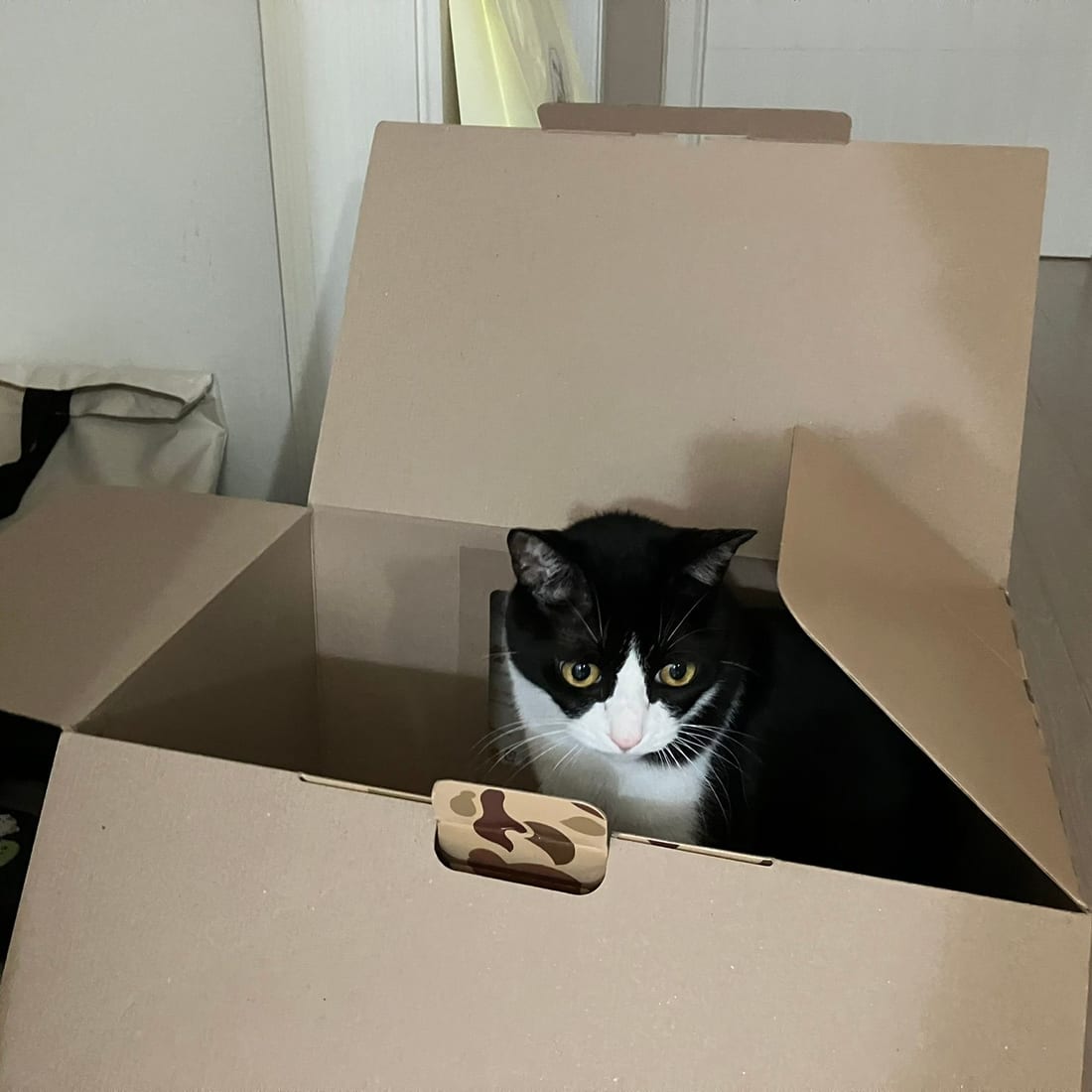
Cats sit on top of the fridge because it checks three boxes at once: it’s high, it’s warm, and it gives them a full view of the room with their back protected. For most cats it’s not a problem — it’s a cat doing exactly what cats are wired to do. The fridge just happens to be the tallest, warmest, least-interrupted spot in the house.
That’s the short answer. The longer one is more interesting, because which cat climbs up there, and when they started, tells you something about how your cat feels in the house.
Why the fridge specifically?
A few things stack up to make the fridge a five-star location from a cat’s point of view.
| What the fridge offers | Why cats want it |
|---|---|
| Height | A safe vantage point where nothing can sneak up from above |
| Warmth | The motor and coils give off gentle heat, especially at the back |
| A protected back | Against the wall, so they only watch one direction |
| Low traffic | People don’t walk through it the way they do a countertop |
| A clear view | They can see the whole kitchen and who’s coming |
Height is the big one. In the wild, elevation means both safety and a good view of prey. Indoors, that instinct doesn’t switch off just because there’s no prey. A cat on the fridge is essentially saying, “I can see everything from here, and nothing can get behind me.”
The warmth matters more than people think. The back and top of a running fridge stay slightly warmer than the rest of the room, and cats are heat-seekers. Add a sunny kitchen window nearby and it’s a napping jackpot.
Is my cat on the fridge because she’s stressed?
Not necessarily — but it can be. There’s a big difference between a cat who always lounges up high and a cat who suddenly retreats up there.
A relaxed cat on the fridge looks relaxed: loafed up, eyes half-closed, maybe asleep. That’s comfort-seeking, not fear.
A stressed cat looks tense: upright, wide-eyed, tracking movement, ready to bolt. That cat is using height as a lookout tower, not a bed. If guests just arrived or a vacuum is running, going up high is a completely normal way to feel safe. We saw this pattern clearly in our own house — our nervous one, Yuja, used height as her exit strategy for years.
When we first got her, Yuja spent a little over ten days behind the washing machine — honestly, we don’t know the exact day she stopped. When she finally came out where we could see her, she wasn’t on the floor. She was on top of the fridge, hissing if we so much as walked past. The fridge was her upgrade from “hidden and terrified” to “visible but still in control.” We let her have it, and we deliberately blocked the path back behind the washer so the better perch became her default.
So the fridge can be a stress signal, but it can just as easily be a sign of a cat who finally feels safe enough to watch the room instead of hiding from it.
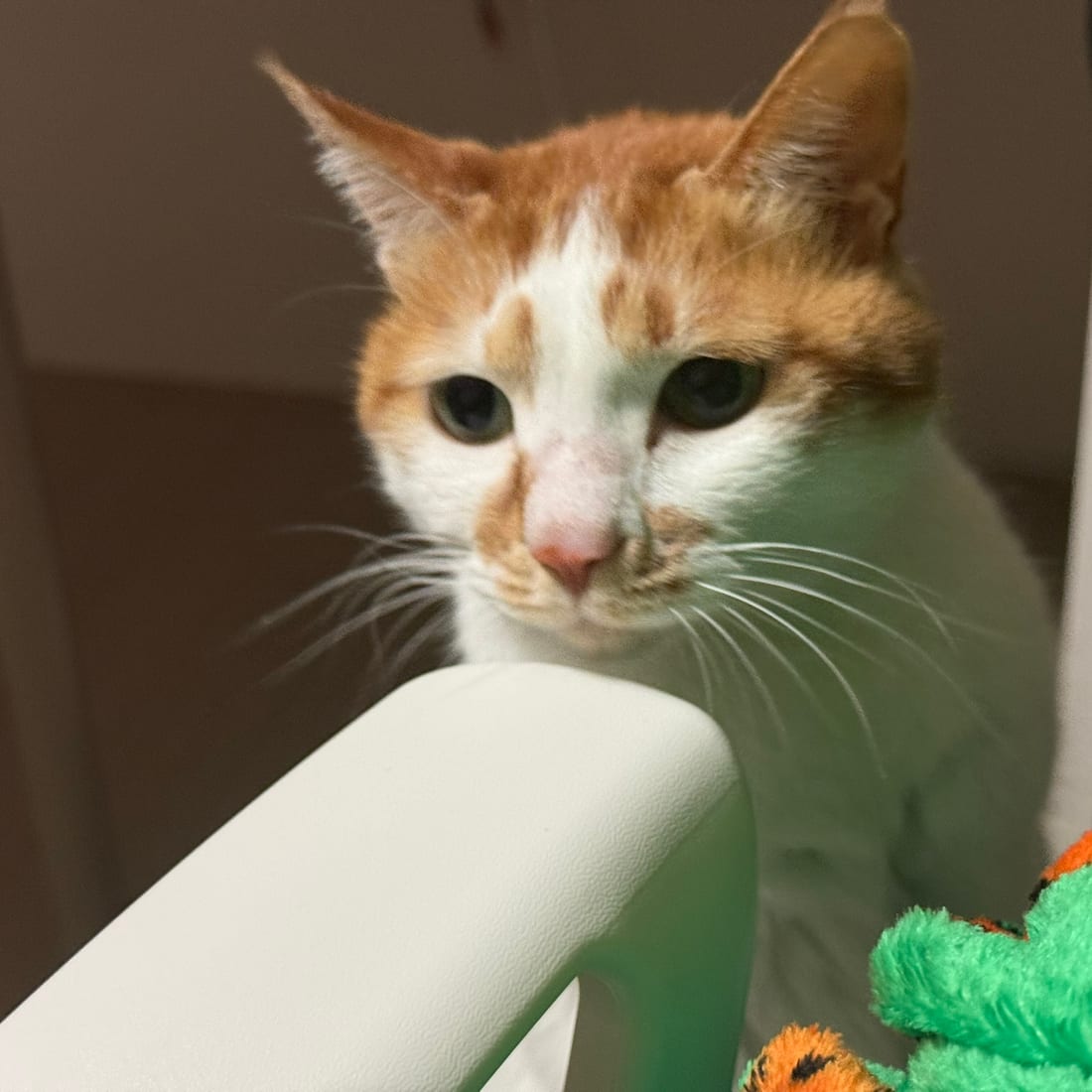
When it’s actually worth paying attention
Most fridge-sitting needs no response at all. These few patterns are worth a closer look:
- A sudden change in a calm cat. A cat who never cared about heights and now lives up there may be reacting to a new stressor — or, less often, to pain or feeling unwell. If the new habit comes with not eating, hiding, or a shift in litter box use, a vet visit rules out the physical stuff.
- They can’t get down safely. Older cats or heavier cats sometimes jump up fine but hesitate on the way down. If you hear a lot of pacing and false starts, give them a step-down route.
- The landing zone is dangerous. The single real hazard with the fridge is what’s below it. If a cat launches off and lands on a stovetop, that’s a burn risk. Keep the stove area clear and cool.
Height alone isn’t the warning sign. A behavior change plus other symptoms is.
How do I stop my cat from going up there?
You mostly don’t win this by blocking the fridge. Cats don’t abandon a high perch — they trade it for a better one. Take away the fridge and they’ll find the cabinet, the bookshelf, the top of the door frame.
The move that actually works is giving a better option:
| Instead of | Offer |
|---|---|
| Shooing her off the fridge | A cat tree at a similar height nearby |
| Covering the top with foil | A cleared shelf she’s allowed to use |
| Spray bottles and scolding | A warm, protected spot with a view |
Our two cats sort themselves by exact perch, which is a nice illustration of how personal this is. Yuja gravitates to the top shelf of the cat tower; Mochi, our confident one, prefers the upper kitchen cabinets, looking down like she owns the place. Same instinct for height, two different favorite spots. If you’ve got two cats with completely opposite personalities, you’ll probably see the same thing — they rarely want the exact same perch.
If you truly need the fridge to be off-limits — say the landing is unsafe — make the top physically uninviting and provide the replacement at the same time. A perch taken away with nothing offered just pushes the cat somewhere you like even less.
The honest version
A cat on the fridge is, nine times out of ten, a cat doing something completely normal and healthy. Height, warmth, a protected back, a good view of the room — the fridge delivers all four, and your cat is smart enough to notice.
Watch how she sits there more than that she sits there. Loafed and dozing means comfort. Tense and scanning means she wants a lookout, and it’s worth asking what changed. In our house, the fridge went from a hissing fortress to just another napping spot over the years — same perch, completely different cat underneath. The perch didn’t change. The trust did.
This article is general information from a cat owner, not veterinary advice. Talk to your vet about your cat's specific situation.