Why Does My Cat Headbutt Me? What the Bonk Means
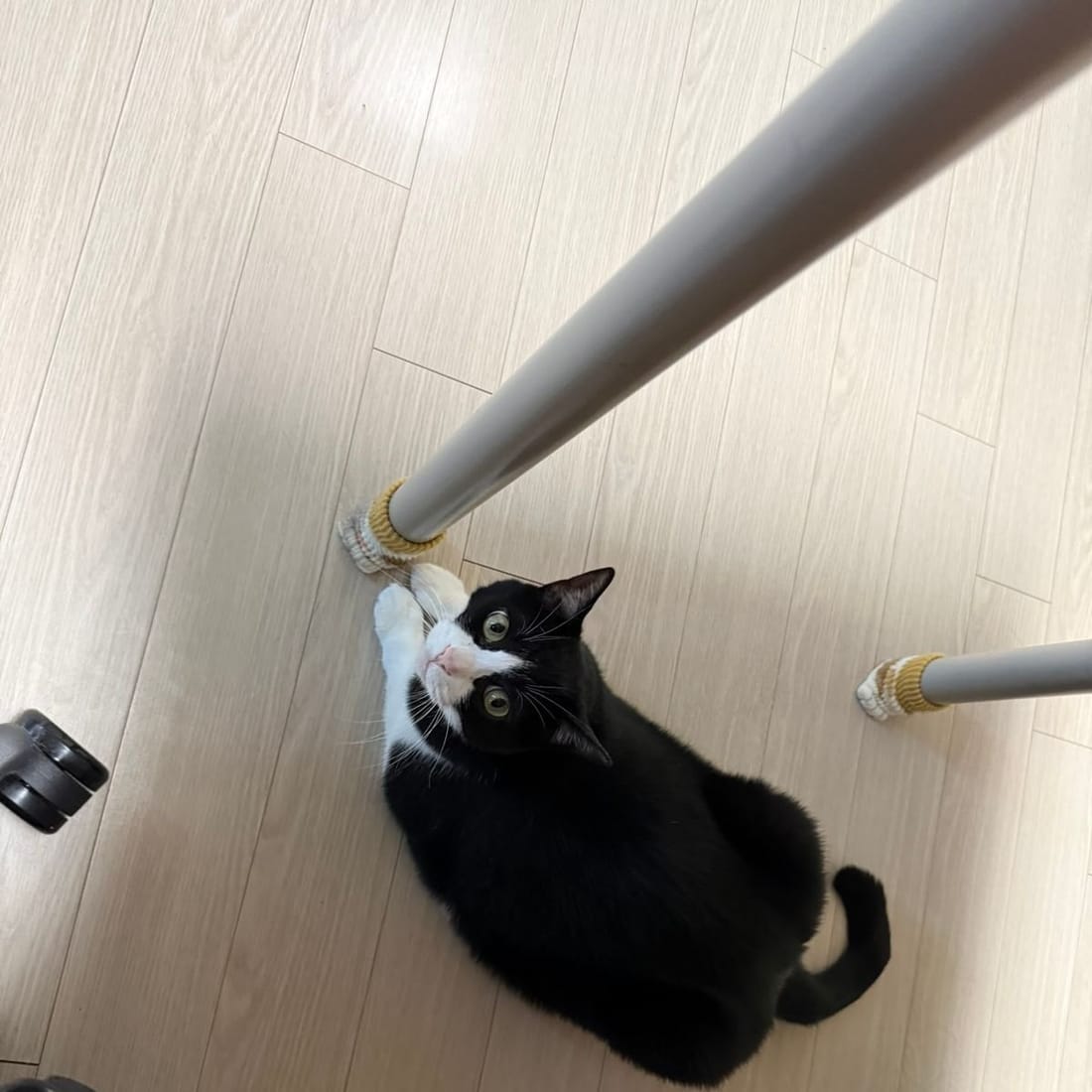
When your cat headbutts you, it’s saying you’re safe and you’re mine. That gentle press of the forehead is called bunting, and it’s how cats deposit scent from glands on their face onto the people and things they trust. It’s one of the clearest signs of affection a cat gives, not a demand or a warning.
That’s the short version. The longer version is more interesting, because the same gesture can mean slightly different things depending on when and how your cat does it.
What headbutting actually means
Cats have scent glands packed around their cheeks, chin, and forehead. When they rub or press those spots on you, they’re marking you as part of their trusted circle. To a cat, everything in the home has a familiar smell, and you carrying their scent means you belong.
So a headbutt is a mix of three things at once:
- Scent-marking — claiming you as part of the group
- Trust — cats don’t expose their face to threats
- A bid for attention — often followed by “now pet me”
Our tuxedo cat, Mochi, is the headbutting champion of the house. Walk past her and she’ll roll over, then push her forehead into your hand or shin until you scratch her. She meets us at the door every single day. That’s the confident, “I want to be near you” version of bunting.
Why does my cat headbutt me and then walk away?
Because the point was the marking, not the petting. Once a cat has pressed its scent onto you, the job is done and it may wander off satisfied. This throws a lot of owners, who read it as the cat losing interest.
There’s also the attention-seeking version, where the headbutt is basically a request. Mochi will bonk your hand, get a few scratches, and then flop over asking for more. If you stop too soon, she’ll paw at you to restart it.
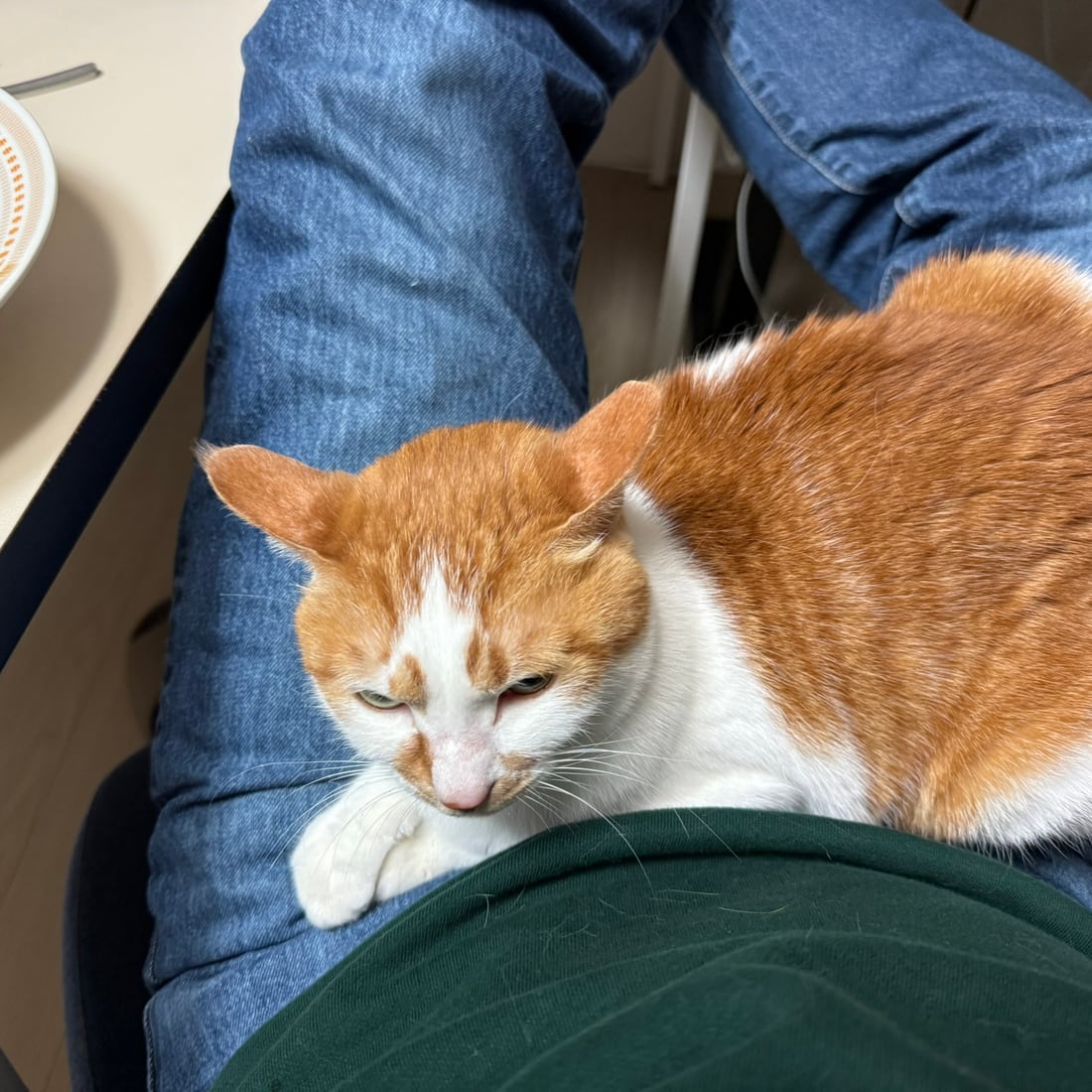
Contrast that with our other cat, Yuja. She’s sensitive, took four years just to let us touch her paws, and she rarely headbutts the way Mochi does. When Yuja leans her head toward you even a little, it means far more coming from her — it’s a rare, hard-won gesture. Two cats, completely opposite personalities under the same roof, and the same behavior carries different weight for each.
Bunting vs. rubbing vs. head pressing
These get lumped together, but they’re not the same. Knowing which is which tells you whether to smile or call the vet.
| Behavior | What it looks like | What it means |
|---|---|---|
| Bunting (headbutt) | A deliberate, gentle press of the forehead into you | Trust, scent-marking, affection |
| Cheek rubbing | Sliding the side of the face along you or furniture | Scent-marking territory, feeling relaxed |
| Allorubbing | Full body rub against your legs | Greeting, bonding, often at feeding time |
| Head pressing | Head pushed hard against a wall or floor, held there, often looking blank | Possible medical issue — see a vet |
The first three are all good news. Head pressing is the one that stands apart. If a normally alert cat starts pressing its head against a wall and holding it, especially with other odd signs, that’s not affection and it’s worth a same-day vet call.
When headbutting is a bit much
Some cats crank the intensity up. A hard bonk to the face at 5 a.m. is usually a food request dressed up as affection. Others headbutt, then get overstimulated and nip — the gesture starts friendly and tips over into “okay, that’s enough.”
We know that tipping point well. Yuja will accept a touch and then, if you go one beat too long, she’ll bite and bolt. If your cat headbutts and then bites, the two behaviors aren’t contradictory; the cat wanted contact and then hit its limit. We wrote more about that pattern in why cats bite while you’re petting them.
A few things that help keep headbutting in the sweet spot:
- Let the cat set the pace. Hold your hand still and let it press into you rather than reaching in.
- Watch the tail and ears. A flicking tail or flattened ears means the affection window is closing.
- Don’t reward the 5 a.m. bonk with breakfast. Feeding right after teaches your cat that a headbutt to the face gets food.
Should I be worried if my cat never headbutts?
No. Plenty of perfectly bonded cats never headbutt at all. Personality, history, and comfort level all play in. A formerly feral or nervous cat may show love in quieter ways — sitting six feet away in the same room, or blinking slowly at you — long before it would ever press its face into your hand.
Yuja is proof of this. For her first two weeks with us she lived behind the washing machine and we fed her back there. She still doesn’t headbutt on demand, and that’s fine. Affection from a cautious cat looks different, and it counts just as much.
The one time absence is worth a second look is when a cat that used to headbutt suddenly stops, along with hiding, eating less, or dodging touch it used to accept. Confident cats going withdrawn is a change, and changes in behavior are how cats often show they don’t feel well. That’s a case to mention to your vet, not because a missing bonk is an emergency, but because it may be one piece of a bigger picture.
The bottom line
A headbutt is your cat telling you it trusts you enough to mark you as its own. Whether it comes as a soft forehead press, a demand for scratches, or a rare lean from a shy cat, take it as the compliment it is. Match your cat’s energy, watch for the difference between bunting and head pressing, and let the bonks come on their terms.
This article is general information from a cat owner, not veterinary advice. Talk to your vet about your cat's specific situation.