How to Set Up a Safe Room for a New Rescue Cat
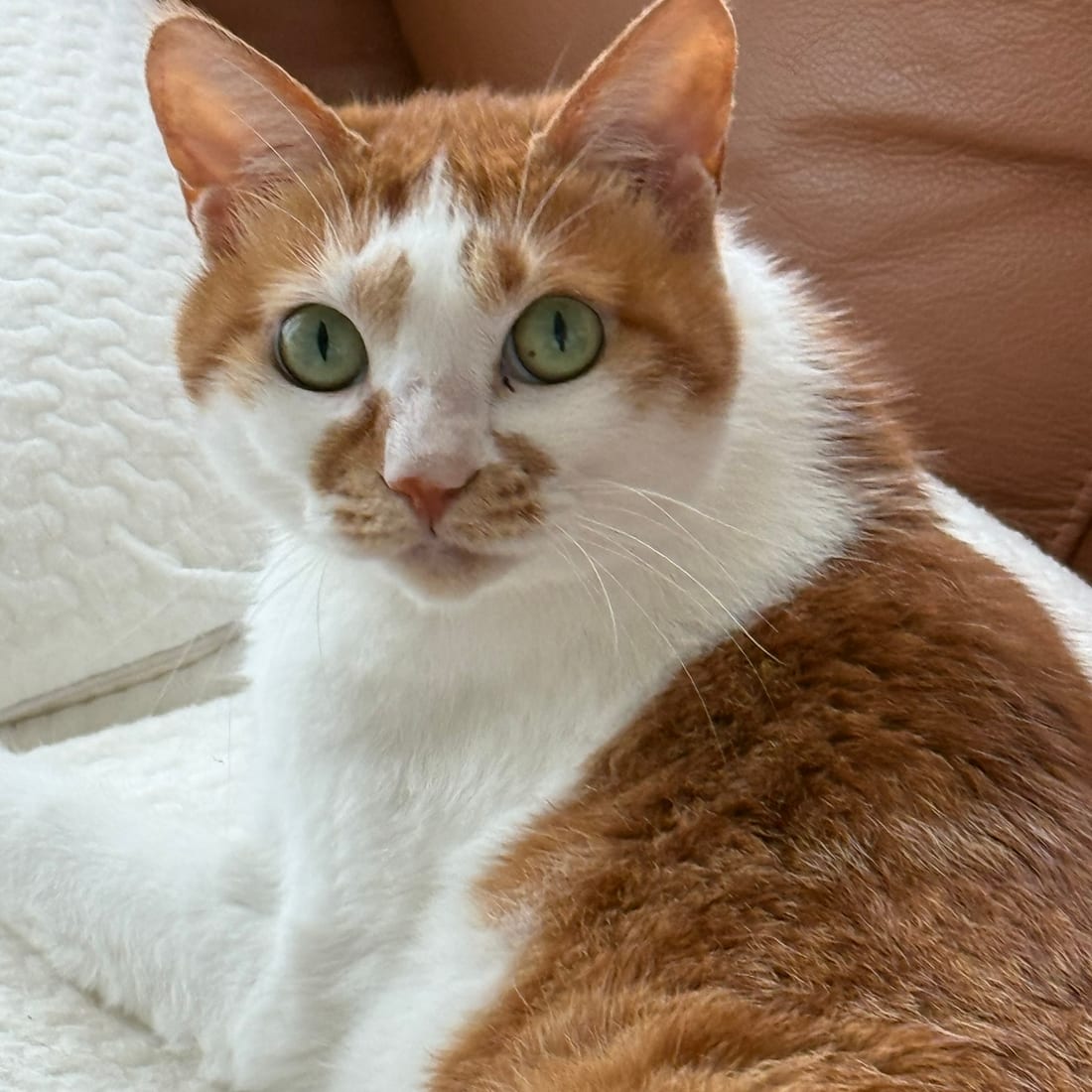
A safe room for a new rescue cat is one small, closable room set up with a single hiding spot, food and water, a litter box, and as few unfamiliar noises as possible. Pick a bathroom or spare bedroom, put everything in place before the cat arrives, then let her come out on her own schedule. The goal is decompression, not interaction.
Almost everyone underestimates how much a scared cat needs to just be left alone at first. When our orange girl Yuja came to us six years ago, we didn’t have a proper safe room planned — and she found her own, behind the washing machine, where she stayed for a little over ten days. A dedicated room would have saved us a lot of camera-on-a-stick searching.
What actually goes in a safe room
You don’t need much. A rescue cat isn’t looking for enrichment on day one; she’s looking for somewhere nothing can sneak up on her. Here’s the short list.
| Item | Why it matters | Placement |
|---|---|---|
| One hiding spot | Where she’ll spend the first days | Corner, away from the door |
| Food + water | Has to be reachable from hiding | Near the hiding spot, not by the litter box |
| Litter box | Confirms she’s eating and healthy | Opposite corner from food |
| A worn T-shirt or towel | Carries your scent | By the hiding spot |
| Closable door | Blocks household chaos | Kept shut at first |
Skip the fancy stuff. No loud toys, no fountain that hums, nothing that requires her to be brave. A cardboard box on its side makes a fine hiding spot for most cats — though I’ll say honestly that both of ours have never cared for boxes, so a gap behind furniture or under a low table works too. Give her what she’ll actually use, not what looks good in photos.
Why the hiding spot is the whole point
New owners often want to remove hiding places so the cat is “forced” to socialize. Don’t. Taking away the safe corner doesn’t build trust; it builds a cat who’s cornered.
We learned this the slow way. Yuja picked the one spot in the apartment we couldn’t see into. We couldn’t even confirm she was eating until the food started disappearing slightly overnight, and the real relief came the day the litter box had more in it — proof she was eating and processing food. A safe room just puts that same setup somewhere you can actually monitor.
Position the hiding spot so she can see the door from inside it. A cat who can watch the entrance relaxes faster than one who has to guess what’s coming. If you can offer a choice — a box on the floor and a spot up high — some cats strongly prefer elevated. Once Yuja finally left the washing machine, the next place we saw her was on top of the refrigerator, so height clearly mattered to her.

How do I feed a cat that won’t come out?
You bring the food to her. Set the bowl a few feet from the hiding spot at first, then, if she’s not eating, move it closer over a day or two until it’s right at the entrance to her hideout.
With Yuja we ended up sliding the bowl all the way behind the machine, using a long tool because reaching in by hand got us scratched and bitten. You hopefully won’t need to go that far in a proper room, but the principle holds: don’t make eating a test of courage. Feed where she is.
Keep meals small and fresh. Our picky one won’t touch food that’s been sitting more than about twelve hours, and a stressed new cat is even less likely to eat something stale. If she’s leaving food, swap it for a fresh small portion rather than topping off the old bowl — there’s a real case for washing the bowl between meals with a nervous eater. And if a new cat refuses food entirely for more than a day or two, that’s the one thing worth a same-week vet call rather than more waiting.
Managing sound, smell, and traffic
A safe room isn’t just a place — it’s a quiet zone. What you keep out matters as much as what you put in.
- Sound. Keep the vacuum, TV, and loud kitchen noise away from the door. Yuja is still, six years on, thrown off by sudden sounds — plastic bag rustling in particular can undo a calm moment. Assume your new cat has triggers you don’t know about yet.
- Smell. Leave a shirt you’ve worn in the room. Your scent becomes background noise faster when it’s tied to the safe space and the food showing up.
- Traffic. Decide who’s allowed in and keep it to one or two people. Every new face resets the clock.
- Other pets. Keep them on the other side of the door. Let them sniff under it, but no face-to-face until the new cat is eating and moving freely.
What to do — and not do — the first two weeks
The hardest part is doing less than you want to.
| Do | Don’t |
|---|---|
| Sit in the room quietly, no reaching | Pull her out of the hiding spot |
| Talk in a low voice so she learns you | Stare directly at her (it reads as a threat) |
| Refresh food and litter on a schedule | Bring guests to “meet the new cat” |
| Let her approach you | Rush the open-door step |
Progress is rarely a single dramatic moment. With Yuja, the first sign wasn’t her walking up to us — it was her simply not hissing when we passed by, as long as we didn’t get too close. That in-between stage, from full alarm to conditional tolerance, is the one to watch for. When she’s eating well, using the box, and staying visible while you’re in the room, start cracking the door for short supervised stretches.
The whole approach can be summed up in one line, and it’s the same thing that eventually worked for us: don’t chase, take care of her, and wait. A safe room is just the version of “wait” you set up on purpose instead of discovering behind the washing machine. If you want the longer version of how that patience played out, we wrote a full six-year timeline of earning a formerly feral cat’s trust — Yuja is proof it’s slow, but it moves.
Not every cat needs two weeks. Our tuxedo girl Mochi came to us at the same time and was eating out in the open almost immediately. Same house, same people, opposite cats. Set the room up for the shy one and let the confident one graduate early.
This article is general information from a cat owner, not veterinary advice. Talk to your vet about your cat's specific situation.