How to Offer Your Hand to a Cat That Fears Hands
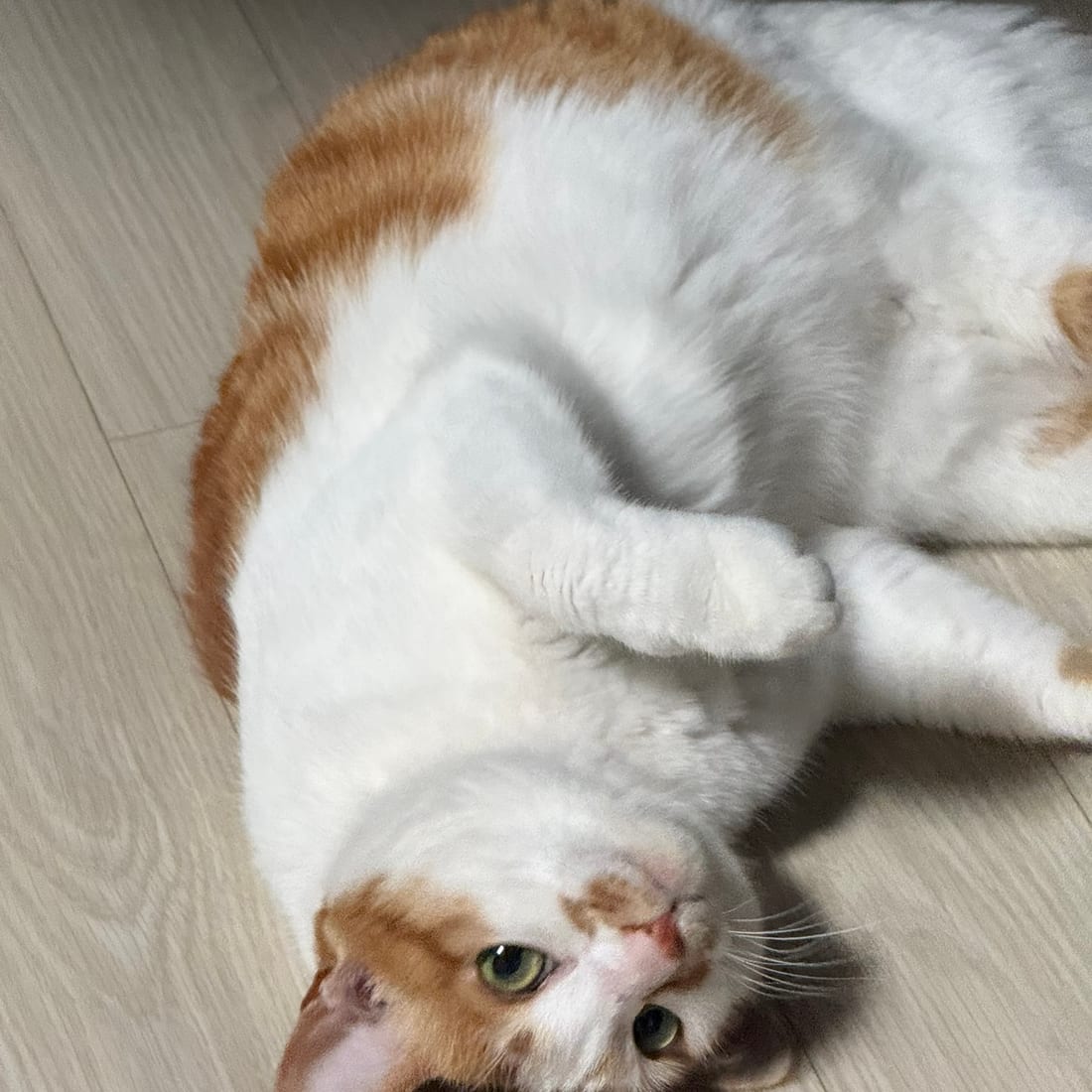
Offer your hand low, still, and off to the side — then let the cat close the distance herself. Don’t reach toward her face, don’t come down from above, and don’t move once she starts investigating. A hand-shy cat reads a moving hand as a grab, so the whole trick is to make your hand a thing she chooses to approach, not a thing that comes at her.
That sounds simple. It is not fast. Our orange-and-white cat, Yuja, still hisses if a hand lingers, and she came to us six years ago. So here’s what actually works and what to skip.
Why your hand scares her in the first place
A hand coming toward a cat’s face looks a lot like a predator moving in. That’s true for confident cats and doubly true for a fearful or formerly outdoor cat who learned that hands could mean being grabbed. Yuja lived on the street before family rescued her and she came to us, and hands were the last thing she trusted — she hid behind our washing machine for about two weeks and hissed the moment anything reached in.
The instinct most people have is to reach out and let the cat sniff. The problem isn’t the sniffing. It’s the reaching. Your hand is already inside her bubble before she’s agreed to anything, and the moment it twitches, she reads it as a strike.
How to actually offer your hand
The goal is a hand she can walk up to and walk away from freely. Here’s the position and the sequence:
| Step | What to do | Why it works |
|---|---|---|
| Position | Rest your hand low, near the floor, slightly to her side | A low, sideways hand doesn’t loom or point at her face |
| Stillness | Do not move it once it’s down | Movement is what triggers the flinch-and-bite |
| Height | Never come down from above her head | Overhead approach mimics a bird of prey grab |
| Choice | Let her approach, sniff, and leave on her own | Control is the whole thing — she needs the exit |
| Stop | If she sniffs, that’s the win. Don’t follow with a pet | Sniffing is not consent to touch |
That last row is where most people lose the cat. She sniffs your knuckles, you think “great, we’re friends,” you go to scratch her cheek — and she bites and bolts. A sniff means she investigated. It does not mean she agreed to contact. Early on, end the interaction at the sniff and walk away. You want her to learn your hand is boring and safe, not that every sniff turns into a grab.
What if she hisses or bites anyway?
Back off without drama. Don’t jerk your hand away fast — a sudden retreat is still movement, and it confirms the hand was dangerous. Just slowly withdraw and give her space. Punishing or scolding does nothing except tell her you’re unpredictable too.
Yuja bites and hisses to this day when we push past her limit. For years, brushing the fur on her paw was enough to make her bite and disappear for three days. We didn’t stop offering; we stopped forcing. If your cat is biting the hand that feeds her out of fear, that’s information, not failure — she’s telling you where the line is so you can stay behind it.
One caution worth mentioning: if a cat who used to tolerate your hand suddenly starts hissing or biting when you touch a specific spot, that can be pain rather than fear. A quick vet check rules out something physical before you assume it’s behavioral.
The mistake almost everyone makes
Trying to speed it up with treats. The standard advice is “offer your hand with a treat and let her associate hands with food.” For a lot of cats that works. For ours it was a dead end, because Yuja is so extreme about food that she’ll eat a treat once and never touch it again. We genuinely gave up on the buy-her-love-with-snacks strategy — there was no snack she’d take twice.
So we leaned on something slower and cheaper: presence without pressure. We sat near her doing nothing, kept our hands to ourselves, and let her decide when to close the gap. Not reaching turned out to be the actual skill.
How long does this take?
Longer than you want. Here’s Yuja’s real timeline as a reference point, not a promise:
| Milestone | Roughly when |
|---|---|
| Came out from hiding where we could see her | A little over two weeks |
| Would tolerate a still hand nearby without hissing | Months, and inconsistent |
| Let us touch her paw at all | About four years |
| Now: paw touch okay once, hiss on the second | Six years in |
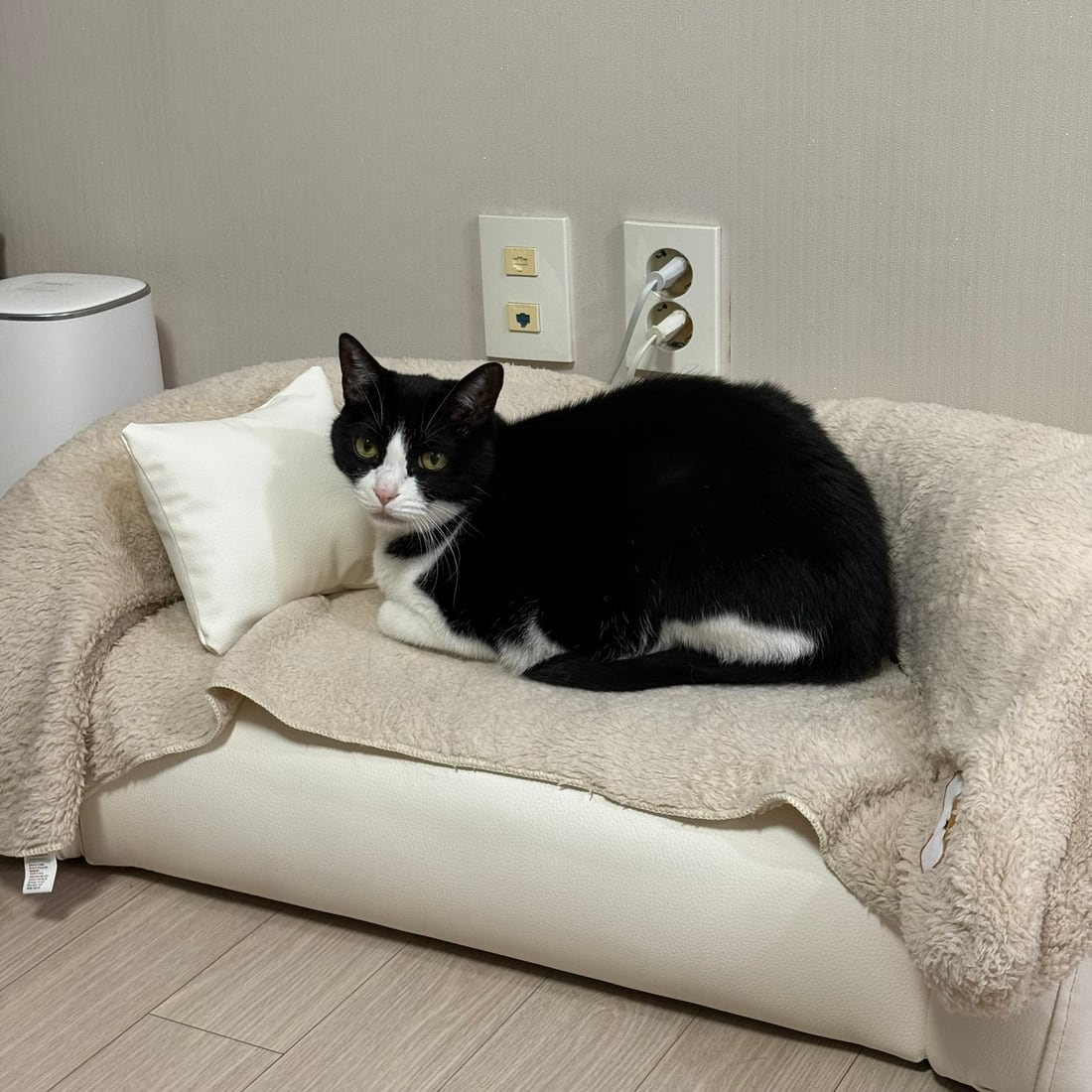
That’s a cat who was fearful by temperament, not just circumstance — her sister Mochi, who came to us at the same time, rolls over for belly rubs and gets her nails clipped without a fight. Same house, same people, opposite cats. If your cat is on the slow end, she’s not broken. Some of them just take years. We wrote out the full 6-year trust timeline if you want the longer version.
Reading whether she’s ready
Watch her body before you offer anything:
- Ready-ish: loose posture, sitting or in a loaf, blinking slowly, ears forward. This is when a still low hand has a chance.
- Not now: crouched low, ears sideways or flat, tail tucked, staring hard, or freezing. Any hand offer right now teaches fear.
- Hard stop: hissing, growling, dilated pupils, backing into a corner. Leave. There’s no version of “just a little” here.
The strange one to mention: with our cat, a purr doesn’t mean what you’d expect. Yuja purrs before we touch her — it’s how she demands a scratch, not how she reports she’s happy. So don’t read her sounds as a green light on their own. Read the whole body, and read the exits — a cat who has a clear path away from your hand is far braver about approaching it than one who’s cornered.
The single most useful thing we did over six years wasn’t a technique at all. It was refusing to chase. We fed her, we kept our hands low and still, and we waited. The offering is easy. The not-grabbing is the whole job.
This article is general information from a cat owner, not veterinary advice. Talk to your vet about your cat's specific situation.