Does Slow Blinking at Cats Actually Work? 6 Years In
Slow blinking at a cat can work, but not the way most people hope. It’s a real calming signal cats use with each other, and doing it back can tell an already-comfortable cat “I’m not a threat.” What it won’t do is turn a terrified cat into a cuddly one. After six years with a nervous rescue, we’ve found it’s a gentle maintenance tool, not a trust switch.
What is the slow blink supposed to do?
The idea is simple: cats communicate a lot with their eyes. A hard, unblinking stare reads as a threat between cats. A slow, relaxed blink — eyelids drooping halfway or fully shut, then opening again — signals the opposite. It says nothing scary is happening here.
When you slow blink at your cat, you’re borrowing that vocabulary. You soften your gaze, close your eyes for a beat, and open them slowly. Some cats blink back. That back-and-forth is often described as a little conversation, and it can be. We’ve had it happen. It’s a nice moment.
But “nice moment” is the honest ceiling for a lot of cats. The blink didn’t create trust. It rode on top of trust that was already there.
Did slow blinking work on our cats?
Two cats, two completely different answers — which is exactly why we don’t sell it as a universal trick.
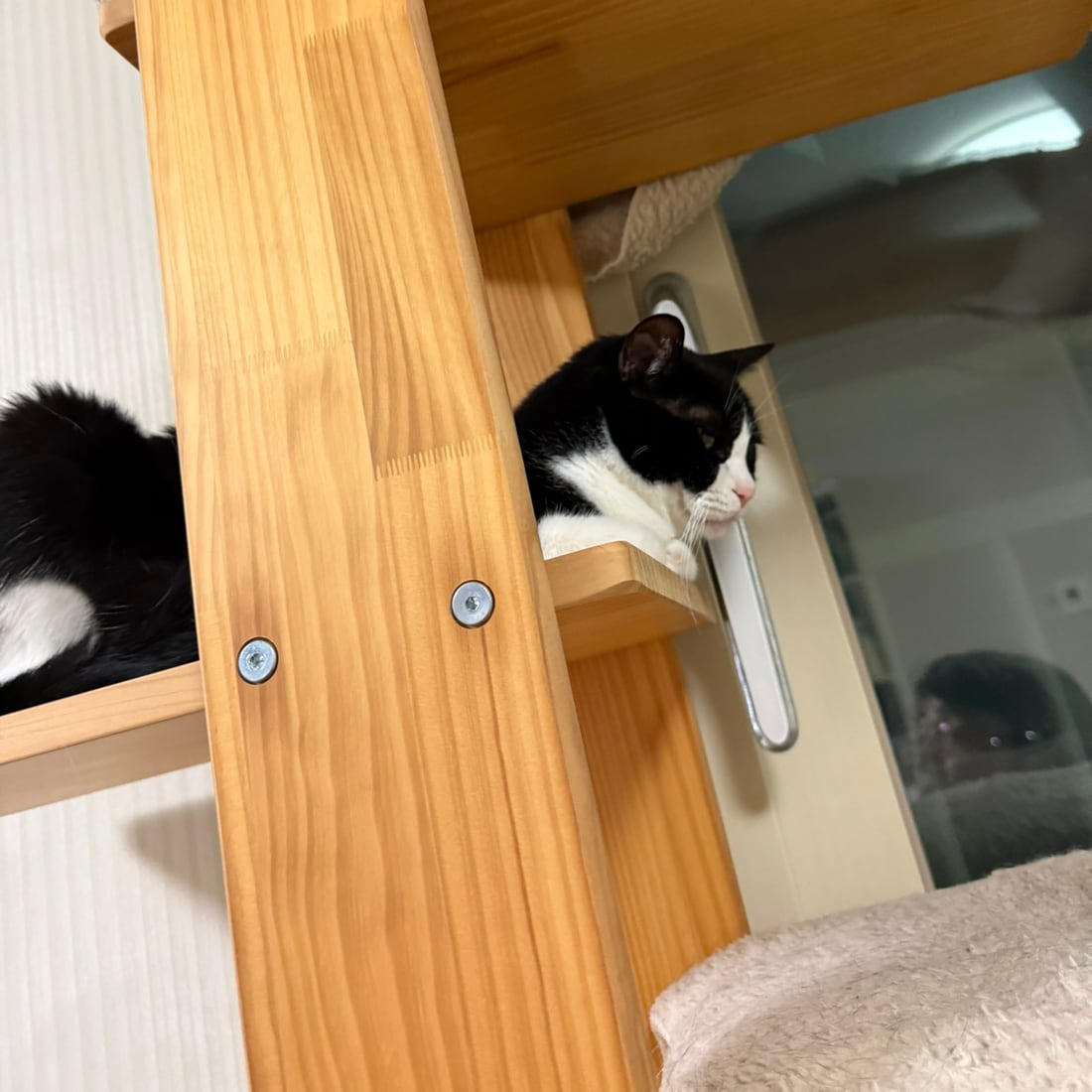
Mochi, our tuxedo, is the easy one. She rolls over if you so much as walk past her. When we slow blink at her, she’ll sometimes blink back, sometimes just squint and lean in for scratches. With her, the blink works fine. But honestly, everything works on Mochi. She was comfortable from day one, so it’s not much of a test.
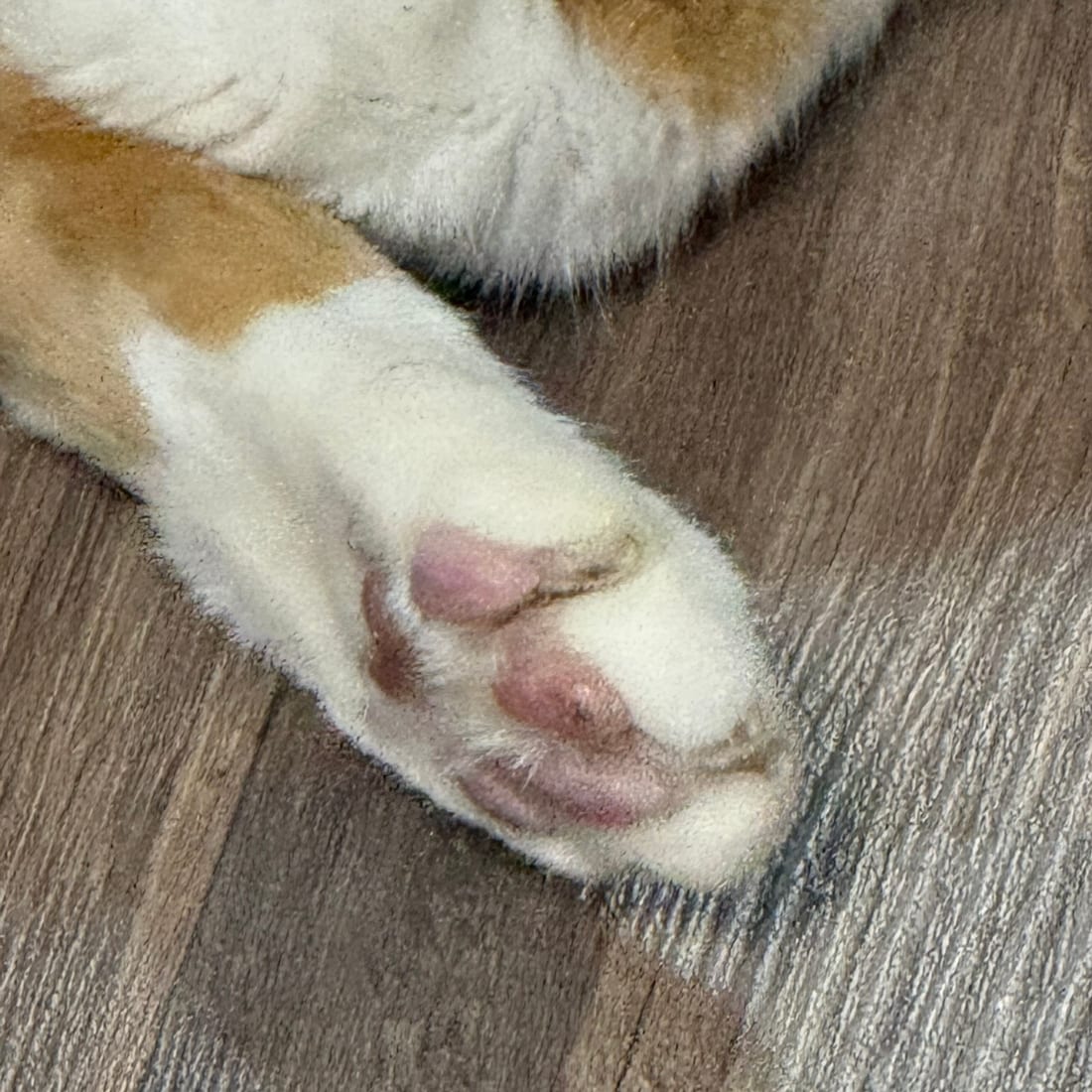
Yuja is the real test. She’s our orange-and-white first cat, and it took us about four years just to be able to touch her paws. She hisses, she bites, and she still won’t sit for a second nail trim. When we slow blink at Yuja, most of the time she just… looks at us. No blink back. Occasionally she’ll break eye contact and look away calmly, which is a small win, but it’s rare. Six years in, she is not a slow-blink success story.
| Cat | Comfort level | Response to slow blink |
|---|---|---|
| Mochi | Confident, affectionate from day one | Often blinks back or squints |
| Yuja | Nervous rescue, slow to trust | Usually stares; rarely looks away calmly |
The pattern is clear in our house: the blink reflects how safe a cat already feels. It doesn’t manufacture that feeling.
When slow blinking does nothing (and what to do instead)
Here’s the part the cute videos skip. When Yuja first came to us, she vanished behind the washing machine and stayed there for a little over ten days — honestly we don’t know the exact day she started coming out. During that stretch, slow blinking would have been useless. She hissed at a phone camera pointed her way. Any direct attention was a threat, gentle eyelids or not.
What actually moved the needle back then wasn’t a signal. It was absence of pressure. We slid her food and water bowls behind the machine with a long tool, then left. We didn’t stare, chase, or coax. If you’re at that stage, skip the blinking and read how long a rescue cat will hide in a new home — the answer is “give it space,” not “make eye contact.”
Rough guide to when the blink is worth trying:
| Cat’s state | Is slow blinking useful? |
|---|---|
| Hiding, hissing at any attention | No — give distance, feed, wait |
| Out in the open but keeps its distance | Maybe — try once, don’t push |
| Relaxed near you, loafing, dozing | Yes — good time for a blink |
| Already asking for scratches | Sure, but you don’t need it |
How to slow blink without making it worse
If your cat is calm enough that it’s worth trying, a few things keep it from backfiring:
- Don’t stare first. Look softly, blink, then look away. A locked-on gaze before the blink can read as a threat and cancel out the whole point.
- Keep your body loose. Cats read posture more than eyes. Tense shoulders leaning toward them undoes a relaxed blink.
- Do it from a distance. Across the room beats up close, especially with a wary cat.
- Blink, then break off. Looking away after the blink is itself a calming cue. You don’t have to hold the “conversation.”
- Let it be one-sided. If your cat never blinks back, that’s not failure. Yuja rarely does, and she still sleeps in the same room as us.
The one thing we’d warn against is treating the blink-back as a test the cat has to pass. Some cats show trust by eating in front of you, grooming near you, or falling asleep within arm’s reach instead. A cat that does those things is telling you plenty, even if it never once mirrors your eyelids.
So is it worth doing at all?
Yes — as a small, low-cost gesture, not a strategy. It costs nothing, it can’t hurt if you do it calmly, and with a settled cat it’s a pleasant little exchange. We slow blink at Mochi all the time and she blinks back, and it feels like something.
But if you came here because you have a frightened rescue and you’re hoping the slow blink is the key, we’ll be straight with you: it isn’t. The thing that changed Yuja was six years of feeding her, not cornering her, and letting her set the pace. The blinking was, at best, one quiet piece of a much longer patience. What earned her trust was the part nobody films — showing up every day and asking for nothing.
If she never blinks back at you, don’t take it personally. Keep being boring and safe. That’s the real signal cats are reading.
This article is general information from a cat owner, not veterinary advice. Talk to your vet about your cat's specific situation.