Why Does My Cat Groom Herself Right After I Pet Her?
Your cat grooming herself right after you pet her is almost always normal — she’s smoothing down the fur you just ruffled and resetting the scent on her coat. It’s a tidy-up, not a “get your hands off me.” Only a small slice of cases mean she’s overstimulated or the spot bothered her.
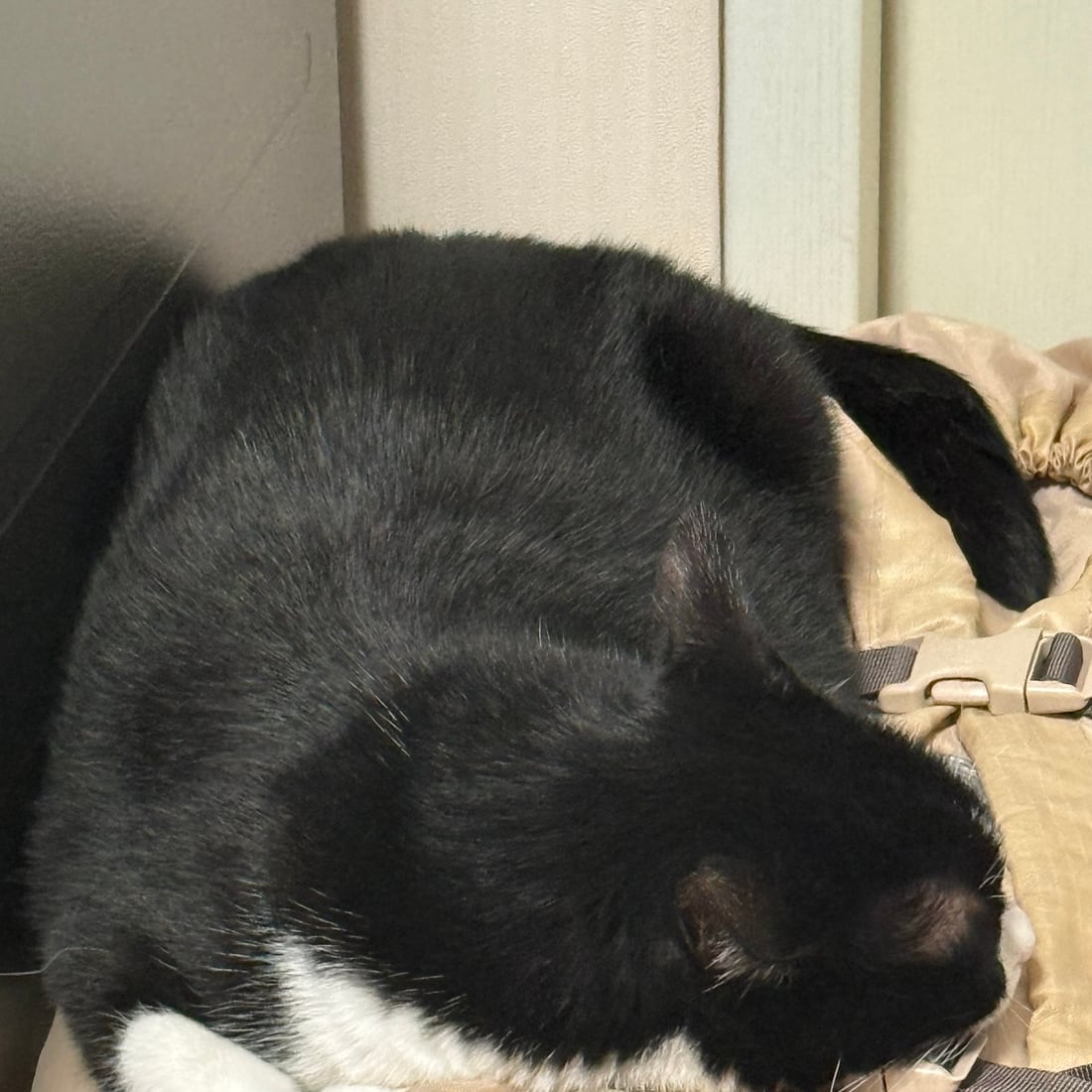
I see this every day with Mochi, our tuxedo. She’ll flop over for a full belly scratch, soak up two minutes of it, and the second I stop she’s licking her shoulder like she’s fixing her hair after a hug. It reads as offended if you don’t know what’s happening. It isn’t.
Why does petting trigger the licking?
A few things are going on at once, and they’re all boring in the best way.
You messed up her fur. Cats keep their coat lying in a specific direction. Your hand pushes it around, so she straightens it back out. Same reflex as you fixing your shirt after someone pats your back.
You changed her scent. Cats are covered in their own smell, and yours lands on top of it when you pet. Licking blends the two back together. In multi-cat homes this matters more — it’s part of how the group keeps a shared “we all smell like us” scent.
It’s a self-soothing habit. Grooming lowers a cat’s arousal level. After an intense moment — good or bad — a lick or two helps her settle. This is why a nervous cat sometimes grooms after a startle, and a happy cat grooms after a nice cuddle. The behavior is the same; the mood behind it isn’t.
Is my cat annoyed or just tidying up?
The lick alone tells you nothing. The rest of her body tells you everything. Here’s how I read it after living with one mellow cat and one who bites first:
| Signal | Content, just tidying | Overstimulated, back off |
|---|---|---|
| Speed of licking | Slow, casual, wanders around the body | Fast, hard, drilled into one spot |
| Which spot | Anywhere — shoulder, paw, flank | Exactly where you just touched |
| Tail | Still or loosely swishing | Thumping or flicking hard |
| What she does next | Stays put, might ask for more | Gets up and leaves |
| Skin/ears | Relaxed | Ears back, skin rippling |
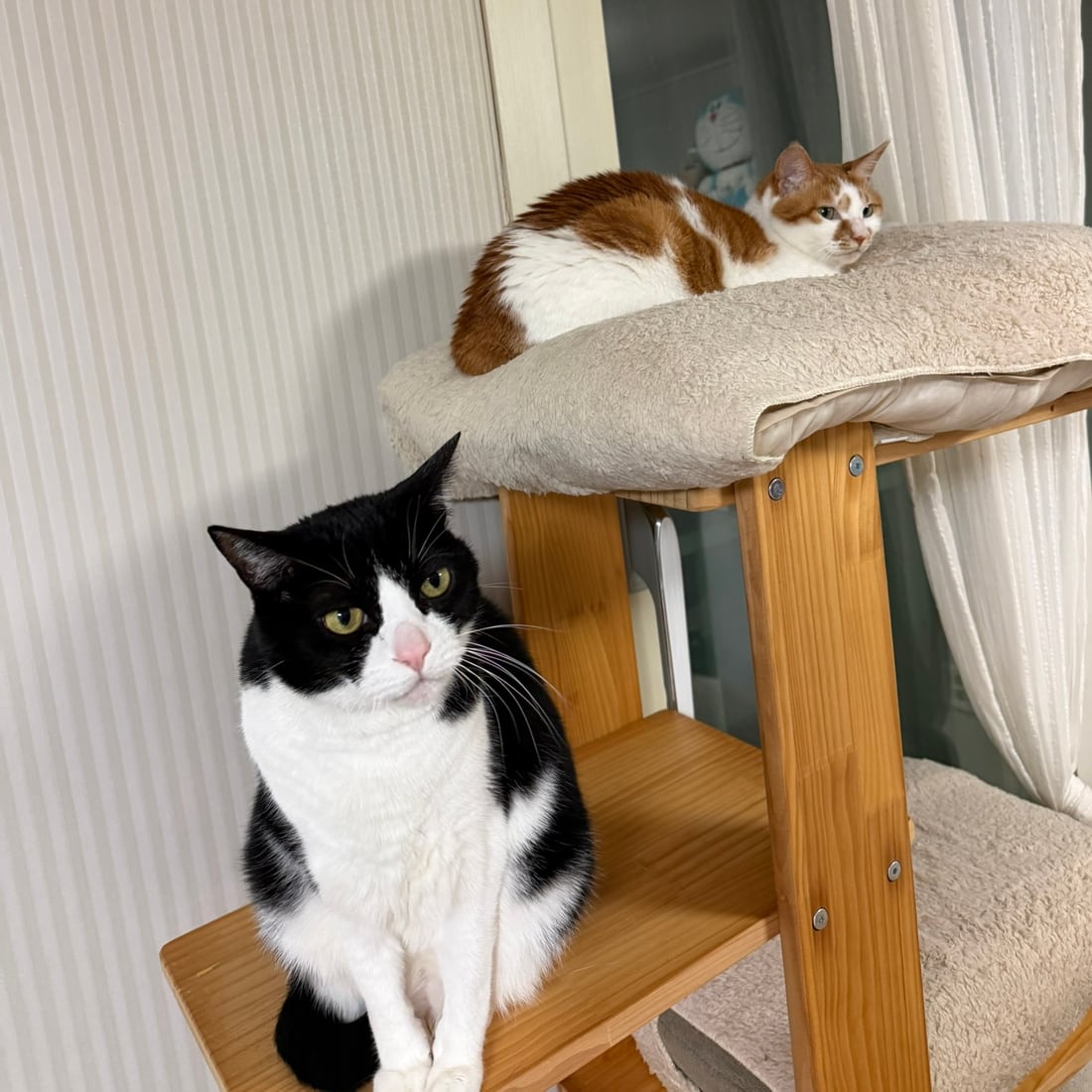
Mochi is textbook column one — she grooms, stretches, and leans back in for round two. Yuja, our prickly orange senior, is column two on a bad day. If I get one stroke past her limit, she licks the exact spot fast, then bites and leaves. That focused, one-spot lick is her last warning before teeth, so I take it seriously. If your cat does the same, this walkthrough on why cats bite mid-petting covers the tipping point in more detail.
Does the licking mean she doesn’t like being touched?
Usually the opposite. A cat who felt genuinely threatened doesn’t hang around to groom — she leaves. Grooming near you, on your bed, or right up against your leg is a comfortable cat doing comfortable-cat things. Some cats even lick you right after, which is the same scent-blending instinct pointed at your arm.
The confusing part is that grooming shows up on both ends of the mood scale. A relaxed cat grooms to say “all good, just fixing my coat.” A slightly-over-it cat grooms to burn off tension. So don’t judge the affection by the lick — judge it by whether she stayed or bolted.
There’s also a scent side to this that has nothing to do with liking or disliking you. Cats want their smell on things, including their own bodies. When your hand deposits a different smell, re-licking is just housekeeping. It’s the coat equivalent of straightening a picture that got knocked crooked.
How should I pet her to avoid the “reset” every time?
You can’t fully stop it, and you don’t need to. But if your cat grooms and leaves every single session, you’re likely petting a little too long or in a spot she’s lukewarm about.
- End before she wants you to. Two or three good strokes, then pause. Let her ask for more instead of pushing past her limit.
- Stick to the safe zones. Cheeks, chin, and the base of the ears are welcome on most cats. Back and belly are hit-or-miss. Belly is a trap on plenty of cats — Mochi loves it, Yuja would remove your hand.
- Watch the tail, not the purr. A cat can purr and still be building toward “enough.” The tail moves first.
- Pet with the fur, not against it. Smoothing the coat the way it already lies means less to fix afterward, and it feels better to her.
With Yuja, the whole relationship has been an exercise in stopping early — it took four years just to touch her paws without a bite, so I don’t gamble on one extra stroke. Short and predictable beats long and pushy every time.
When is grooming after petting worth a closer look?
Most of the time this is a non-issue you can ignore. A couple of situations are worth flagging:
- She licks one spot raw. Thinning fur, bald patches, or red skin from repeated licking isn’t a reaction to petting — it points to itch, pain, or skin trouble that needs your vet’s eyes, not more analysis at home.
- It’s a sudden new habit. If a cat who never groomed after petting suddenly does it constantly, or gets touchy about a spot she used to love, something may have changed physically. A quick vet check rules out pain before you assume it’s mood.
Short of those, let her groom in peace. She’s not filing a complaint — she’s just putting her coat back the way she likes it, the same way she does a hundred times a day when you’re not even looking.
The fix for the annoyed version isn’t to pet less, it’s to pet smarter: read the tail, quit early, and keep to the spots she actually enjoys. Do that and the licking becomes what it should be — a relaxed cat straightening up after a good scratch, then leaning back in for another.
This article is general information from a cat owner, not veterinary advice. Talk to your vet about your cat's specific situation.