Why Cats Lose Interest in a Toy Right After Missing It
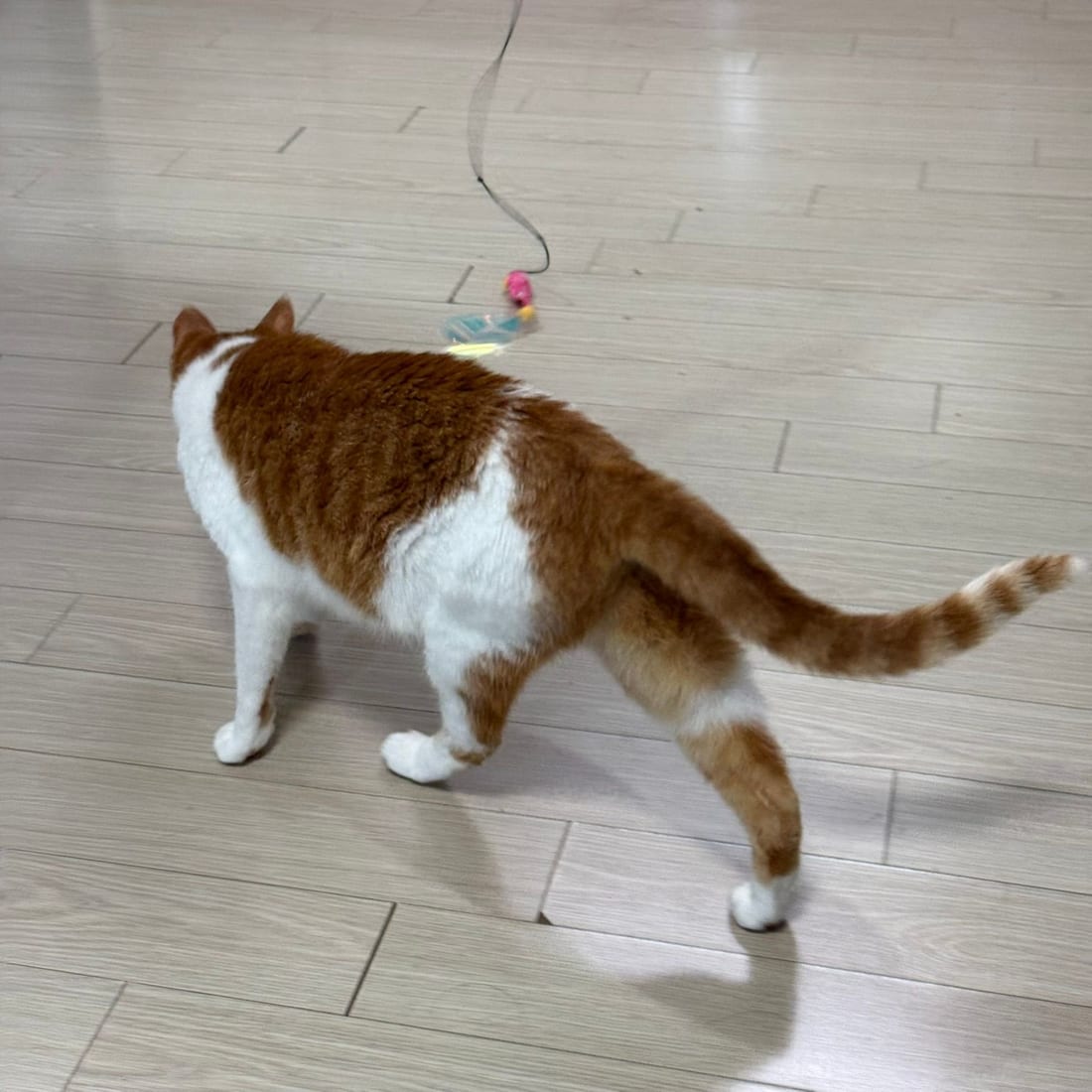
Your cat locks on, wiggles her back end, launches — and misses. Then, instead of trying again, she just… leaves. Walks off like the toy insulted her. This happens because a missed pounce breaks the hunting sequence cats are built around, and when the “catch” doesn’t land, the drive drops instead of resetting. Many cats also seem self-conscious about the whiff and reset by grooming or wandering off.
It looks like your cat gave up, but it’s closer to a stalled program than real boredom. Once you see the pattern, you can restart it.
What’s actually happening when she misses
A cat’s hunt runs on a fixed order: stare, stalk, pounce, catch, kill, eat. Each step is supposed to trigger the next. When the pounce connects, the chain completes and the cat feels the payoff. When it doesn’t connect — the toy skitters past, the jump lands a paw-width short — the sequence has nowhere to go. There’s no “catch” to lead into the next step, so the whole thing deflates.
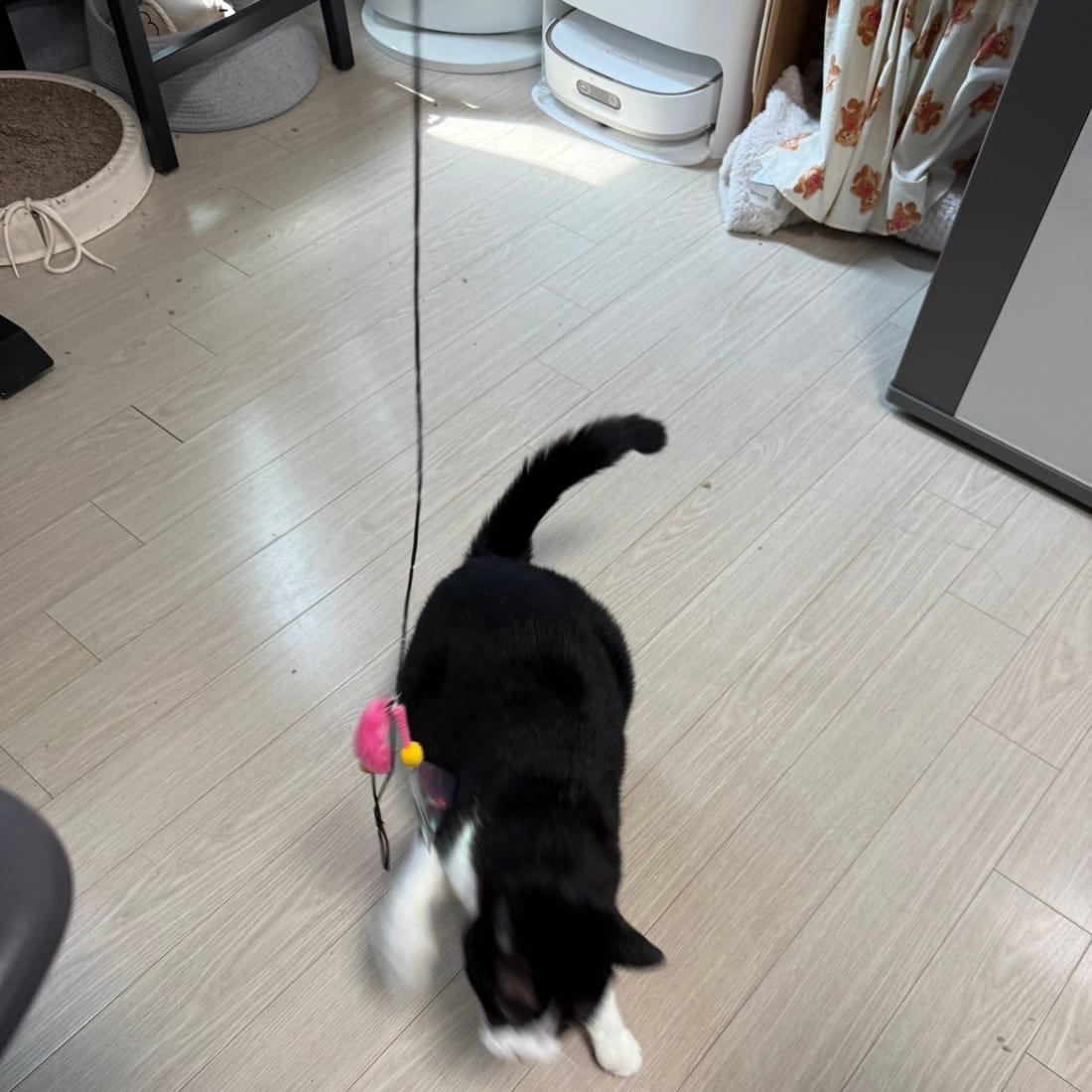
Our tuxedo, Mochi, is the clearest example of this I’ve ever seen. She’s a serious hunter: total focus, low crouch, a real jump. But if she leaps and overshoots the toy — sails right past it — she gets visibly sheepish and her interest evaporates on the spot. Then she’ll disappear for a while, come back, do it again, and get sheepish again. It’s almost comedic how reliable it is. That little pause after the miss isn’t sulking so much as her whole hunting circuit resetting to zero.
Why the “embarrassed” look is real (sort of)
We can’t ask a cat how she feels, so I won’t pretend the awkward walk-off means literal embarrassment. But there’s a well-known behavior called a displacement activity — when a cat is caught between two impulses (keep hunting vs. the hunt just failed), she does a third, unrelated thing to break the tension. Grooming is the classic one.
You’ve probably seen it: your cat misses, then immediately sits and starts washing a shoulder like that was the plan all along. That sudden grooming is the feline version of “I meant to do that.” It’s the same reflex that makes some cats groom themselves right after you pet them — a reset button, not an insult.
Boredom vs. a broken sequence — how to tell
These two get mixed up constantly, and the fix is different for each.
| What you see | Likely a broken sequence | Likely real boredom |
|---|---|---|
| Cat misses, walks off, comes back in a few minutes | ✅ | |
| Cat ignores the toy even when you make it dart | ✅ | |
| Perks up when the toy hides behind furniture | ✅ | |
| Same toy, same motion, every single day | ✅ | |
| Re-engages the instant you change the movement | ✅ |
The quick test: move the toy differently — make it run away and vanish under a chair. A cat whose sequence just stalled will usually re-lock. A genuinely bored cat won’t bother.
How to keep the game going after a miss
The trick is to feed the sequence a “catch” so it doesn’t dead-end. A few things that work in our house:
- Let her win. Every few pounces, drag the toy right into her paws and let her grab it. A completed catch resets the whole chain and buys you several more rounds. A toy that never gets caught is a toy that gets abandoned.
- Make prey flee, not approach. Movement toward a cat kills the drive; movement away triggers it. After a miss, don’t wave the toy in her face — dart it away from her and around a corner.
- Use the pause. When she walks off, don’t chase her with the toy. Let it “die” — go still on the floor — then twitch it once. That flicker of a wounded target often pulls a cat straight back.
- Quit while she’s ahead. End the session after a good catch, not after a string of misses. You want her last memory to be a win.
Yuja, our older, prickly one, plays completely differently and it changes the tactics. She bites down and will not let go — she’ll work a toy until it literally breaks, then never touch it again. For her, the win has to be catchable and durable, or the whole thing is over. Two cats, opposite play styles, same underlying wiring — which is its own normal-and-fascinating story.
What material and motion do to the odds
A toy that’s easy to actually catch keeps the sequence alive. Small, light, and grabbable beats big and flashy. Mochi has a soft spot for rubbery, cord-like textures — the kind of drag-and-flick motion a thin wand toy gives you. (Worth saying plainly: cats being drawn to rubbery cords is exactly why you keep real cords and chargers out of reach — mimic that motion with an actual toy, not a live wire.)
Motion matters more than the toy itself. The same wand feather is thrilling when it flees and boring when it hovers. If your cat keeps missing and quitting, before you buy something new, spend one session just changing how you move what you already own.
When the walk-off is worth a second look
For a healthy cat, a two-minute burst of pounces followed by a groom and a nap is a normal, complete hunting cycle — not a problem to fix. Cats aren’t built for long sessions; they hunt in short, intense bursts.
The one time I’d pay attention is a sudden change. If a cat who reliably plays hard suddenly won’t chase anything, moves stiffly, or seems to hold back on jumps she used to nail, that’s worth a vet’s eyes — a dropped interest in play can sometimes track with pain or feeling off. But a cat who’s always quit after a miss? That’s not a health flag. That’s just a hunter whose program ran out of road, waiting for you to hand her a catch.
This article is general information from a cat owner, not veterinary advice. Talk to your vet about your cat's specific situation.