Why Does My Cat Destroy Every Toy in One Sitting?
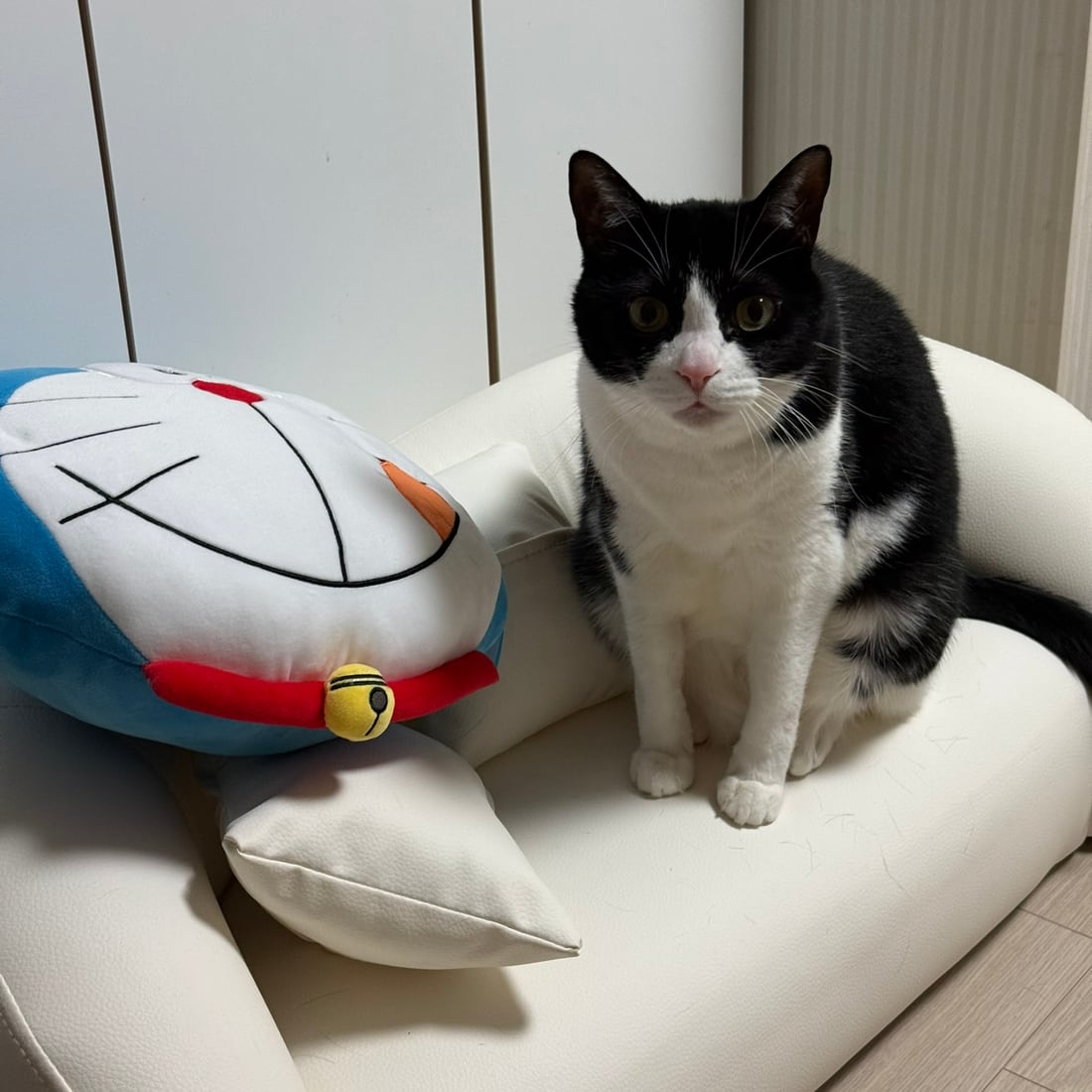
If your cat mauls a new toy into pieces in one sitting, it usually means she’s a bite-and-hold hunter, not a bat-and-chase one. That’s normal prey drive, not aggression or a defect in the toy. The fix isn’t a stronger cat — it’s buying for durability and knowing which toys are truly single-use.
We live with the extreme version of this. Our first cat, Yuja, grabs a toy, clamps down, and does not let go until it’s wrecked. Then she never looks at it again. Same house, same toys, and our second cat, Mochi, treats a toy completely differently. Two cats, one toy budget, two totally different problems.
Why does my cat destroy toys so fast?
Play is rehearsed hunting. A cat stalks, pounces, catches, and “kills” — and for some cats the kill part is the whole point. That’s the phase where teeth and claws go to work, and a lightweight plush toy simply doesn’t survive it.
With Yuja, there’s no gentle batting. She bites, holds, and grinds down on the toy with real focus until something tears, unravels, or snaps off. It looks intense, but it’s the same instinct that makes a cat carry a “prize” around the house. She’s finishing the hunt.
The reason she abandons the toy afterward is the interesting part. A broken toy doesn’t move right, doesn’t spring back, doesn’t feel like something worth pinning. Once it stops behaving like prey, it stops existing to her. We’ve thrown away a lot of toys that were perfectly fine except for one chewed corner she’d decided was disqualifying.
Why does another cat play so differently?
Not every cat “kills.” Some are chasers who lose interest the moment the game gets awkward.
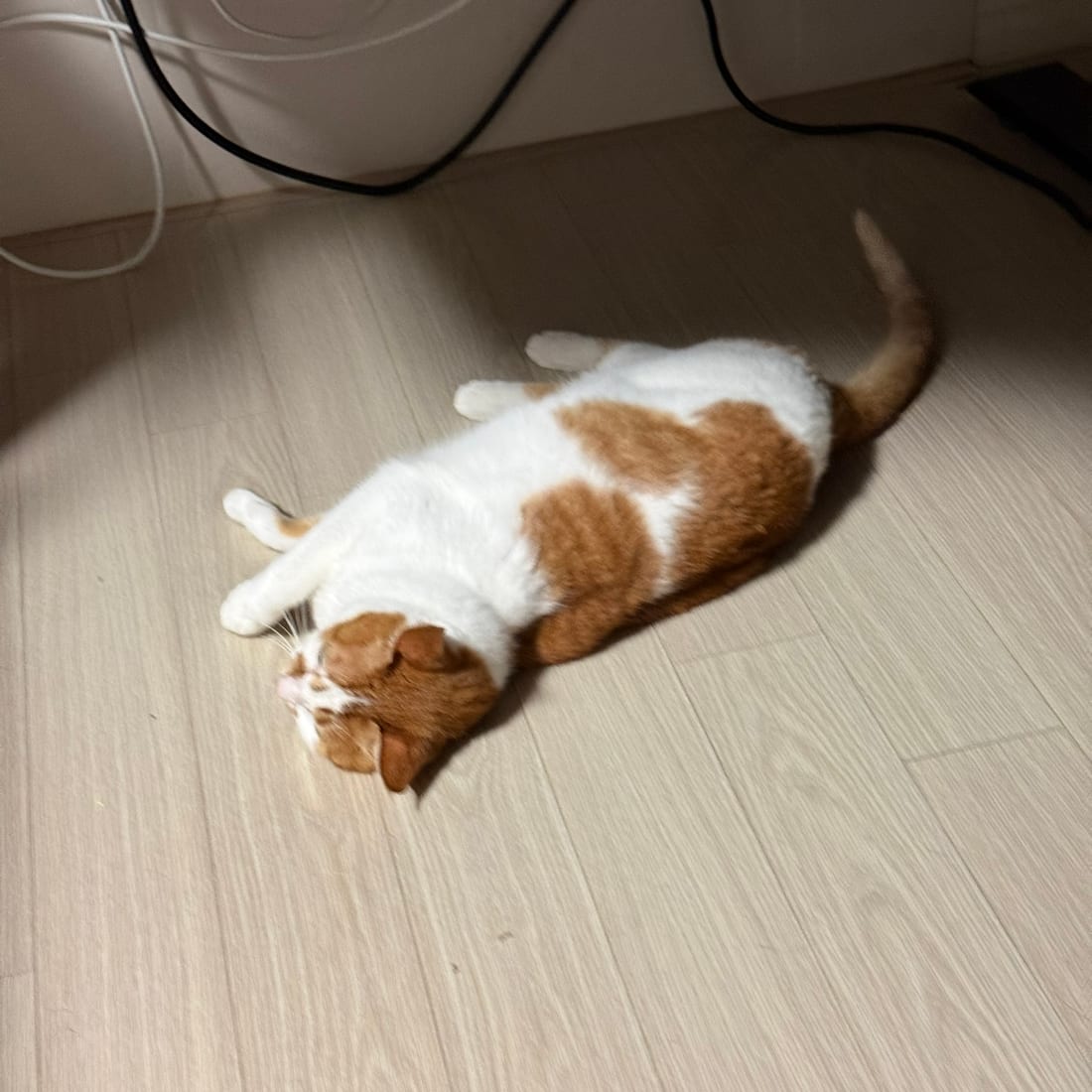
Mochi is the opposite of her sister. She’ll drop into a serious hunting crouch, lock on, and actually jump at a toy — full commitment. But if she leaps and misses, overshooting the toy, she gets visibly embarrassed and just… stops. She wanders off, comes back a few minutes later, tries again, misses, and gets sheepish all over again. If you’ve ever wondered why a cat quits mid-play for no obvious reason, that self-conscious reset is one version of it.
The takeaway: a cat that destroys toys isn’t “playing wrong.” She’s a catch-and-kill type. A cat that abandons toys mid-game isn’t bored either. They’re just running different hunting programs.
| Play style | What it looks like | Toy that survives it |
|---|---|---|
| Catch-and-kill (Yuja) | Bites, holds, grinds until it breaks | Solid rubber, thick stitched fabric |
| Chase-and-pounce (Mochi) | Stalks, jumps, quits if she misses | Wands, balls, anything that keeps moving |
| Casual batter | Light paw taps, short bursts | Almost anything lasts |
Which toys actually survive a destroyer?
You can’t out-buy a determined chewer, but material matters far more than price. We’ve watched thin plastic crack, felt mice lose their tails in minutes, and cheap wand attachments get shredded off the string.
What holds up better for a bite-and-hold cat:
- Solid rubber or hard chew toys made for cats. No stuffing to pull out, no seams to split.
- Tightly stitched fabric toys, not glued or lightly sewn. Tug a seam in the store; if it gives, it’s gone in a week.
- One-piece designs. Anything with small attached parts — bells, plastic eyes, feathers on a weak crimp — becomes a choking risk the second it detaches.
What to skip if your cat kills toys: thin plush mice, feather toys with feathers you actually care about keeping, and dollar-bin plastic. They’re not badly made — they’re just built for a batter, not a killer.
One honest note on Mochi: she’s drawn to rubbery, cord-like textures, the kind of thing a cable feels like. That’s exactly why we’re careful. Cords and cables are not toys. We keep them managed and out of reach and give her purpose-built rubber toys instead. A cat’s attraction to a material doesn’t make that material safe.
When is a destroyed toy actually a problem?
Destruction itself is fine. Swallowed pieces are not.
The moment a toy starts shedding parts — string, stuffing, a cracked-off chunk of plastic, a loose bell — it goes in the trash, not back in the toy box. String and ribbon are the big ones; they can cause serious internal problems if swallowed, and that’s a vet situation, not a wait-and-see one. We don’t leave string toys or wands out unsupervised for exactly this reason.
So our rule is simple: play hard, then clean up. Wand toys come out during play and get put away after. Solid rubber toys can stay out. Anything that’s actively coming apart gets tossed before Yuja can turn a tear into a swallow.
How we actually handle a toy destroyer
We stopped fighting it. Yuja is going to wreck a toy, and no toy in any store is going to survive her indefinitely. So we buy accordingly.
Our approach in practice:
- We treat most of Yuja’s toys as consumable. We don’t spend $15 on something she’ll retire in one session. Simple, sturdy, cheap-enough-to-replace wins.
- We buy for material, not marketing. The fanciest toy at Chewy or Petco isn’t automatically the toughest. A plain solid-rubber toy has outlasted every “premium” plush we’ve tried.
- We rotate for Mochi, replace for Yuja. Mochi keeps a small set of favorites in circulation. Yuja gets fresh ones because a used toy, to her, is a dead toy.
- We supervise the fragile ones. Wands and anything with parts come out with us in the room and go away after.
Six years in, we’ve made peace with the fact that “durable cat toy” is relative. For a bite-and-hold cat, durability just means lasts long enough to be worth it and doesn’t fall apart into swallowable pieces. If a toy gives your cat one great, intense session and comes apart safely at the end, that’s not a failure. That’s the toy doing its job.
The bigger picture is that a toy-destroyer is telling you something useful: she wants to catch and kill, hard and often. Give her that outlet with tough, safe toys and regular play, and the shredding stops feeling like a waste and starts looking like a satisfied hunter.
This article is general information from a cat owner, not veterinary advice. Talk to your vet about your cat's specific situation.