Using Play to Build Trust With a Scared Cat
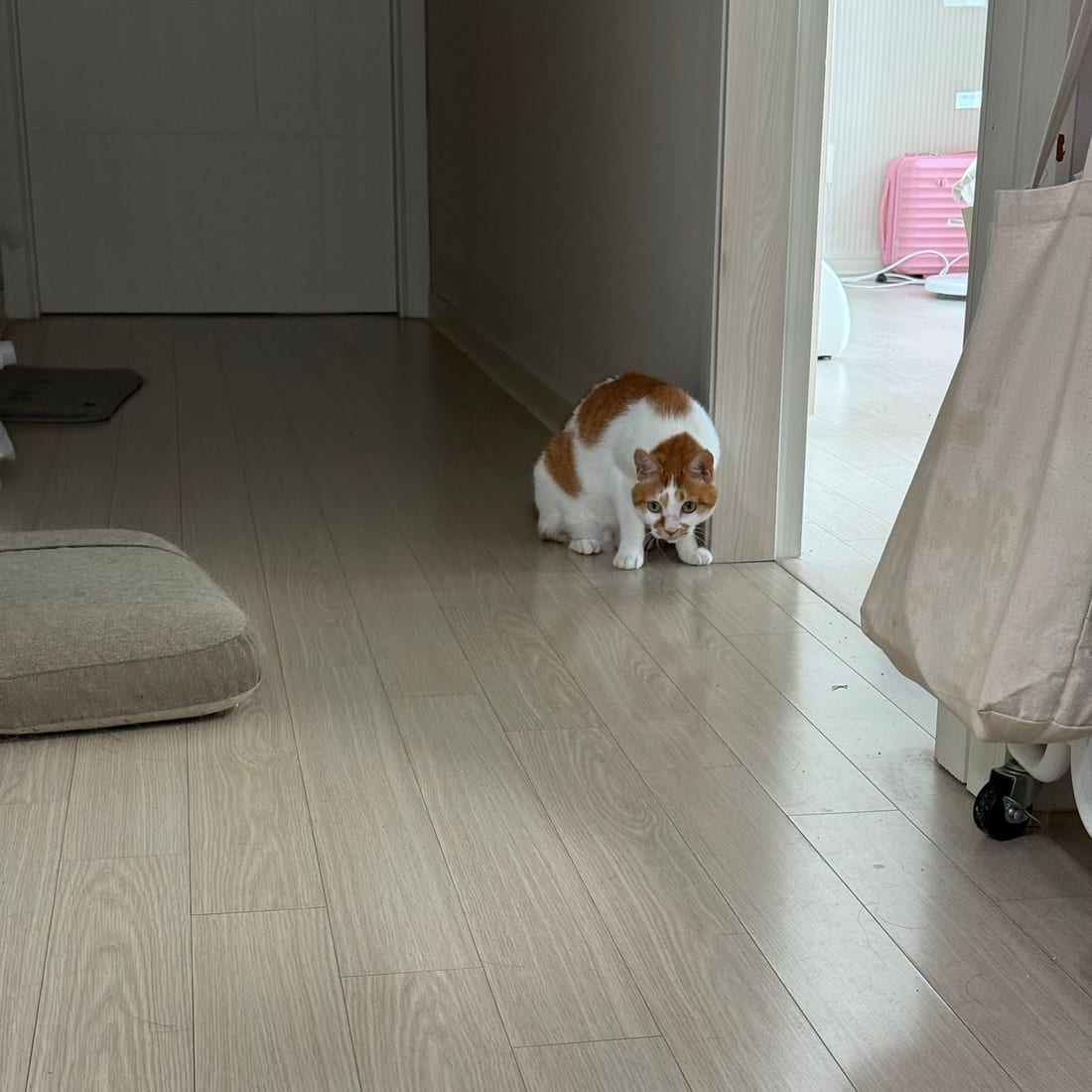
Play works with a scared cat because it lets her come closer on her own terms. A wand toy keeps your hand several feet away while giving her something to focus on, so she can approach the fun without approaching the threat. That distance is the entire trick — it’s why play often reaches a fearful cat before petting or treats ever will.
We learned this with our two rescues, who came to us together and could not have reacted more differently. One took years to let us near her paws. The other rolls over for a belly rub if you so much as walk past. Same house, same people. Play was one of the few tools that moved the needle with the nervous one.
Why play reaches a scared cat when petting doesn’t
A frightened cat reads a reaching hand as a grab. Even a slow, gentle hand. She doesn’t have the history to know your intentions, so she assumes the worst and either freezes, flees, or bites. Petting asks her to accept contact before she trusts you, which is backwards.
Play flips the order. With a wand toy, the thing moving is the feather at the end, not your fingers. She can chase it, miss it, win it, and quit — all without your hand entering her bubble. She stays in control the whole time. Over enough sessions, her brain starts filing “this person near me” under good things happen instead of danger.
That’s the mechanism. It’s slow, and it doesn’t override temperament, but it’s real.
How we actually use play to close the distance
Here’s the progression we used, roughly. Don’t rush from one row to the next — let her body language set the pace.
| Stage | What you do | What you’re watching for |
|---|---|---|
| 1. From her hiding spot | Drag a wand toy slowly past the entrance, then leave | Ears forward, eyes tracking, a paw twitch |
| 2. She engages but stays hidden | Play the toy just outside her spot so she reaches out | She swats without leaving cover |
| 3. She comes out to play | Longer sessions in the open, you sitting still | She stays out after the toy stops |
| 4. Play near your hand | Shorten the wand so she works closer to you | No hissing when your hand is visible |
| 5. Play plus a brief touch | A single stroke after a good catch, then stop | She doesn’t flinch or bolt |
The two rules that mattered most: let her win (a cat that never catches the toy gives up), and stop before she wants to stop. Ending a session while she’s still interested is what makes her show up for the next one.
If she won’t even track the toy yet, she’s earlier in the process than play can help with. That’s a feeding stage, not a play stage — we wrote about how we fed our cat when she was hiding and wouldn’t come out, and that came first for us.
What play looks like with two very different cats
The gap between our two is the best illustration of what play can and can’t do.
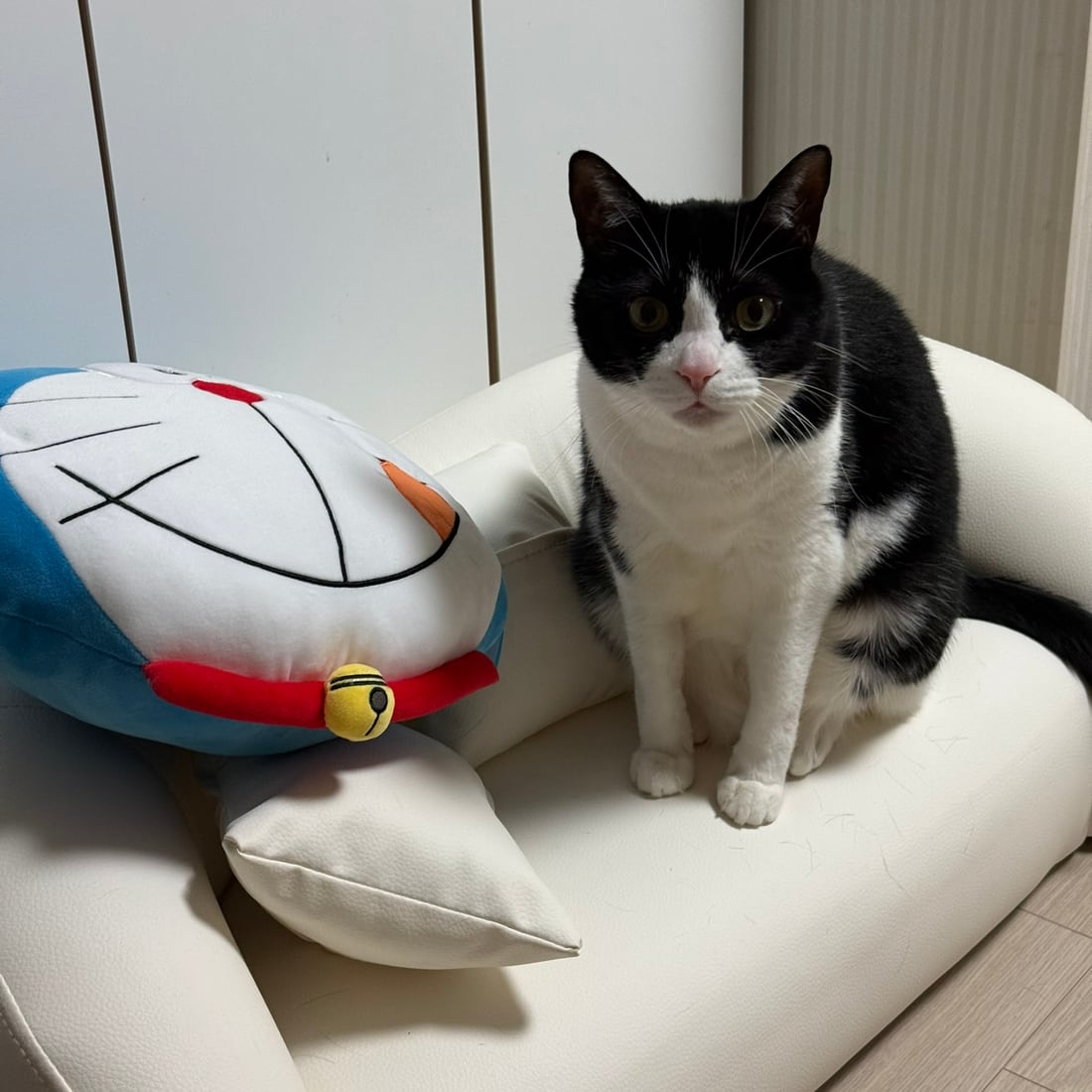
Mochi, our tuxedo, is a full-on hunter. She locks onto the toy, drops into a crouch, and launches — real jumps, total focus. But here’s her quirk: if she overshoots and misses the toy, she gets weirdly embarrassed. She’ll stroll off like she meant to do that, ignore the toy for a while, then circle back and do it again. If your fearful cat quits mid-game for no reason, watch for a missed pounce right before it. Slow the toy down and let her land the next one.
Yuja, our orange tabby, is the opposite kind of player. She loves toys but she’s a biter, not a chaser. When she catches one, she clamps down and does not let go — she’ll gnaw it until it breaks, and once it’s broken she never touches it again. For us, one good toy is basically one-time-use. If you’ve got an intense biter, expect to replace toys and don’t waste money on delicate ones.
The point: play helped us reach both of them, but it looked completely different for each. Don’t copy a technique — read your cat.
Where play stalled for us (the honest part)
Play got Yuja out from behind the washing machine and into the same room as us. It did not turn her into a lap cat, and I want to be straight about that.
Six years in, she still can’t be handled for long. Two strokes in a row and she’ll hiss. We still can’t trim her nails properly. Play bought us proximity and a shared activity she genuinely enjoys — but it never rewrote her baseline temperament, and no amount of it was going to.
We also gave up on the classic “win her over with treats” advice, because with Yuja it never worked: she’ll eat any snack exactly once and refuse it forever after. Play was more durable than food for us precisely because it isn’t about the reward at the end — it’s about the safe distance during.
So treat play as a bridge, not a cure. It’s one of the best tools for closing physical distance with a scared cat, and for some cats it’s the tool that finally clicks. But if your cat plateaus at “comfortable in the room but not in your lap,” that may just be who she is — and that’s a real, livable relationship too. If you’re wondering whether time alone helps, our take on whether a shy cat gets friendlier with age covers what actually changed over six years.
One quick note: if a cat who normally plays suddenly refuses to, and it comes with hiding, not eating, or other changes, that’s worth a vet visit — a sudden drop in a playful cat can be pain rather than mood.
This article is general information from a cat owner, not veterinary advice. Talk to your vet about your cat's specific situation.