Adult Rescue Cat vs Kitten: How Trust Differs
Trust with a kitten is mostly about exposure; trust with an adult rescue cat is mostly about undoing. A kitten hasn’t decided yet whether the world is safe, so good experiences stack up fast. An adult who lived outside already has opinions, and your job is to slowly outvote them. Same goal, very different work — and very different timelines.
We didn’t raise our two from kittens. Both Yuja and Mochi were rescued and cared for by family before they came to us, and they arrived together as young adults. So this isn’t a “we tried both from eight weeks old” story. It’s what we learned watching two adult rescues with opposite temperaments settle into the same house.
Why does a kitten trust faster than an adult rescue cat?
A kitten’s fear responses aren’t locked in yet. Handle its paws early, introduce the vacuum before it means anything, let it meet a few calm people — and much of that just becomes normal. There’s less to overwrite.
An adult who survived outside comes pre-loaded. Certain sounds, movements, and smells already mean danger, and you rarely get to know why. With Yuja, plastic-bag sounds set off something closer to panic than surprise. She’d be getting scratched happily, hear a bag rustle, bite, and flee. We have no way of knowing what caused it — our best guess involves her outdoor life, but that’s a guess we can’t confirm. What we could do was manage it, which is a different project than teaching a blank-slate kitten.
What building trust actually looks like at each stage
Here’s the honest split, based on what we lived through with our adults versus how kittens are generally described:
| Kitten | Adult rescue (street history) | |
|---|---|---|
| Starting point | Curious, not yet decided | Already has fixed fears |
| First response to you | Approaches or plays | May hide for days |
| Handling (paws, brushing) | Accepts if introduced early | Can take months to years |
| Main strategy | Positive exposure | Patience + working around fears |
| Setbacks | Minor, quick to recover | One bad moment can cost days |
| Realistic ceiling | Often a lap cat | May stay affectionate-but-guarded |
That “one bad moment costs days” row is the one people underestimate. Early on, a single unwanted paw touch sent Yuja back behind the washing machine for three days. A kitten shrugs that off in an hour. An adult files it.
How trust looked with our two adults
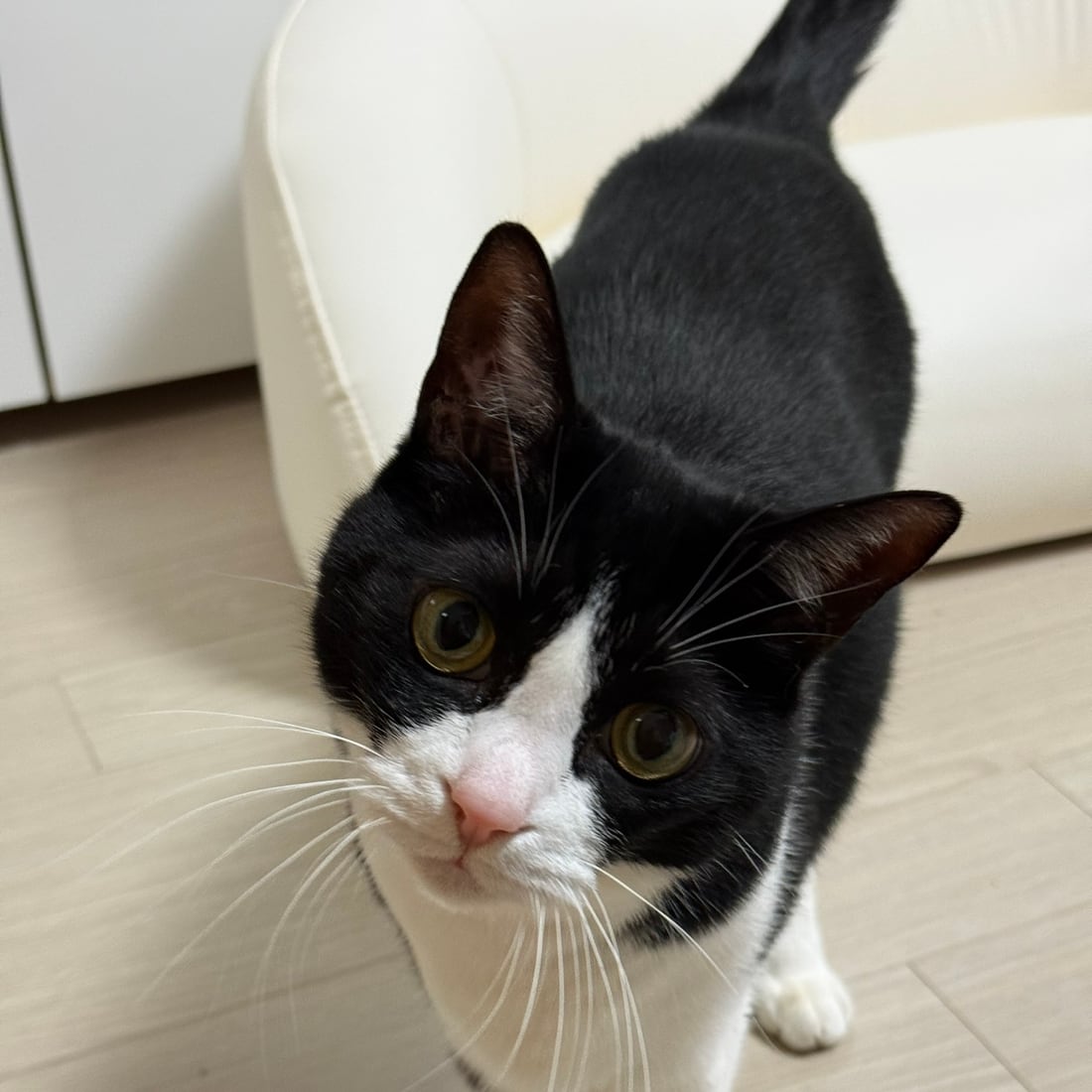
Even among adults, temperament splits the timeline wide open. Mochi, our tuxedo, was basically ready on day one — she ate well, followed us around, and rolled over for belly rubs almost immediately. If you only had Mochi, you’d think adult rescues were easy.
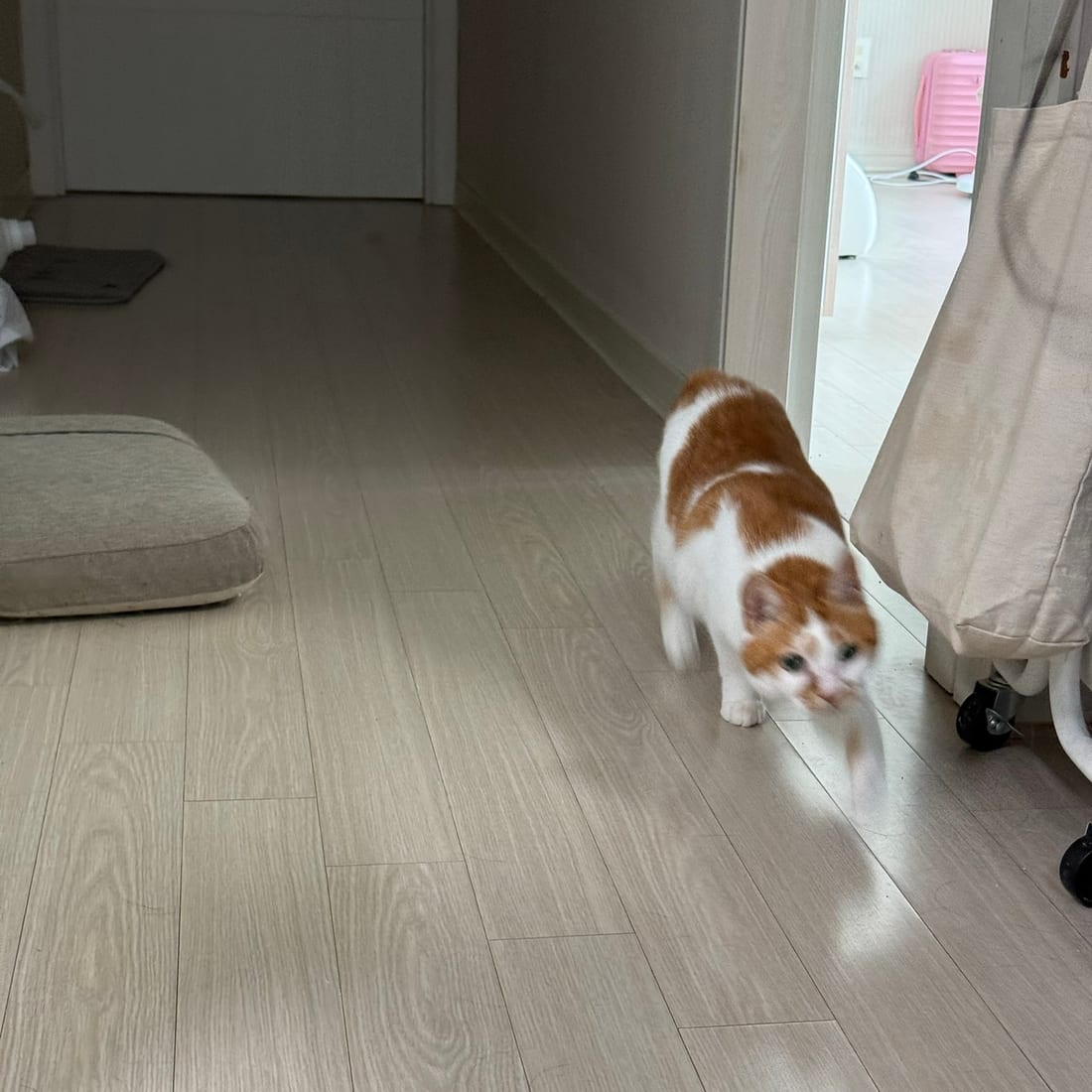
Yuja rewrote that idea. When she arrived, she vanished. We left her carrier open and didn’t chase her; by the time we finished unpacking she was gone. On day three we searched the whole house and found her wedged behind the washing machine, hissing at a phone camera. She hid for what we’d call about two weeks — honestly we don’t know the exact day she started coming out, because we couldn’t see back there. We just delivered food behind the machine with tongs and waited.
The milestones with her were measured in years, not weeks. It took four years before I could touch her paws at all, and even now a second touch in a row earns a hiss. That’s not failure. That’s the real pace of an adult with her wiring.
Does the same technique work on both?
Mostly, the principles carry over — go slow, let the cat set the distance, never yank a hiding cat out. But the tools you lean on shift.
- Food and treats. With many cats, treats are the fast lane to trust. With Yuja that plan collapsed: she eats anything once, then refuses it forever, so we gave up buying her loyalty with snacks. A kitten will usually let food do a lot of the heavy lifting.
- Handling early. Mochi’s nails trim fine because handling never became a fight. If you get a kitten, that early window is gold — use it. With an adult who already flinches, you’re negotiating, not training.
- Reading the signals. Adults will show you smaller, quieter signs of thawing. We wrote a whole piece on the signs a rescue cat is starting to trust you precisely because with an adult, you learn to celebrate a cat who simply sits in the same room without leaving.
One more thing that surprised us: fears can soften even in adults. Yuja no longer bolts at plastic bags. She stands her ground and watches now — a clear six-year improvement — though she still hates a bag coming close. It never fully disappeared. It just got livable.
So which is “easier”?
If you want the fastest, most forgiving path to a snuggly cat, a kitten or an easygoing adult like Mochi will get you there sooner. If a sudden change shows up in an already-settled cat — a friendly cat who abruptly won’t be touched, or stops eating — that’s worth a vet visit, since pain can look like a personality shift.
But easier isn’t the whole story. The trust an adult like Yuja hands you is trust she chose after deciding you weren’t a threat. Six years in, she comes to sit near me, purring before I’ve even reached out, using that purr as her way of saying look at me. She still won’t tolerate two paw touches in a row. Both of those things are true, and I wouldn’t trade the slow version for anything.
Kittens teach you patience by being sponges. Adult rescues teach you patience by making you earn every inch. Pick the one that fits your life — just don’t expect an adult to run on a kitten’s clock.
This article is general information from a cat owner, not veterinary advice. Talk to your vet about your cat's specific situation.