Starting to Brush a Cat That Doesn't Trust Hands Yet
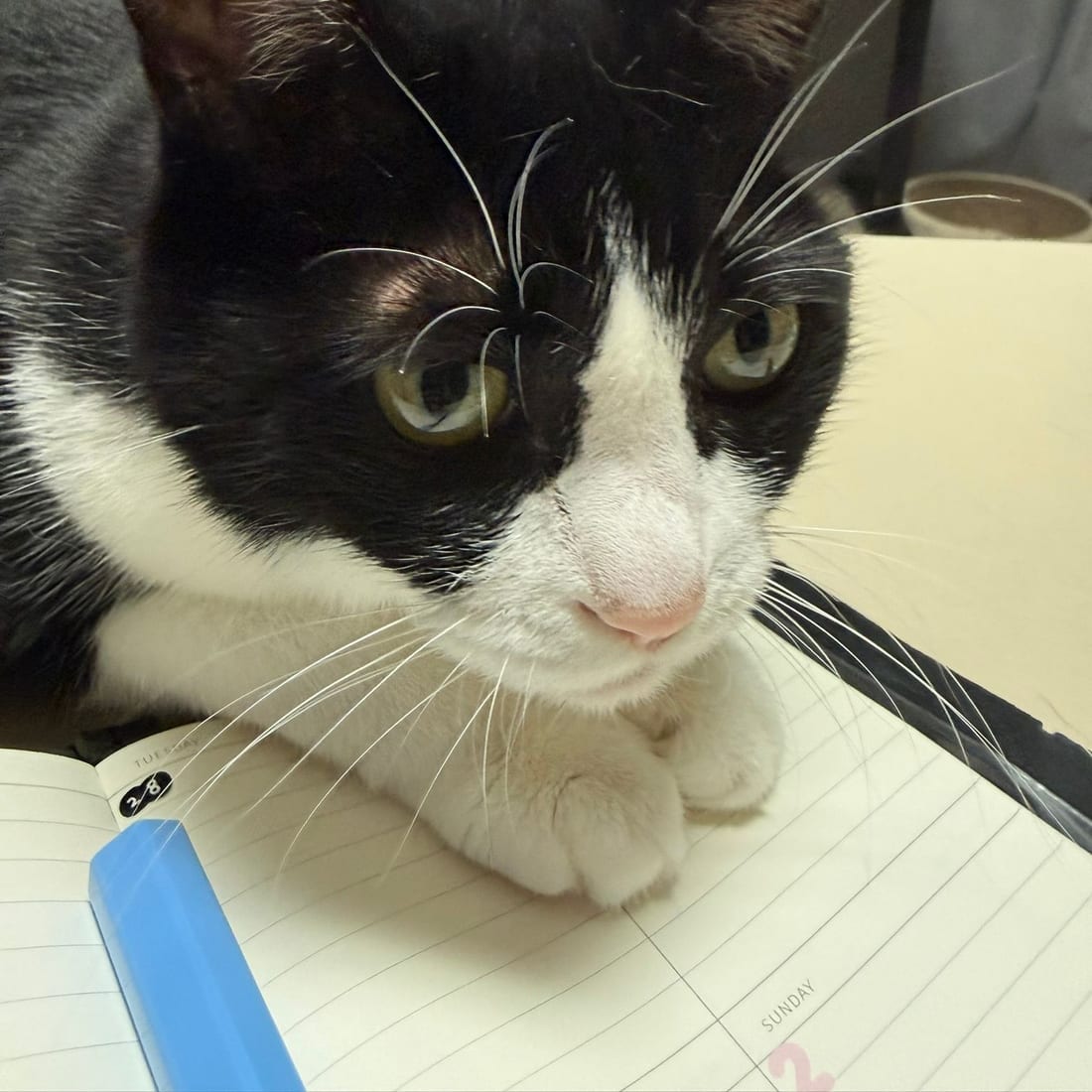
If your cat still flinches from your bare hand, don’t start with a brush — start with the hand. A cat that doesn’t yet trust touch reads a brush as one more strange object coming at her. Get her comfortable being near your hand and lightly touched first, then introduce the brush as a quiet extension of that same calm contact. Rushing straight to grooming usually costs you the little trust you’ve built.
Why the brush isn’t step one
A brush is a tool for a relationship that already exists. It presses, it drags, it makes a sound near her body, and it moves in ways she can’t predict. To a cat still deciding whether hands are safe, that’s a lot of unknowns at once.
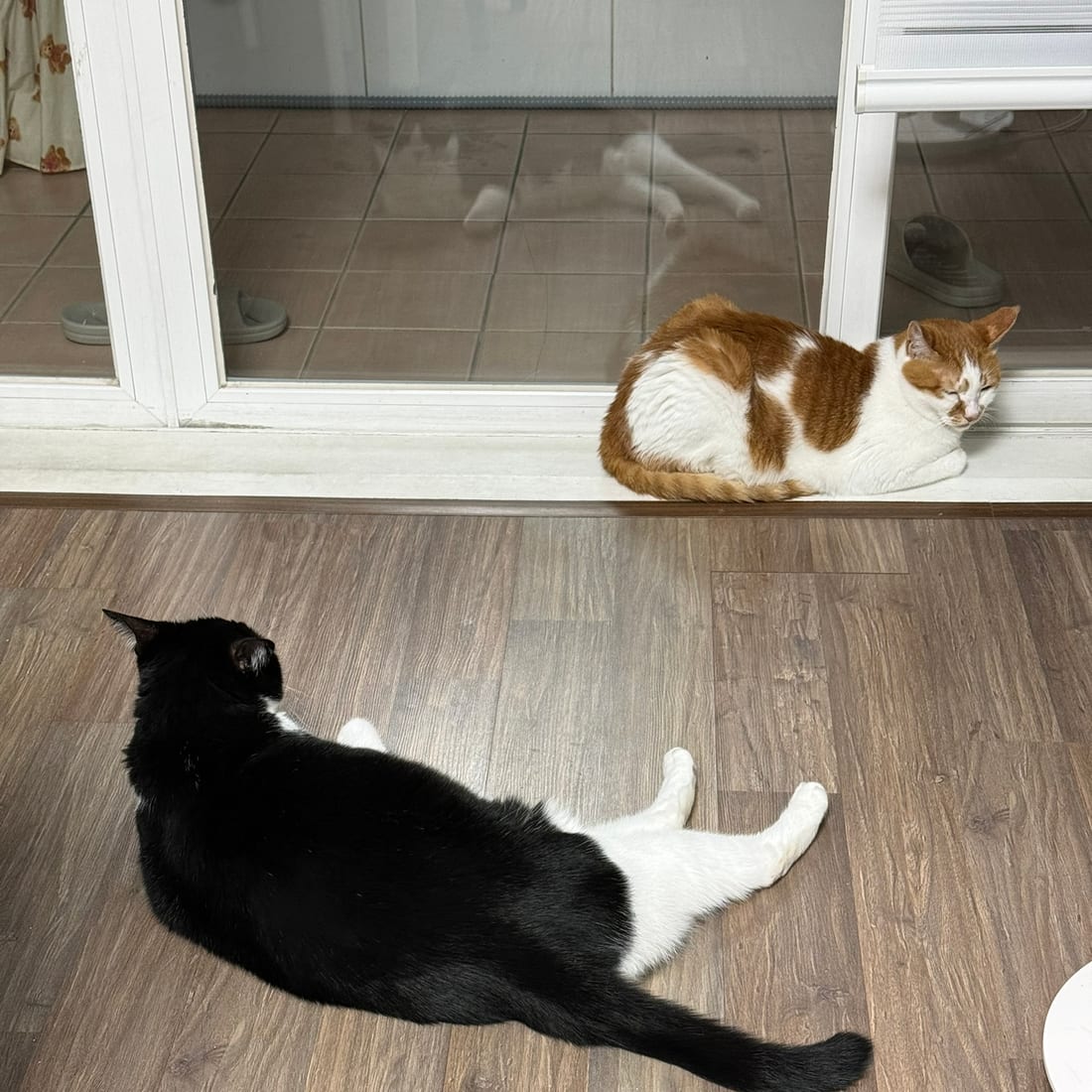
We learned this the slow way with our older cat, Yuja. She came to us skittish off the street, and touching her paws at all took four years. Not four years to brush — four years just to lay a hand near her foot without getting bitten. If we’d waved a brush at her in year one, she’d have gone right back behind the washing machine.
So the honest first question isn’t “which brush,” it’s “does she tolerate my hand yet?” If the answer is no, that’s your project first. Our post on how to offer your hand to a cat that fears hands covers that groundwork in detail.
How do I know she’s ready to try a brush?
You’re looking for a cat who accepts calm, brief touch without escalating. A few green lights:
| Signal | What it tells you |
|---|---|
| Stays put when your hand approaches | Your hand no longer reads as a threat |
| Lets you stroke her back or head briefly | She tolerates pressure, not just presence |
| Leans in or headbutts your hand | She’s actively asking for contact |
| Recovers fast after a startle | Her baseline trust is solid |
Our younger cat, Mochi, hit all of these early — she rolls over the second you touch her and asks to be scratched. Yuja gives a narrower version: she’ll sit in a loaf near me and start purring before I even reach out, which for her is a request to be scratched, not a sign she’s fully relaxed. Reading your own cat’s version of “yes” matters more than any checklist.
The slow introduction, step by step
Once she’s comfortable with your hand, add the brush as the smallest possible change. Keep sessions short — 30 seconds is a real session at this stage.
- Leave it out. Set the brush near her food spot or a favorite napping area for a few days so it stops being new. Let her sniff it on her own terms.
- Hold it while you pet. Have the brush in the same hand you already pet with, but keep petting normally. She learns the object is attached to a thing she already accepts.
- One stroke, then stop. Turn the brush and do a single light pass over the spot she likes best — usually the cheeks or the base of the neck. Then put it down. Ending early is the whole trick.
- Watch, don’t push. If she stays, do one or two more. If she tenses, freezes, or flicks her tail hard, you’re done for the day. No exceptions.
- Never chase. If she walks off, let her. Following her with the brush teaches her the brush means being cornered.
The pattern that works is the same one that worked for getting near Yuja at all: don’t chase, take care of her, and wait. Progress comes from her choosing to come back, not from you covering more ground each time.
Where to brush first (and where to avoid)
Start where cats already like being touched and stay away from the touchy zones until she’s fully on board.
| Start here | Save for later |
|---|---|
| Cheeks and chin | Belly |
| Base of the neck | Tail and rear |
| Along the upper back | Legs and paws |
Cheeks and the head are the safest opening because that’s where a cat rubs on things to scent-mark — it overlaps with something she already does willingly. The belly and paws are the last frontier for most nervous cats, and honestly, some never get there. Yuja still won’t take two paw touches in a row without a hiss, and we’ve made peace with that.
When a brush just isn’t happening yet
Some cats aren’t ready for months, and a few short-haired cats barely need brushing anyway. If she won’t tolerate it, you’re not failing — you’re reading her correctly. Short-haired cats groom themselves well, and you can get by on the odd wipe-down and letting her manage the rest while trust builds. Our take on how often a short-haired cat actually needs brushing puts this in perspective.
A grooming glove is often the gentlest bridge here, because it feels almost identical to being petted. It let us handle a cat that would never accept a bristle brush pressed on her, and the low-key version of the tool made all the difference.
One thing to keep an eye on separate from trust: if a cat who used to let you groom her suddenly resists being touched in a spot, or you notice mats forming fast, matting or a sore spot can be the reason rather than mood. A calmer cat who flinches at handling out of nowhere is worth a quick vet look, since pain and fear look nearly identical from the outside.
The mindset that gets you there
Brushing a distrustful cat is less a grooming task and more a trust exercise that happens to involve a brush. The goal for the first few weeks isn’t a well-groomed cat — it’s a cat who doesn’t leave the room when the brush appears. Everything useful is built on top of that.
Keep the wins small and the retreats free of consequence. Let her set the pace, quit while she’s still comfortable, and accept that the finish line moves. Six years in, we still have one cat who purrs for scratches and one who bites if you push a second stroke — and both of them are exactly where they should be.
This article is general information from a cat owner, not veterinary advice. Talk to your vet about your cat's specific situation.