Why One Rescue Cat Warms Up Fast and the Other Takes Years
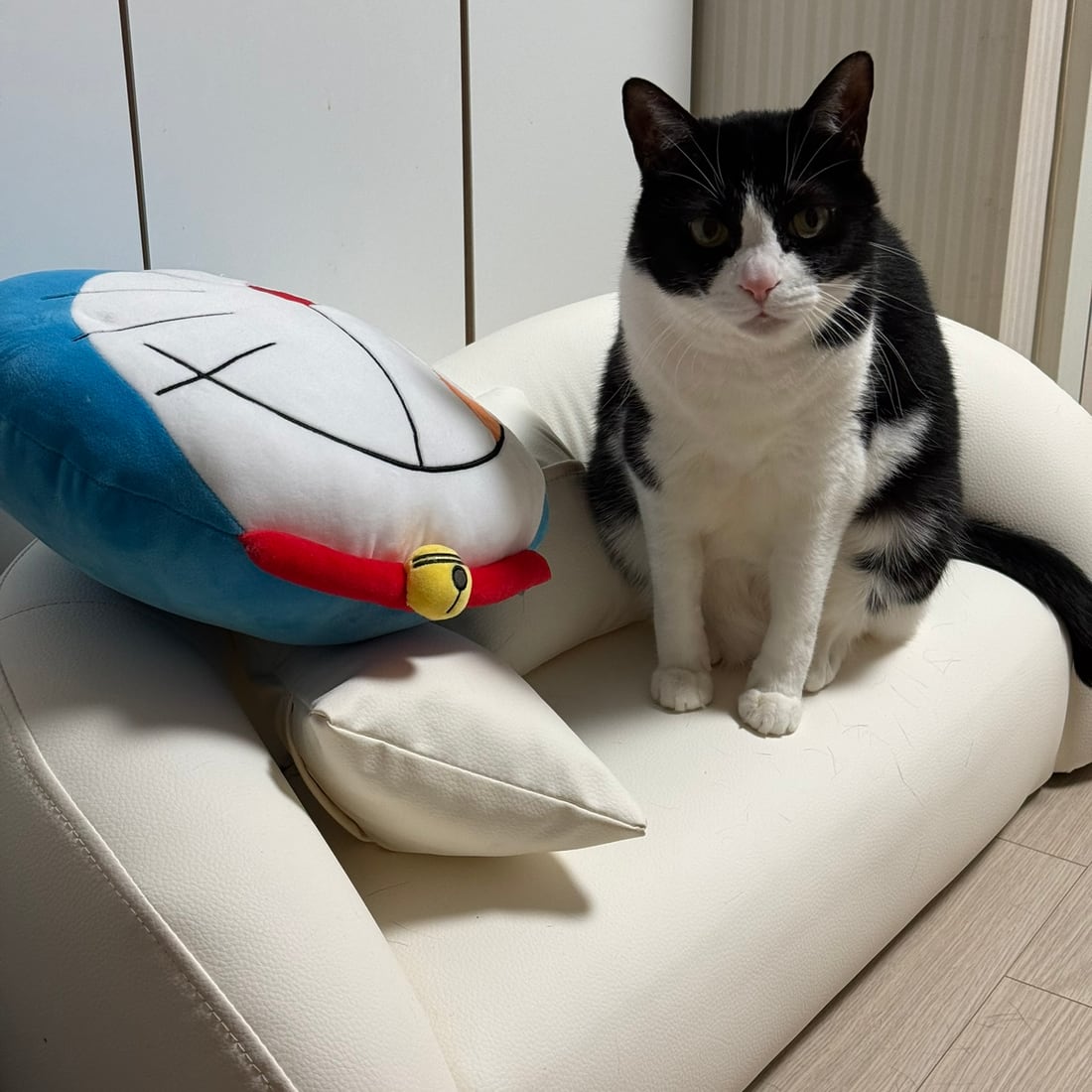
One cat warms up fast and the other takes years mostly because of temperament and past experience, not anything you did. A naturally bold cat with an easier history bonds in days; a sensitive, guarded cat needs to feel safe on her own schedule. Same house, same people, same food — the gap is the cat, not the care.
We know this firsthand. Yuja and Mochi came to us together, both formerly street cats rescued and cared for by family before they landed with us. Six years later, one greets us at the door every day and the other still hisses if I touch her twice in a row. Nothing about our home explains that. Their wiring does.
Why are my two cats so different when they got the same start?
Because “same start” isn’t really true from the cat’s side. Two cats can share a house, a rescue story, and a feeding schedule and still carry completely different nervous systems and memories.
Mochi, our tuxedo, is a lap-first, roll-on-the-floor cat. She headbutts, she paws at us to be scratched, she meets us at the front door when we come home. From the first weeks she ate well and settled in like she’d always lived here.
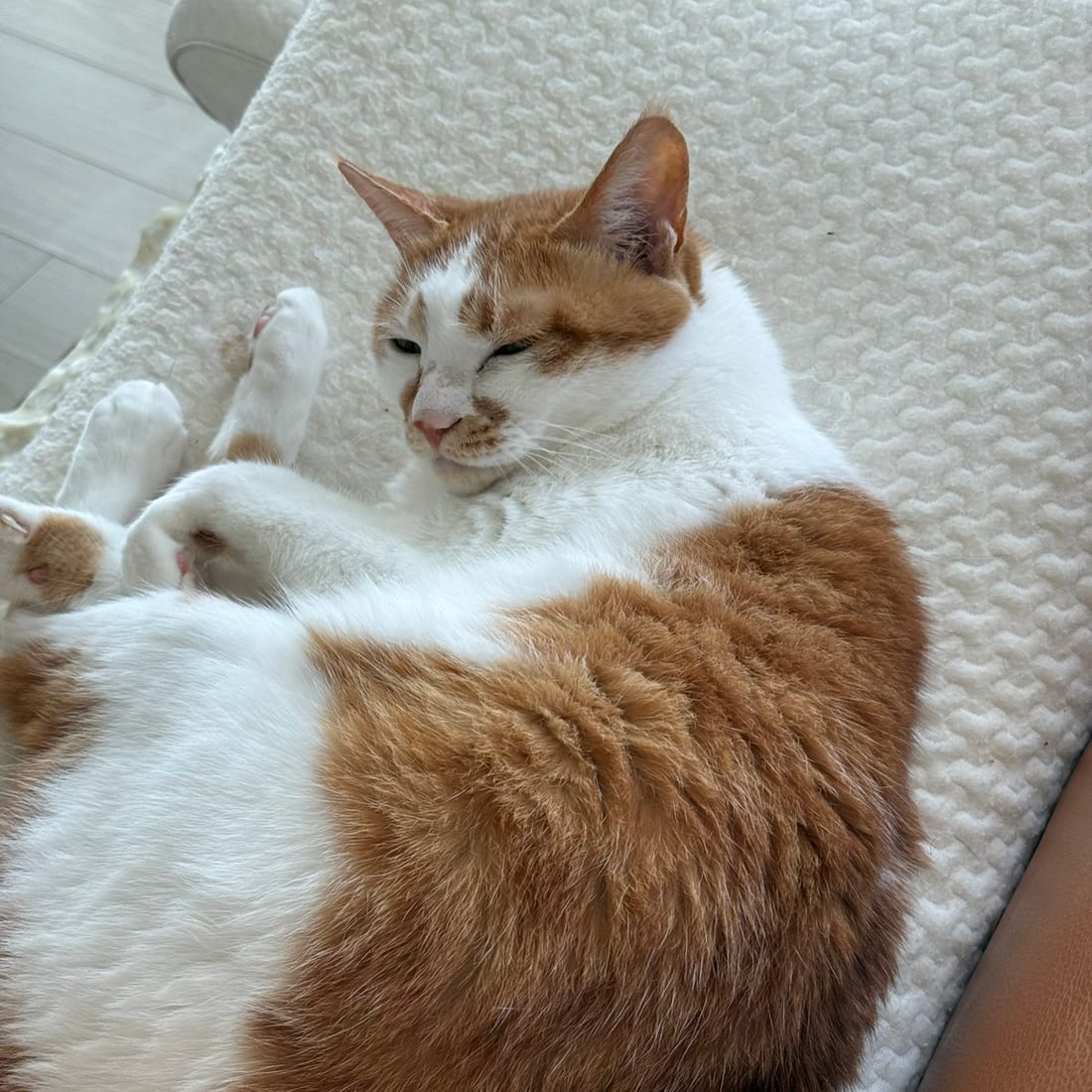
Yuja, the orange-and-white one and the older of the two, spent about two weeks behind the washing machine when she arrived. Honestly we don’t know the exact number of days — it’s been six years — but it was well over ten. She hissed at a phone camera. She wouldn’t eat unless we slid the bowl right up to her with tongs. That’s the same home Mochi was thriving in.
So the question isn’t “what went wrong with the slow one.” It’s “why did I expect them to run at the same speed?”
What actually decides how fast a rescue cat bonds
A handful of things stack up. Some you can influence, most you can’t.
| Factor | Fast-bonding cat | Slow-bonding cat |
|---|---|---|
| Baseline temperament | Bold, curious, social | Sensitive, easily startled |
| Past experience with people | Neutral or positive | Frightening or unpredictable |
| Startle recovery | Bounces back in minutes | Can hide for days after one scare |
| Response to handling | Seeks more contact | Tolerates a little, then bites |
| Trigger sensitivity | Few triggers | Many (sounds, strangers, plastic) |
Notice that none of those columns is “how much love the owner gave.” A confident cat would bond fast in almost any decent home. A guarded cat will take her time no matter how patient and skilled you are.
Yuja checks nearly every box in the right column. She’s startled by strangers, by plastic bag sounds, by being touched a beat too long. One bad moment used to set her back three days. Mochi checks the left column across the board. Living with both makes it obvious the difference was baked in before either of them met us.
Does slow bonding mean the cat will never be affectionate?
No — but “affectionate” looks different for a slow cat, and you have to read it on her terms.
It took four years before we could touch Yuja’s paws at all. Even now, one touch is fine; a second in a row earns a hiss. That’s not failure. Four years ago, brushing the fur on her paw with a fingertip meant a bite and three days of hiding. Progress in a wary cat is measured in tiny, uneven steps, not a smooth curve.
She also shows trust in ways that don’t match the textbook. Her purr, for example, isn’t a “I’m content” sound — she uses it to ask for scritches. She’ll settle into a loaf position next to me and she’s already purring before my hand reaches her. That’s her version of Mochi’s flop-and-roll. Same message, different dialect. If you’re trying to spot these small shifts, the early signs a rescue cat is starting to trust you are worth learning to read, because a shy cat’s version is quiet.
The slow cat can absolutely love you. She just won’t announce it the way the friendly one does.
How should I treat two cats bonding at different speeds?
Not the same. The single most common mistake is treating the nervous cat like the confident one — approaching, picking up, insisting on contact because it worked with the other cat.
Here’s roughly how we split it:
- The confident cat gets the contact she asks for. Mochi wants to be near us, so we let her. No cost, all upside.
- The wary cat sets the distance. With Yuja, we let her come to us. Chasing her down to “reassure” her does the opposite.
- Predictability over affection for the slow one. Same feeding routine, same voice, no surprise grabs. Boredom is safety to a cat like Yuja.
- Don’t skip the fast one’s needs to fix the slow one. It’s easy to pour all your attention into the project cat and shortchange the easy one. The easy one still needs you.
One concrete thing we do around triggers: when I have to use a plastic bag near Yuja — cleaning the litter box, say — I either say her name so she knows the scary sound is me, or I act completely uninterested in her and just do the task. Both beat surprising her. Her fear of plastic has genuinely faded over six years; she used to bolt, now she just stands and watches. Slow, but real.
The honest limit
Six years in, I can tell you what patience does and doesn’t do. It moved Yuja from behind-the-washing-machine terror to a cat who asks to be scratched. It did not turn her into Mochi. She still can’t be picked up easily, still hisses on the second pet, still won’t come when called.
If you’re waiting for your slow cat to become your friendly cat, you’ll be disappointed by a cat who’s actually doing great. The goal isn’t to close the gap. It’s to find out who this particular cat is and let her be that, at her own speed.
What I did, the whole time, was simple and boring: I didn’t chase her, I took care of her, and I waited. That’s the entire method. The speed was never up to me.
One quick note on the health side — if a cat who was warming up suddenly reverses and starts hiding, refusing food, or flinching at touch she used to allow, that can be pain rather than personality, and it’s worth a vet visit to rule out. Slow trust is normal; a sudden backslide is worth a look.
This article is general information from a cat owner, not veterinary advice. Talk to your vet about your cat's specific situation.