Why Does My Cat Hiss When I Touch Her Paws?
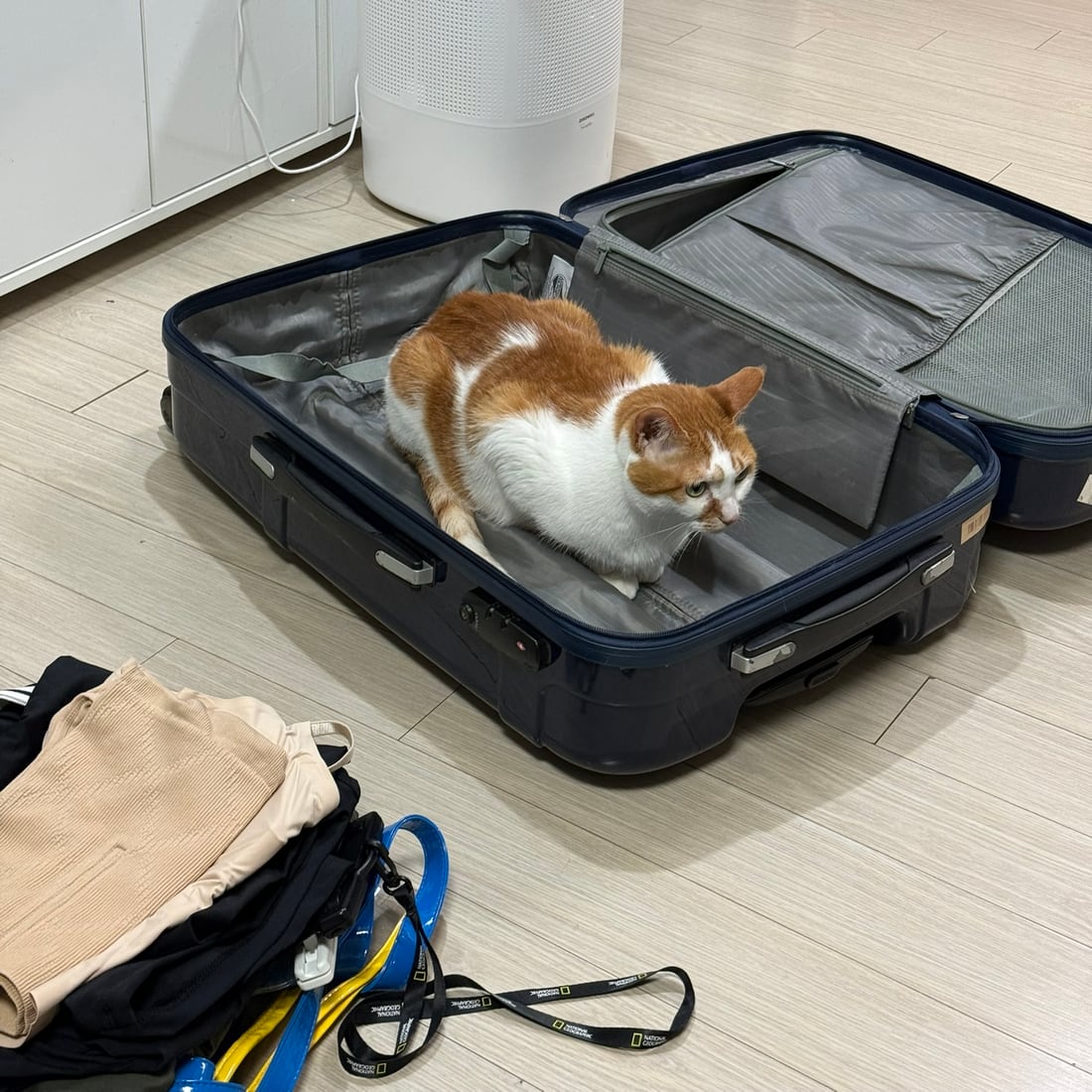
Most cats hiss when you touch their paws because paws are packed with nerve endings and represent one of their most vulnerable, well-defended body parts. To a cat, feet are for landing, running, and reacting fast to danger. Having them grabbed feels like losing an escape route. Hissing is her way of saying “not there, not yet.” For the vast majority of cats, it isn’t aggression and it isn’t pain. It’s a boundary.
One caveat before anything else: if your cat used to let you touch her paws and suddenly won’t, or if she’s limping, licking one paw obsessively, or the hissing comes with a swollen pad, that’s worth a quick vet visit to rule out an injury or ingrown claw. A sudden change is the signal to pay attention to. A cat who has always hated paw handling is just being a cat.
Paws are sensitive on purpose
A cat’s paws do a lot of work. They cushion landings, help her feel textures and temperature, and give her balance when she’s moving fast. All that sensory detail means the pads and toes are full of nerves. What feels like a gentle touch to you can feel like a lot to her.
There’s also an instinct layer. In the wild, a cat that can’t move her feet can’t flee. So even a well-fed, safe, indoor cat carries the wiring that says “don’t let anything trap my feet.” Hissing is the early warning before she escalates to a swat or a bite. In that sense, a hiss is actually polite. She’s telling you instead of just biting.
History matters more than personality
We have two cats, both female, both eight years old, and both came to us as former street cats after being rescued and cared for by family. They’ve had the same home for six years now, and they could not be more different about their feet.
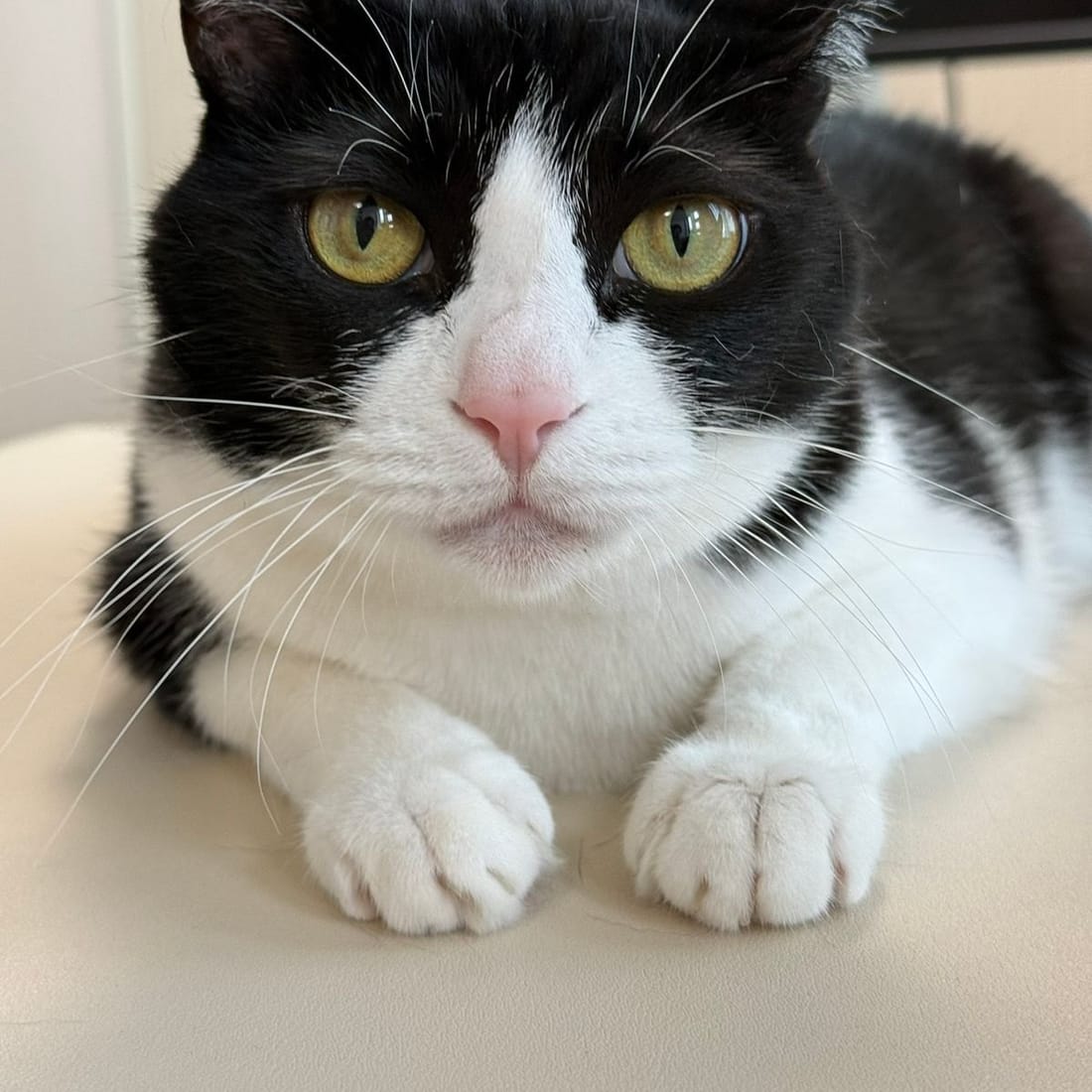
Mochi, our tuxedo, lets me clip her claws without a fuss. She rolls over for belly rubs and head-butts my hand. Feet included, she’s easy.
Yuja is the opposite, and she’s the reason I actually understand this question. She hisses, she has a real bite, and when she first arrived she spent two weeks hiding behind the washing machine. I had to slide her food and water bowls back there so she’d eat. Touching her paws was out of the question. In the early days, even brushing the tip of the fur on her foot got me a bite, and she’d disappear for three days afterward.
So here’s the honest part: it took four years before I could rest my hand on Yuja’s paw without a fight. And even now, if I touch the same paw twice in a row, I get a hiss. Interestingly, none of that is trauma from the street. Yuja was rescued and cared for before she came to us, and she’s simply a sensitive, wired-tight cat by nature. Mochi came from a similar situation and clips like a dream. Personality beats backstory here.
What the hiss is actually telling you
It helps to read the hiss as information rather than defiance. A few common translations:
| The behavior | What she likely means |
|---|---|
| Hiss + pull the paw away | ”That’s too much, back off.” |
| Hiss then walks off calmly | She set a limit and it’s over. Don’t chase it. |
| Hiss + flattened ears + tail lashing | She’s genuinely stressed. Stop now. |
| Hiss only on one specific paw | Worth checking that paw for a cut, ingrown claw, or sore pad. |
| Sudden hissing from a cat who never used to | Time for a vet look. |
Yuja’s version is the third-to-last one on a good day and the top one on a bad day. What I’ve learned is to respect the first hiss. If I push past it, I don’t get a second warning, I get teeth.
How we made progress (slowly)
I want to be clear that I never trained Yuja out of hissing. I still can’t clip her claws after six years. What I did was lower the stakes so that a touch stopped feeling like a threat. If you have a paw-sensitive cat, this is the approach that actually moved the needle for us.
- Touch near, not on. I started with the leg, then the ankle, then the top of the foot. The pads and toes came last, years later.
- One second, then stop. I always ended the touch before she wanted me to, not after. Quitting while she’s still tolerant teaches her that hands come and go without trapping her.
- Never two in a row. With Yuja, a second touch on the same paw resets everything. One brief touch, then leave it alone for the day.
- Pair it with something good. A touch right before a meal or a treat starts to mean something is coming, not that something is being taken.
- Let her leave. Cornering a cat guarantees a bite. If she can walk away, she’s less likely to feel she has to fight.
The pace matters more than the technique. Four years sounds absurd, but it’s what a genuinely defensive cat needed. If your cat is more like Mochi, you might get there in a few weeks. Don’t measure your cat against anyone else’s timeline.
When you actually need her paws handled anyway
The tricky reality is that sometimes the paw needs attention whether she consents or not, like an overgrown claw or a clip. Fighting a hissing cat into a claw trim usually makes the next attempt worse, so I’ve stopped trying to force Yuja and instead:
- Clip one or two claws when she happens to be relaxed, then stop, rather than doing all of them at once.
- Catch her mid-nap when her guard is down.
- Accept that a groomer or a vet tech can do in five efficient minutes what would take me a stressful hour and cost me her trust.
There’s no shame in outsourcing this. A professional handling it quickly is often kinder than a nervous owner drawing it out. Chewy, Petco, and PetSmart all have grooming services, and plenty of vet clinics do a nail trim as a quick low-cost visit.
The short version
Paw hissing is normal, usually about sensitivity and instinct rather than pain, and it’s more about your individual cat’s wiring than about anything you did wrong. Read the first hiss as a real message and respect it. Build tolerance in tiny doses if you can, over a much longer timeline than you’d expect, and don’t be discouraged if you never get all the way there.
Six years in, Mochi will hand me her paw and Yuja still hisses if I get greedy. Both of those are fine. The goal was never to win. It was to make her feel like her feet were still her own.
This article is general information from a cat owner, not veterinary advice. Talk to your vet about your cat's specific situation.