Do Indoor Cats Ever Need a Bath?
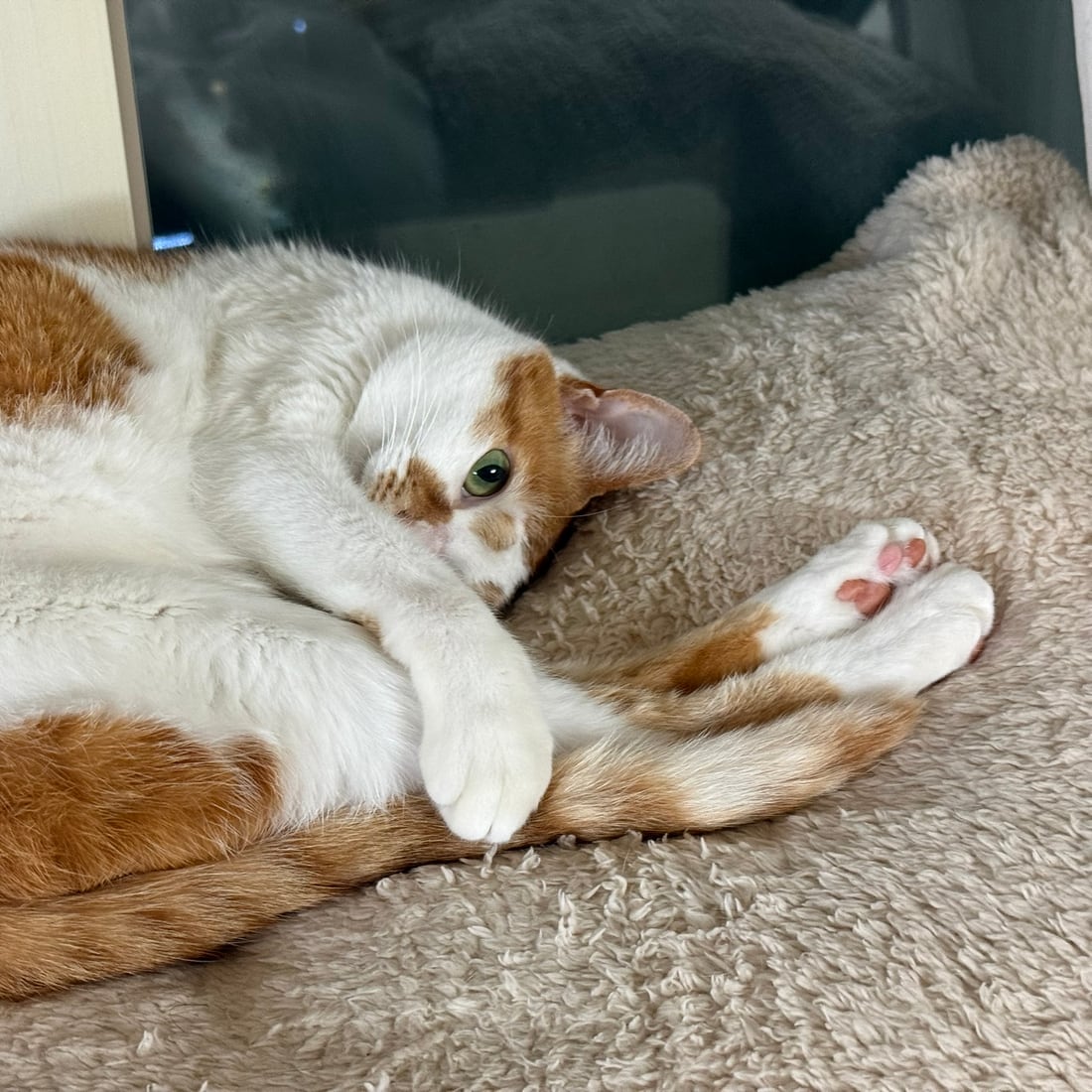
Most healthy indoor cats never need a bath. Cats are built to groom themselves, and a normal short-haired indoor cat keeps herself clean without any help from you. You bathe a cat only when there’s a specific reason — a sticky spill she can’t lick off, something unsafe stuck in her coat, or a medicated wash your vet asked you to do.
So if you’ve been feeling guilty for never bathing your cat, stop. You’re not neglecting her. In six years, we’ve never given Yuja or Mochi a real, full bath, and both are clean, soft, and healthy.
When does an indoor cat actually need a bath?
There are only a handful of situations where a bath is genuinely worth the stress. Everything else is either optional or better handled another way.
| Situation | Bath needed? | Better option |
|---|---|---|
| Normal daily “she looks fine” | No | Nothing — she’s grooming herself |
| Small sticky spot (food, sap) | Usually no | Damp washcloth, spot-clean |
| Something toxic on fur (paint, chemicals) | Yes, promptly | Rinse and call your vet |
| Fleas | Sometimes | Vet-recommended treatment first |
| Vet-prescribed medicated shampoo | Yes, as directed | Follow the vet’s instructions |
| Long-haired cat with greasy or soiled coat | Sometimes | Regular brushing prevents most of it |
| Senior or overweight cat who can’t reach her back | Occasionally | Gentle spot-cleaning, help with grooming |
The last row matters more than people expect. Older or heavier cats sometimes lose the flexibility to groom their lower back and rear, and the fur there can get greasy or clumped. That’s a real reason to help — but even then, a warm washcloth usually beats a full soak.
One quick health note: if your cat suddenly stops grooming and looks unkempt, or starts over-grooming one spot bald, that’s not a bathing problem. It’s a “get her checked” signal, because a cat who quits grooming is often telling you she feels off.
Why do indoor cats stay clean without baths?
A cat’s tongue is covered in tiny backward-facing barbs that work like a comb. She uses it to remove loose fur, dirt, and dander, spreading natural skin oils across her coat as she goes. That daily self-grooming is why a healthy cat smells faintly like nothing at all.
Indoor cats also don’t collect the mud, road grime, and outdoor debris that an outdoor cat would. Yuja and Mochi never touch a sidewalk. The worst thing they get into is a stray bit of wet food on the chin, which they clean off themselves within a minute.
Frequent bathing can actually work against you. Washing too often strips those natural oils and can leave the skin dry and itchy — the opposite of what you wanted.
How do I clean a cat that hates water?
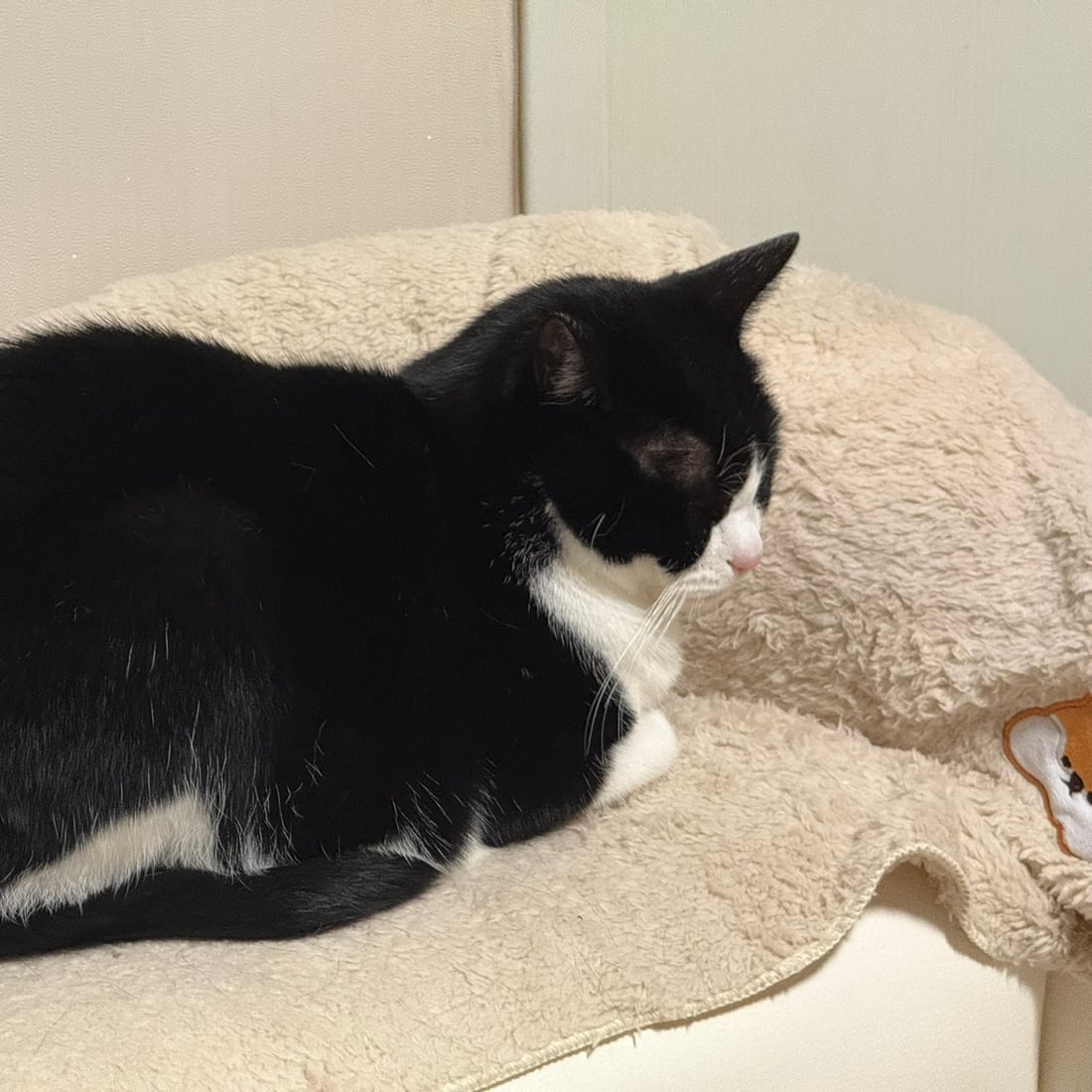
Most cats hate baths, and a fearful cat can scratch or bite hard when cornered in a tub. Yuja is exactly the type — she hisses over a paw touch, and I would not attempt to hold her in water. The good news is that you rarely have to.
Here’s the order we’d reach for, least stressful first:
- Do nothing. Give her an hour. Cats often clean small messes off themselves before you’d get the tub ready.
- Spot-clean. Warm, damp washcloth on the dirty area only. No product for most messes.
- Cat wipes. Unscented, fragrance-free wipes from Chewy or Petco work for a slightly larger smudge.
- Waterless foam. A cat-formulated dry shampoo you rub in and towel off. Useful for a cat who can’t tolerate a real bath.
- Full bath. Last resort, and honestly a two-person job for a cat that panics.
If you do end up needing a real bath, the handling problem is the same one you face during nail trims and brushing — a cat who won’t hold still and may bite. The techniques we use for that carry over directly, and if that’s your daily reality, our approach when you genuinely can’t groom a cat that fights it applies here too.
What to do if you have to give a real bath
Sometimes there’s no way around it — a chemical spill, a vet-prescribed wash. If you’re committed to a full bath, set it up so it goes fast.
- Use cat shampoo only. Never human shampoo, dish soap, or dog products. A cat-safe formula is a few dollars at PetSmart or Chewy.
- Warm, shallow water. A few inches in a sink or tub, lukewarm to the wrist.
- Put a towel or mat down so she has something to grip instead of skidding around in panic.
- Wash below the neck, avoid the face. Use a damp cloth for the head. Never pour water over the face or ears.
- Rinse completely. Leftover shampoo irritates skin and gets ingested when she grooms afterward.
- Towel dry, skip the loud dryer. For a fearful cat, a blow dryer usually undoes any calm you managed to keep.
Two people help enormously — one to hold gently, one to wash and rinse. If your cat is the biting kind, protect your hands, and stop if she’s genuinely terrified. A half-clean cat is better than a cat who now associates you with being trapped in water.
The honest bottom line
We haven’t bathed our cats in six years, and there’s been no reason to. Mochi is easy about handling and would probably tolerate a rinse if she ever needed one. Yuja would not, and we simply don’t put her through it — for a mess, a damp cloth is faster and doesn’t cost us three days of her hiding.
Skip the routine baths. Keep unscented wipes and a bottle of cat-safe waterless shampoo in the cabinet for the rare small mess, and reserve the tub for a real emergency or a vet’s instructions. For most indoor cats, that’s the whole grooming plan — plus regular brushing if she’s long-haired.
This article is general information from a cat owner, not veterinary advice. Talk to your vet about your cat's specific situation.