How to Trim the Nails of a Cat That Hisses and Bites
If your cat hisses and bites the second you reach for a paw, the honest answer is: you go slow, you do one nail at a time, and you accept that some cats will never sit still for a full pedicure. That’s not a failure of technique. Some cats are just wired to defend their feet.
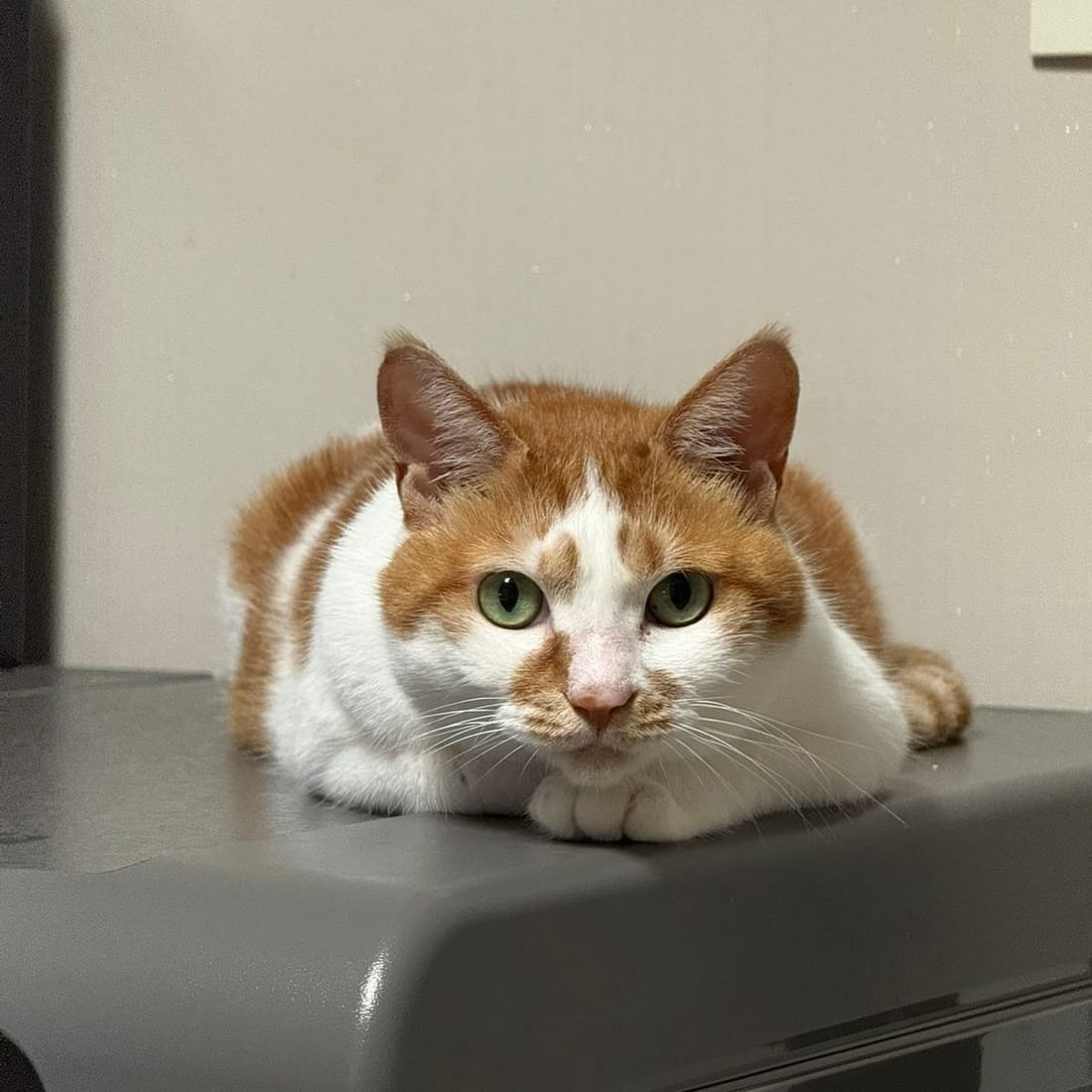
I can say that with a straight face because we’ve had Yuja for six years and I still can’t properly trim her nails. She’s orange-and-white, she was rescued off the street, and she came to us with a hair trigger. Meanwhile our other cat, Mochi, flops over and lets me clip all four paws in one sitting. Same house, same clippers, completely different animal. So before you blame yourself, understand that temperament is doing most of the work here.
The slow desensitization that actually moved the needle
The thing that changed anything for us wasn’t a trick. It was time, measured in years.
When Yuja first arrived she spent two full weeks behind the washing machine and wouldn’t come out — I had to slide her food and water bowls back there. Touching her feet at that point was a fantasy. If I so much as brushed the fur at the tip of her paw, she’d bite and then disappear for three days.
It took four years before I could rest a hand on her paw at all. Here’s roughly how that went:
- Just being near the paw. Hand resting a few inches away while she ate. No touching. Weeks of this.
- Touching the leg, not the foot. A quick stroke down the leg, then walking away before she reacted.
- One brush of the paw, then done. Touch the top of the paw once, stop immediately, reward with the fact that nothing bad happened.
- Two touches in a row. This is the wall we’re still at. To this day, if I touch her paw twice in a row, I get hissed at.
That last line is the honest one. Six years in, I can touch Yuja’s feet — once. Two times and she’s done with me. So no, this story doesn’t end with a perfectly clipped cat. It ends with a cat who no longer treats a paw-touch as an emergency, which for her is enormous progress.
The mechanics: one nail is a win
When you’re working with a biter, throw out the idea of doing all ten (or eighteen) nails at once. The goal for a single session is often one nail. Maybe two. Then you stop while everyone is calm.
What works when the moment is right:
| Do | Why |
|---|---|
| Pick a sleepy, post-meal window | A drowsy cat has a longer fuse |
| Have clippers already open and in hand | Fumbling is when the bite comes |
| Do one nail, then release the paw | Ends the session on a non-event |
| Clip only the clear tip, well away from the pink quick | Nicking the quick teaches them that clipping hurts |
| Stop the instant tension rises | You’re protecting next month’s trim, not just today’s |
A pair of small scissor-style or plier-style clippers from Chewy or PetSmart works fine. The tool almost never matters as much as the timing. I’ve spent more money chasing “calming” gadgets than I’d like to admit, and none of them outperformed simply catching the cat at the right moment.
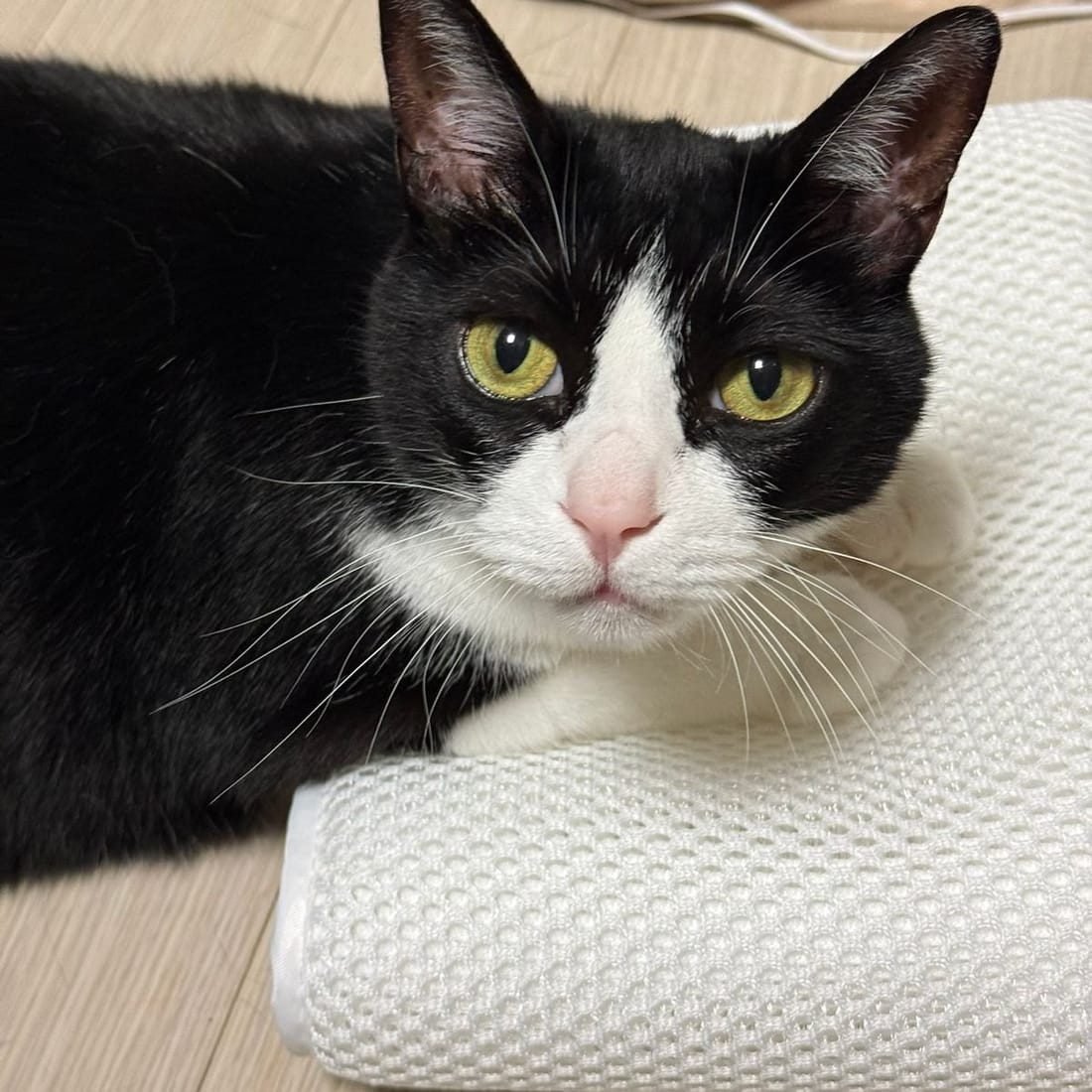
Mochi, who lets me clip all four paws in one sitting and has no idea why this is a whole article.
The two-person and the burrito method
For a cat that bites hard, two people is safer than one. One person gently steadies the cat and offers a distraction; the other clips. Short sessions only.
The towel wrap — sometimes called a “kitty burrito” — is the other common approach. You wrap the cat snugly in a towel and free one paw at a time. For some cats this is genuinely calming because it limits the flailing. For a cat like Yuja, being restrained is its own trigger, so I don’t force it. You’ll learn quickly which camp your cat is in: the towel either settles them or makes it worse within about ten seconds.
If either method turns into a wrestling match, stop. A fight now means the next attempt starts from a worse place. I learned this the slow way.
When to let a groomer or vet do it
There is no shame in outsourcing this. If your cat’s nails are getting long enough to curl toward the pad, or if a session always ends in a bite and blood, book a groomer or vet tech. They do this dozens of times a week, they can do it faster than you, and — importantly — your cat won’t associate you with the bad experience.
One more reason to loop in the vet instead of pushing through: if a cat that has always tolerated paw handling suddenly starts hissing and biting, that can be pain — sore joints, an ingrown nail, a cut pad — rather than attitude. A quick exam rules it out in minutes. (Yuja’s case isn’t that; she’s been this way from day one.)
Indoor cats also wear their nails down less, so they need trims more often, but they don’t get into as much trouble if a nail is slightly long. A scratching post helps too; Mochi keeps her front nails reasonably blunt just by using hers.
For a cat you genuinely cannot handle, a professional every four to six weeks is a perfectly good permanent answer. I still get help with Yuja’s back feet.
What six years taught me
A few things I wish someone had told me at the start:
- Progress is measured in years, not weeks. Four years to touch a paw sounds absurd until you’re living it.
- Ending calm beats finishing the job. One clean nail and a relaxed cat is a better outcome than eight nails and a cat who now hides when she sees the clippers.
- Some cats have a hard ceiling. Yuja’s is “one touch.” I’ve stopped treating that as a problem to solve and started treating it as information about her.
- Fearful and affectionate aren’t opposites. Yuja wants attention and will still bite if I overstay. Respecting the “I’m done” signal is what keeps her coming back.
If your hisser-biter is where Yuja was on day one — hiding behind an appliance, biting at a brush of fur — know that it can get better, just not fast, and not perfectly. Aim for a cat who tolerates a touch, get help for the actual trim, and stop measuring yourself against the friendly cat down the hall. There’s usually one of those in every house. Ours is Mochi, and she is no help at all with her sister.
This article is general information from a cat owner, not veterinary advice. Talk to your vet about your cat's specific situation.