What If Your Cat Doesn't Like Boxes?
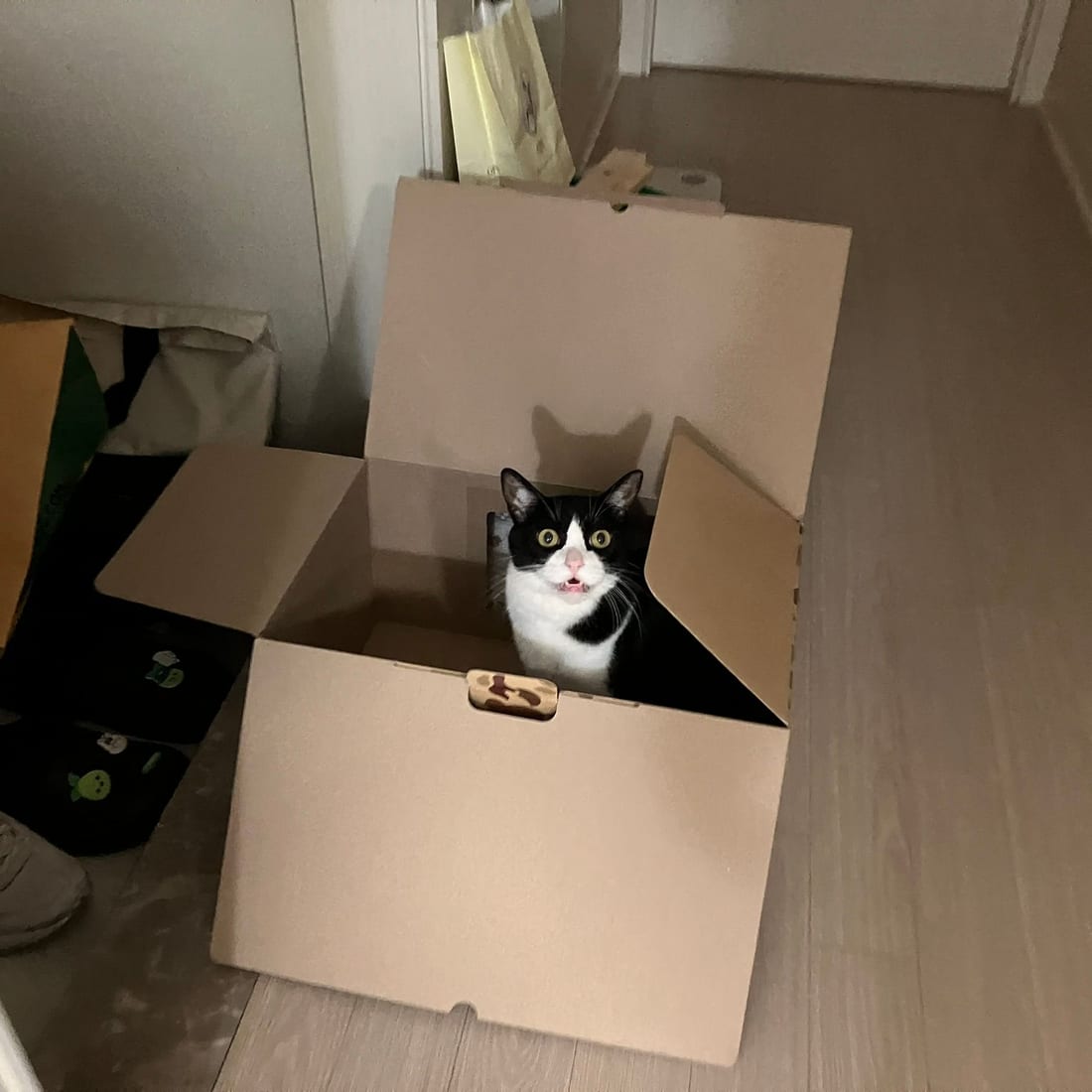
If your cat walks past every box you set out, nothing is wrong with her. The “all cats love boxes” thing is a strong tendency, not a law, and plenty of cats just prefer other spots — height, tight gaps, or a blanket. Both of ours are proof: six years in, neither one cares about boxes.
So don’t read a snubbed box as a rejection of you or a sign of a “broken” cat. It’s a preference, and once you know that, you stop wasting money on cardboard and start offering what your cat actually wants.
Do all cats really love boxes?
Most cats do gravitate to enclosed, small spaces, which is where the reputation comes from. A box gives four walls, a defined edge, and a spot to watch the room from — the same appeal as a cave. That’s real for a lot of cats.
But “most” isn’t “all.” Our two are the counterexample. Yuja, the anxious one who spent about two weeks behind the washing machine when she first arrived, will hide in all kinds of places — never once a box we put out for her. Mochi, our easygoing tuxedo, is the same. Over years of living with them, I can count on one hand the times either of them chose a box on purpose.
The one photo I have of Mochi sitting in a delivery box tells the real story. Her posture isn’t the loaf-of-contentment you see in viral box photos. She looks like she’s inspecting the room, uneasy, and she was out again fast. That’s not a cat who loves boxes. That’s a cat who tried it once in a few years and decided no.
Why doesn’t my cat use boxes?
A box-averse cat usually isn’t box-hating so much as something-else-preferring. Here’s what our two reach for instead, and what it probably means for yours.
| What our cats choose | The appeal it fills | If your cat likes this too |
|---|---|---|
| Top of the cat tree, top of the fridge, high shelves | Height + full view of the room | Add vertical perches instead of floor boxes |
| The gap between an appliance and the wall | Tight walls pressing on both sides | Try covered beds or a spot wedged between furniture |
| Under a blanket, back and paws sticking out | Soft, warm, total cover | Offer a folded throw or an open-top donut bed |
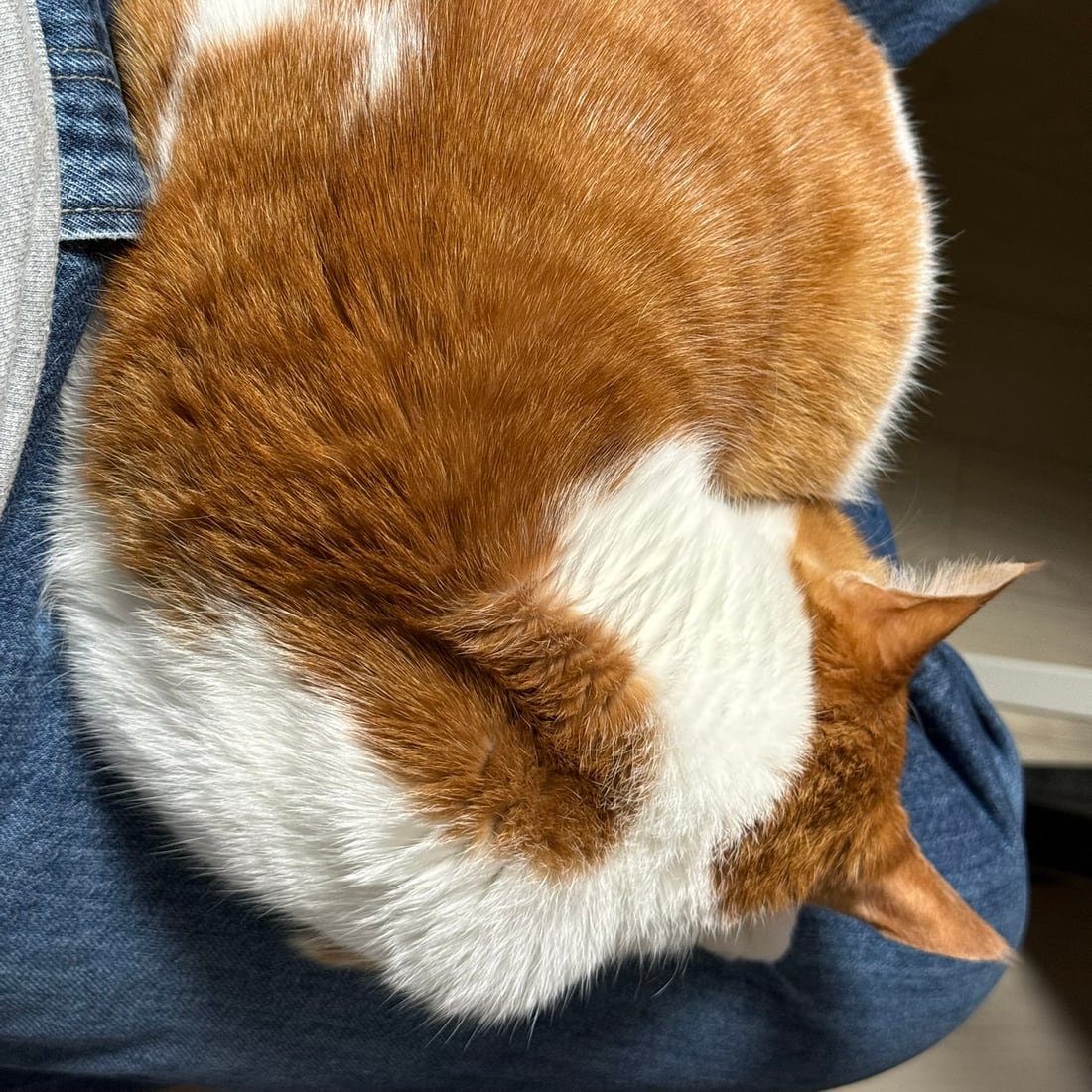
| A lap, belly-up | Warmth + trust, not concealment | This one you can’t buy — it comes with time |
Notice that a box only really hits the first two of those, and even then a shelf or a wall gap often beats it. A cat who has a favorite high perch or a favorite crevice has no reason to bother with a cardboard square on the floor.
Is a box-indifferent cat a stressed cat?
Not by itself. This is the part worth getting right, because people sometimes flip it around: “My cat won’t use the box I gave her, is she scared?” A box is a hiding option, not a stress test. Skipping it says nothing bad.
What actually tells you a cat feels safe is where she’s willing to be out in the open. Both of ours nap in plain sight — Mochi sprawled on a tree shelf with a paw hanging off, Yuja flopped on a lap belly-up. A cat who rests exposed like that is far more relaxed than one who only feels okay crammed inside four walls, box or not.
The flip side is worth naming too: a sudden change matters more than the box itself. If a cat who normally lounges in the open starts wedging herself into gaps and staying there, or stops eating, that’s worth a vet’s attention because it can signal pain or illness. A cat who has simply never liked boxes for years isn’t that. She’s just herself.
What to offer instead of boxes
Skip buying more boxes and let your cat show you what she wants. The trick is offering a few different types of spot and watching which one she uses without being coaxed.
- Go vertical. A cat tree, a cleared shelf, or an approved perch on top of a cabinet often beats any floor-level box. Height gives the same enclosed-safe feeling plus a better view.
- Leave the gaps. That awkward space between the couch and the wall, or beside a cabinet, is prime real estate for cats who like pressure on both sides. You don’t have to build it — just don’t block it.
- Add soft cover. A folded blanket on the bed, or a throw she can burrow under, scratches the same itch as an enclosed box for the cats who want warmth over walls.
- Don’t force any of it. Set the option out and walk away. If she uses it in a few days, great. If not, that spot isn’t for her.
If your cat is newer to you and still figuring out where she feels safe, it helps to understand that hiding spots shift as trust builds — where a cat chooses to rest changes a lot over the first weeks and months. Yuja went from behind the washing machine, to the top of the fridge, to a lap, over years. None of those stops was ever a box.
The bottom line
Your cat doesn’t owe the internet a box photo. Some cats love them, ours don’t, and both outcomes are completely normal. A box is just one of several ways a cat can feel enclosed — and height, gaps, and soft cover are the ways plenty of cats prefer.
Watch where your cat actually settles when nobody’s pushing her, and give her more of that. That’s a far better use of your money and attention than a stack of cardboard she keeps ignoring. And if you want proof that cat “rules” bend, ours are living examples — two cats who broke the most famous rule of all and turned out perfectly fine.
This article is general information from a cat owner, not veterinary advice. Talk to your vet about your cat's specific situation.