Why Does One of My Cats Bully the Other?
Most of the time, one cat “bullies” another because of hierarchy, competition over resources, or a plain personality mismatch. One cat wants to control space, food, or your attention, and the pushier one wins. It usually looks worse than it is. But if the chased cat is hiding all day, stops eating, or shows up with scratches and bald patches, that’s crossed from squabbling into a real problem you need to fix.
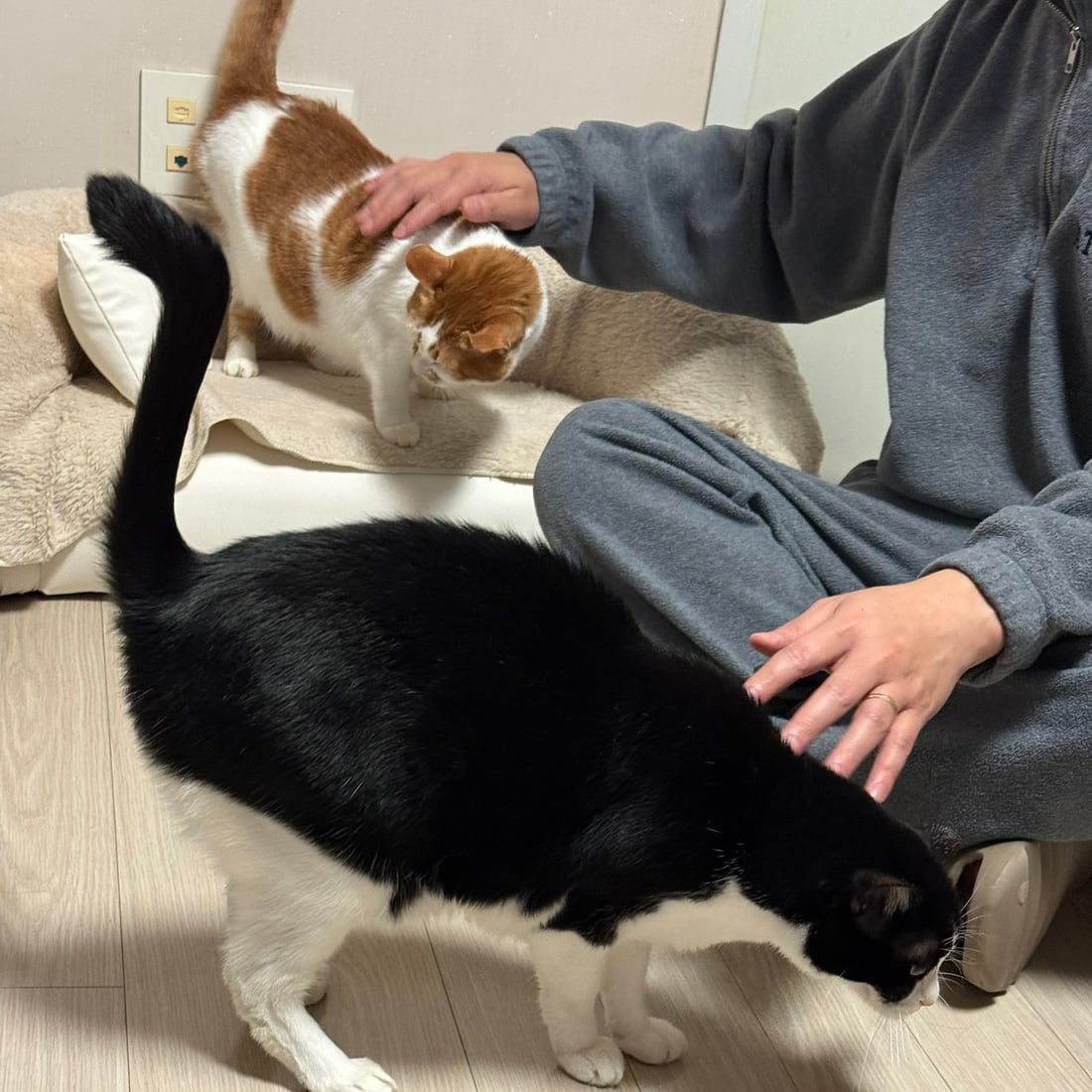
I live with this every day. Yuja, our orange-and-white eight-year-old, has spent six years low-key terrorizing her little sister Mochi. Nothing bloody, but Mochi gets ambushed on the way to the litter box, cornered at the food bowls, and generally lives a life of dodging her sister. So this isn’t theory for me. Let me walk you through what’s actually going on.
Bullying vs. normal cat drama
Cats aren’t polite roommates. A lot of what looks like bullying is just cat communication, which is louder and grabbier than we’d like.
Here’s the rough line I use:
| Probably normal | Probably a problem |
|---|---|
| Occasional chasing that ends quickly | Chasing that ends with one cat hiding for hours |
| Hissing, then both walk away | Silent stalking, then a pounce with claws out |
| Play-wrestling with breaks | Wrestling where one cat screams and can’t get free |
| Eating near each other with side-eye | One cat guarding the bowl so the other can’t eat |
| Both cats relaxed most of the day | One cat perpetually tense, tail tucked, eating on the sly |
Yuja pesters Mochi constantly, but Mochi still comes to greet me at the door every single day, eats fine, and sprawls out on her back for belly rubs. That tells me the bullying, while real, hasn’t broken her. If Mochi were suddenly hiding all day or skipping meals, I’d treat it as urgent — and if a normally-fine cat starts hiding or refusing food, get a vet to rule out pain, because a hurting cat gets defensive fast.
Why the “bully” cat picks fights
There’s almost always a reason, even when it looks random.
Territory and status. In a multi-cat home there’s an unspoken pecking order, and one cat often decides she runs the place. She’ll block hallways, claim the best window, or shove past the other at the bowl to remind everyone who’s boss. This is Yuja’s whole personality. She was a stray before family rescued her, and she came in with a “I go first” attitude that never faded.
Resource competition. Not enough food bowls, water spots, litter boxes, or high perches means cats have to compete, and competition breeds ambushes. Cats guard resources by controlling access, so a bully cat sitting in the doorway is quietly saying “you don’t get in here.”
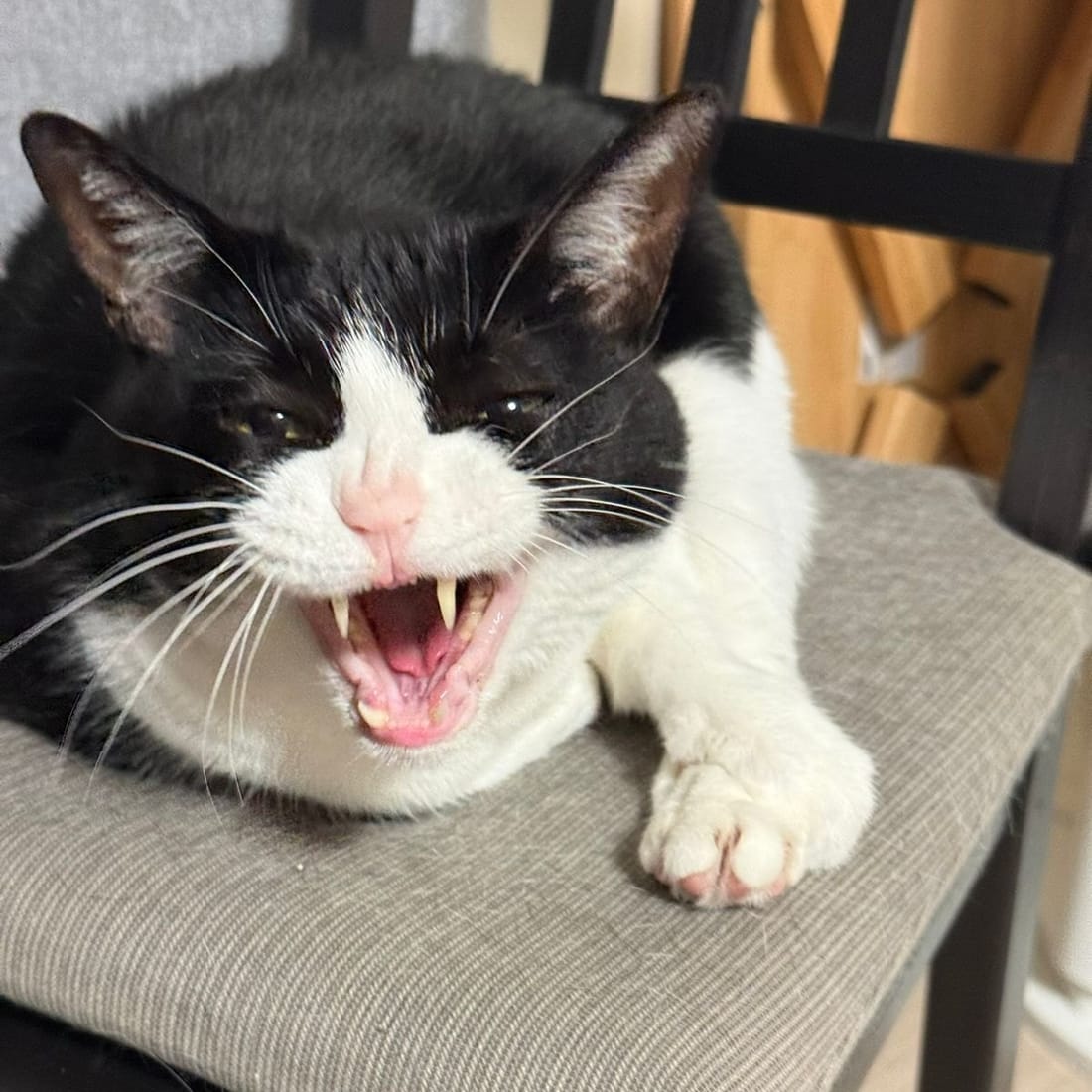
Personality mismatch. Some cats are just intense, and some are pushovers. Yuja is prickly and reactive. Mochi is a soft, roll-on-the-floor people-cat who won’t stand up for herself. Put a bossy cat with a submissive one and the bossy one takes over by default.
Redirected frustration. A cat that sees a bird outside, or gets startled by a plastic bag (Yuja hates those), can spin around and take it out on whoever’s closest. It’s not personal, but the victim doesn’t know that.
Boredom. An under-stimulated cat invents her own entertainment, and a slower housemate makes an easy target.
What actually helps
You can’t therapize your cats into best friends. What you can do is remove the reasons to fight and lower the tension.
Multiply the resources. The classic rule is one litter box per cat plus one extra, spread across the home so a bully can’t guard all of them. Same idea for food and water. When bowls are in separate spots, the pushy cat can’t camp on both. We feed Yuja and Mochi apart because Yuja would otherwise hover over both plates.
Add vertical space. Cat trees, shelves, window perches. Height gives the submissive cat an escape route and lets the bossy one claim status without body-checking anyone. More real estate means fewer forced encounters.
Give the bully a job. Two solid play sessions a day with a wand toy burns off the energy that would otherwise go into stalking. Feed right after play so the cycle ends in “hunt, catch, eat, sleep” instead of “hunt the sister.”
Don’t punish — interrupt. Yelling or spraying water makes cats more anxious, which makes aggression worse, and they often start associating the punishment with the other cat. Instead, break up a stalk before it launches: toss a toy, shake a treat bag, redirect. Reward the calm moments when they’re near each other and not fighting.
Create safe zones. The victim needs a spot the bully can’t reach or won’t bother with. When Yuja first came home she spent two weeks behind the washing machine and I just fed her back there until she felt safe. Same principle applies to a bullied cat — give her a defendable retreat and let her use it.
When to slow way down
If the fighting is escalating — actual injuries, screaming, a cat too scared to eat or use the box — go back to basics like you’re introducing them for the first time. Separate them into different rooms, then reintroduce slowly through scent (swap bedding), then feeding on opposite sides of a closed door, then supervised visual contact, then short shared time. It’s tedious and can take weeks. But rushing a bad relationship usually makes it worse.
I’ll be honest about the ceiling here: Yuja and Mochi are not cuddle buddies and never will be. Six years in, Yuja still won’t let me clip her claws, still hisses if I pet her twice in a row, and still occasionally decides Mochi needs to be reminded who’s in charge. Some cats just don’t fully click, and that’s okay. My goal was never friendship — it was a home where both cats eat well, sleep well, and feel safe. We got there. Mochi lives a full, spoiled, belly-up life despite her sister. That’s the realistic win.
Quick answers
Will they grow out of it? Some pairs settle over months as they sort out territory. Others, like mine, reach a stable truce where one dominates and the other adapts. Both are fine as long as the underage cat isn’t miserable.
Should I get a third cat to break up the dynamic? Usually no. Adding a cat adds resource competition and a new personality to negotiate. It more often makes things tenser, not calmer.
Is it my fault? Not really. You didn’t choose their personalities. What you can control is the environment — bowls, boxes, perches, playtime — and that’s where your effort actually pays off.
If the “bully” cat’s behavior turned on suddenly after years of peace, that’s worth a vet visit, since pain or illness can make a mellow cat lash out. Otherwise, it’s a management project, not a moral failing — for you or the cats.
This article is general information from a cat owner, not veterinary advice. Talk to your vet about your cat's specific situation.